

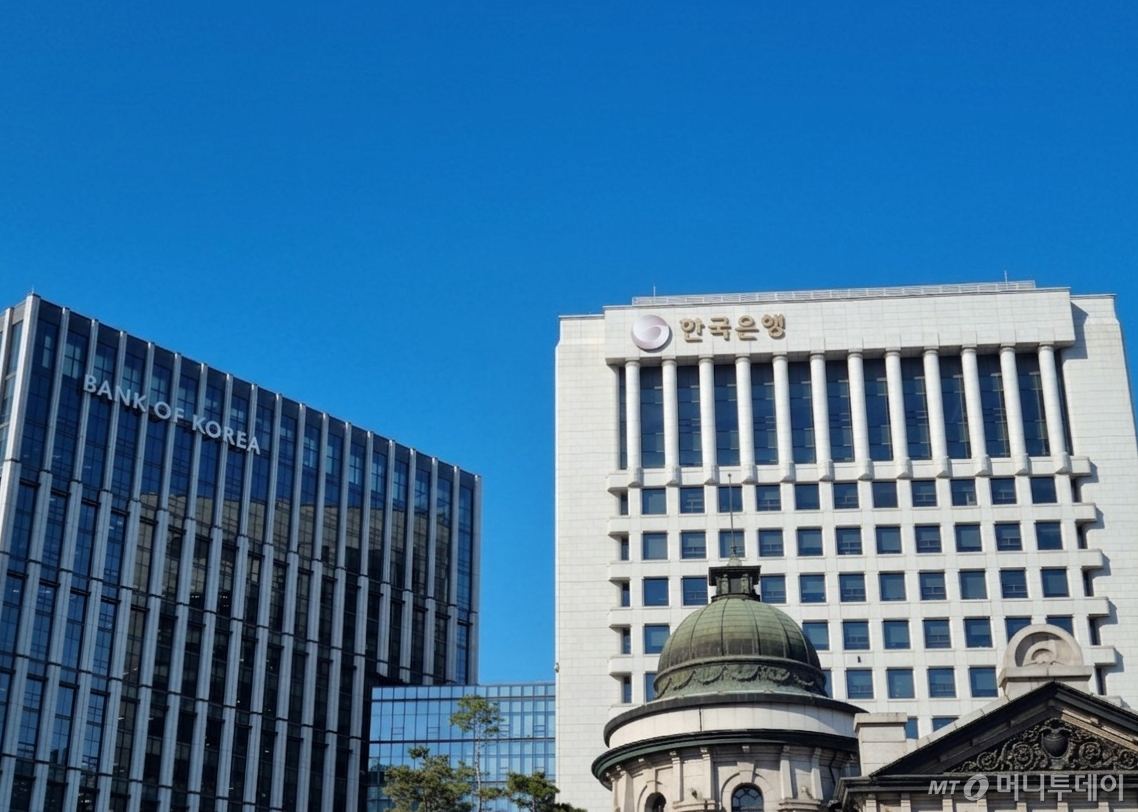
The fact that household debt surpassed the record 2 quadrillion won for the first time in the second quarter is significant, as it was driven not only by growth in housing-related loans but also by a full-scale surge in credit loans. Rising home transactions and prices, combined with a booming stock market, simultaneously fueled demand for funds to purchase homes and for 'margin investing (investing with debt).' As the burden of managing household debt grows, expectations are mounting that the Bank of Korea will move to raise interest rates further.
According to data released by the Bank of Korea on the 19th, household credit in the second quarter increased by 25.9 trillion won from the previous quarter, reaching 20.198 trillion won. This marks the largest increase since the third quarter of 2021, a span of four years and nine months.
Housing-related loans rose by 12.2 trillion won, while other loans including credit loans increased by 12.8 trillion won. For the first time since the second quarter of 2021, the increase in other loans exceeded that of housing-related loans.
The rise in housing-related loans was driven by an increase in apartment transactions in the Seoul metropolitan area and collective loan demand for pre-sold homes. Apartment transaction volumes in the Seoul metropolitan area rose from 27,000 units in March to 28,000 in April, 29,000 in May, and 30,000 in June. In Seoul specifically, transactions increased from 6,400 units in March to 7,500 in April and 8,900 in May, before declining to 7,700 in June.
The stock market boom fueled the increase in credit loans. Credit loans across all financial institutions fell by 900 billion won in April but rebounded with a 3.6 trillion won increase in May and rose another 2.6 trillion won in June. The outstanding balance of securities companies' margin lending also grew by 9.3 trillion won (approximately 34%), from 27.4 trillion won at the beginning of the year to 36.7 trillion won by the end of June. Credit loans expanded primarily around the KOSPI, which was led by gains in large-cap stocks such as semiconductors.
A Bank of Korea official stated, "Credit loans from deposit-taking banks and margin lending from securities firms have increased significantly," adding, "We believe that funds related to stock investment demand rose as the stock market performed well in the second quarter." The official further noted, "Looking at past trends, it is rare for other loans to increase this much," and evaluated that "the scale of credit loan growth is quite exceptional."
The government now faces increased pressure to simultaneously manage household debt and support housing supply. On the 13th, the Financial Services Commission raised its target for the total annual growth rate of household debt from an initial 1.5% to around 3%, aiming to promote housing supply and support young people and genuine homebuyers. The additional lending capacity will be utilized for relocation loans in redevelopment projects and interim/final payment loans for newly constructed complexes, while speculative lending will be curbed.
Financial authorities have also strengthened oversight of margin lending (investing with debt) and unsettled transactions used for such purposes. In May, they ordered securities firms to conduct a comprehensive review of their risk management practices and to consider additional measures if necessary. Some securities firms lowered credit limits for lower-rated stocks and restricted additional credit purchases when outstanding balances exceeded certain thresholds.
The trend of rising household debt is expected to weigh on the Bank of Korea's decision regarding its base rate. In July, the Bank of Korea raised the base rate from 2.50% to 2.75%, citing economic recovery, upward pressure on inflation, and the increasing trends in housing prices and household loans. With a robust growth trajectory and inflation exceeding target levels, the rapid expansion of household loans has further strengthened the case for additional rate hikes.
However, loan growth has slowed somewhat since the third quarter began. The increase in household loans across all financial institutions fell from 8.3 trillion won in June to 6.2 trillion won in July. The Bank of Korea also believes it is unlikely that other loan growth will continue at the same pace as in the second quarter, given stock market corrections and expanding uncertainty. Future trends in household loans and housing prices are expected to be key variables influencing further interest rate hikes.

 in ECONOMY
