

International credit rating agency Moody's has revised its economic growth forecast for Korea this year upward from 2.5% to 3.5%. The agency anticipates that a boom period centered on strong semiconductor exports will continue at least until mid-next year, driving overall economic growth.
According to the financial investment industry on the 18th, Moody's presented Korea's gross domestic product (GDP) growth rate for this year as 3.5% in a report released on the 13th. This represents an upward revision of 1.0 percentage point (p) from the 2.5% growth forecast for Korea issued in its global economic outlook last May.
Moody's new forecast is also 0.3 percentage points higher than the average forecast of 3.2% from eight major investment banks (IBs) compiled by the International Finance Center at the end of last month.
△India (6.0%) △China (4.5%) — excluding some emerging countries, this is among the highest growth forecasts for major economies.
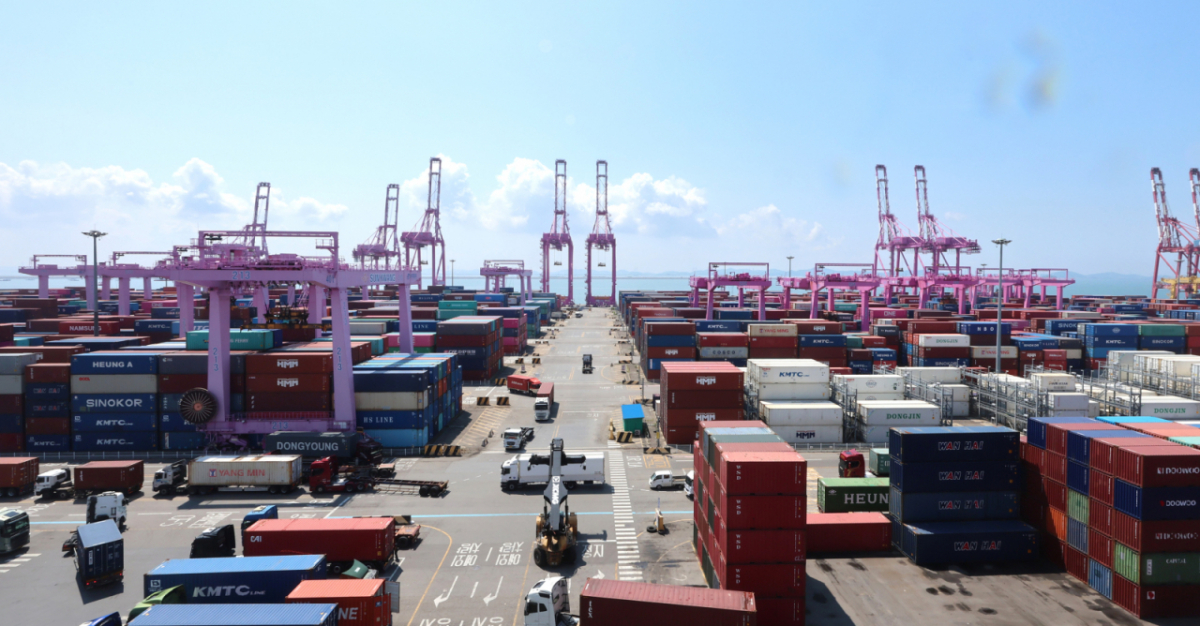
Moody's cited the increasing trend in exports centered on semiconductors as the main reason for upgrading Korea's growth forecast. The report pointed out that merchandise exports from January to July of this year surged by 51% compared to the same period last year, explaining that it was "strongly supported by very robust semiconductor growth."
In particular, it noted that "chip demand continues, and there are limited companies that can realistically replace Korea's advanced memory suppliers," suggesting that this semiconductor upcycle is likely to remain strong at least until mid-2027.
Positive evaluations were also given to the government's mega projects aimed at fostering semiconductors, artificial intelligence (AI) data centers, and physical AI.
Moody's mentioned that these strategies demonstrate the government's sustained and consistent policy efforts to respond to technological innovation trends. If these initiatives take root, they could serve as a driving force to boost productivity and raise the potential growth rate in the long term.
The agency also predicted that Korea's short-term fiscal health indicators would improve more than initially expected due to strong growth rates and excess tax revenues. Specifically, it estimated that Korea's fiscal deficit ratio relative to GDP this year will reach 3.8%, an improvement of 0.1 percentage points from the initial plan.
However, warnings were also added regarding medium- to long-term fiscal burden factors. It was pointed out that without structural policy reforms, long-term fiscal burdens could worsen. Key challenges include increased mandatory spending due to aging, funding for defense costs, and securing investment resources to maintain export competitiveness.
Meanwhile, Moody's drew a line by stating that this report does not involve an evaluation of Korea's credit rating. Previously, in February, Moody's had assessed Korea's national credit rating at Aa2.

 in ECONOMY
