

As South Korea and the United States prepare to launch their first strategic investment project in the U.S., final-stage tensions continue between the two nations. With construction set to begin and an official announcement imminent, differences of opinion on key issues remain difficult to bridge.
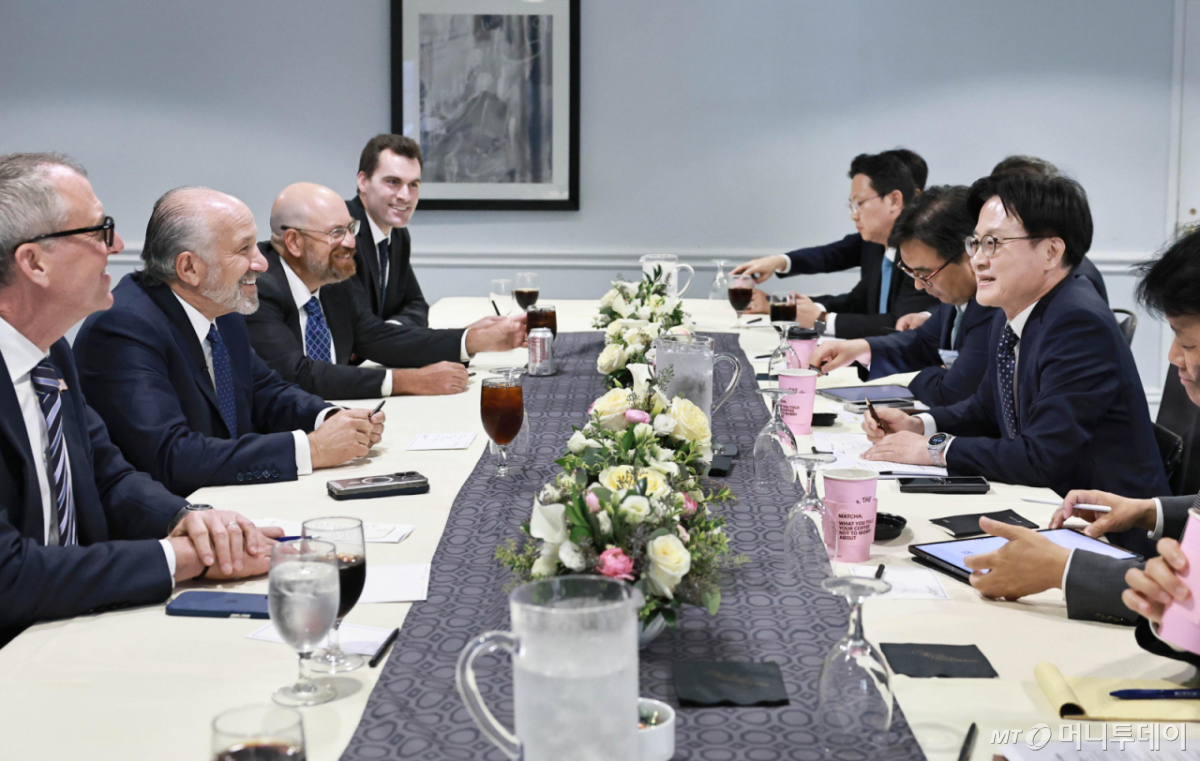
According to the Ministry of Trade, Industry and Energy on the 19th, Minister Kim Jeong-kwan visited Washington D.C., USA, from the 16th to the 19th (local time) to hold a series of meetings with key figures in the U.S. administration, discussing South Korea-U.S. industrial and trade issues including the strategic investment project in the U.S.
The top priority during the visit was concluding negotiations on the U.S. investment deal. Kim (Minister) met consecutively with U.S. Secretary of Commerce Howard Lutnick over two days on the 17th and 18th to conduct final discussions on the schedule for advancing candidate strategic investment projects and key contentious issues.
This negotiation is complex in terms of calculations by both countries, as it involves the first project that will serve as a catalyst for a U.S. investment totaling $350 billion. Recently, the U.S. side has strongly pressured the South Korean government, calling them "the slowest negotiators in history," while also hinting at the possibility of imposing additional tariffs exceeding 15%, taking the initiative to gain leverage.
The deadlock in negotiations is also evident in the Ministry of Trade, Industry and Energy's announcement. The ministry stated through a press release that this meeting was held approximately three weeks after the July talks, during which both sides engaged in in-depth discussions on major issues regarding candidate strategic investment projects in the U.S. to actively seek common ground.
Immediately after his visit to the U.S., Kim (Minister) expressed determination to resolve final-stage issues and announce results within this month. However, since no final agreement was reached even after two meetings with the Secretary of Commerce, the timing for announcing the first project and the official start date for construction remain shrouded in uncertainty.
Experts analyze that the South Korean government faces a dual challenge: upholding principles of commercial rationality and national interest while simultaneously minimizing tariff risks arising from negotiation delays. In response, an official from the Ministry of Trade, Industry and Energy stated, "We plan to proactively respond to ensure stable management of South Korea-U.S. trade relations and prevent damage to the 'balance of benefits' between the two nations secured through last year's tariff agreement."
Meanwhile, to fill the vacancy caused by the absence of a Chief Trade Negotiator, Kim (Minister) has also taken action on various trade issues. On the 19th, he met with Jamie Mason Greer, U.S. Trade Representative (USTR), to review major trade issues such as investigations under Section 301 of the U.S. Trade Act and emphasized the need for stable channel operations. He is also scheduled to meet with Russell Boute, Director of the White House Office of Management and Budget (OMB), to monitor follow-up developments regarding the Donald Trump administration's plan to rebuild the shipbuilding industry and discuss ways to strengthen South Korea-U.S. shipbuilding cooperation.

 in ECONOMY
