

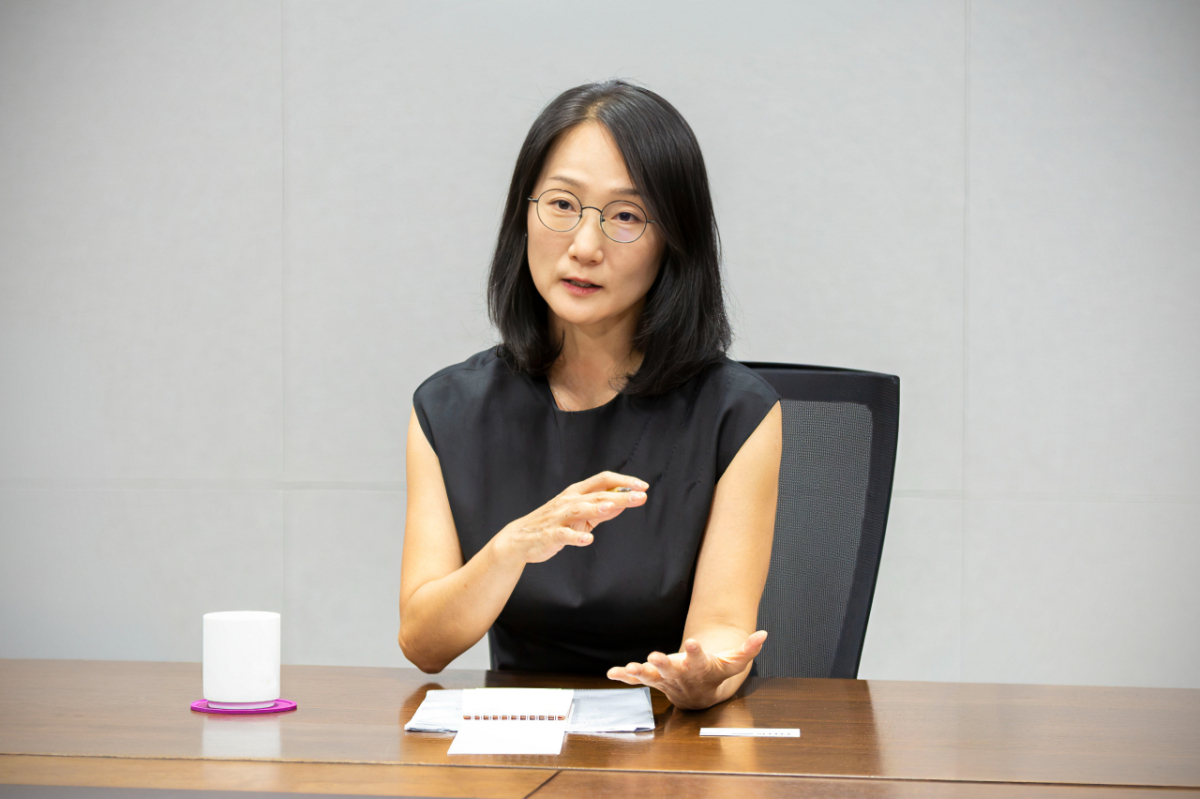
"I will become an independent director (audit committee member) who is not biased toward the management team, MBK, or Yeungpoong. My role is to monitor and check so that the company moves in the right direction with a sense of mission to enhance shareholder value."
Park Yu-kyung, candidate for independent director at Korea Zinc, met with MoneyToday on the 19th and stated, "Although I was nominated as an independent director candidate through recommendations from MBK and Yeungpoong, I accepted the candidacy after confirming that I would serve as a strictly neutral audit committee member. I will monitor all decision-making processes of the board to ensure they align with the interests of all shareholders, including general shareholders, and strive to establish sound corporate governance and culture."
It is known that Park was selected as an independent director candidate for Korea Zinc after being recommended by MBK and Yeungpoong through a shareholder-led public recommendation process. She underwent verification by an external review body independent from the company and all stakeholders, with shareholders taking the lead in the public nomination. This process marks the first such case in Korea's capital market.
Park has attracted attention due to her extensive background. From 2009 for 17 years, she worked at APG, a Dutch pension fund asset management company, where she led responsible investment initiatives to enable investee companies to achieve sustainable growth and create shareholder value, while also directing various shareholder engagement activities.
During this period, she served as an advisory committee member of the Shareholder Group Committee of the Hong Kong Stock Futures Commission, a member of the Stewardship Code Establishment Committee in Korea, representative of APG at the Global Pension Forum launched by Japan's Government Pension Investment Fund and U.S. CalPERS (public employees' pension) and CalSTRS (teachers' pension), and an advisory committee member of the Financial Center Promotion Committee within Korea's Financial Services Commission. From 2015 for 10 years, she chaired the Korean Working Group of ACGA (Asia Corporate Governance Association). Currently, she serves as a board member of Tara Climate Foundation and chairperson of its audit committee.
Park stated, "Over the past 17 years in the stock and investment markets, I have carried out responsible investments while closely observing corporate decisions. As an expert in corporate governance, my track record of meticulously monitoring management teams and board decisions provides sufficient background to serve as a board member."
In fact, Park has conducted shareholder engagement activities targeting Samsung Electronics, Hyundai Motor, POSCO, SK, KT, KB Financial Group, and others. The total investment amount by domestic companies in the fund portfolios managed by APG, where Park worked, amounts to approximately 10 trillion won. By investing significantly in Korea's leading listed companies, she has developed a unique understanding of market monitoring and checking functions.
Park emphasized the duty of loyalty to the board. Recent amendments to the Commercial Act expanded the scope of this duty from "the company" to include "shareholders." The intent of the legal revision is that the board can uphold this duty when it evaluates matters with the interests of all shareholders at the center, rather than favoring controlling shareholders. Park stated, "To fulfill the board's duty of loyalty, three elements must work together: a shift in management's mindset, strengthened monitoring and checking functions of the board, and enhanced transparency. The board must be able to ensure that major decisions regarding fundraising, mergers and acquisitions (M&A), and amendments to articles of incorporation are made correctly from the perspective of shareholder interests."
Park prefers the term "control rights" over "management rights." She holds the view that management cannot claim rights from shareholders but must fulfill responsibilities and obligations. In this context, regarding Korea Zinc, Park said, "If a struggle for control rights continues for too long, it will not benefit general shareholders. There must be clear boundaries in such struggles, and the board must provide assurance to shareholders that it will always protect 'shareholder interests' under any circumstances."
Park also remarked, "When there is a struggle for control rights among shareholders, uncertainty about what might happen naturally causes anxiety. Given that our stock market has a relatively short history and government-led initiatives such as the value-up program are now gaining momentum to improve awareness, the Korea Zinc board should consider what its priority is for the benefit of all shareholders."
Park began her career in 1999 as a senior corporate analyst at Good Morning Securities and Citi Global Securities. In 2006, she served as an executive director of responsible investment at the Asia Sustainable and Responsible Investment Association. She joined APG Asset Management in 2009, where she led the Asia-Pacific Responsible Investment Headquarters and, from 2023 until last year, oversaw the Emerging Markets Equity Investment Division.

 in STOCK
