

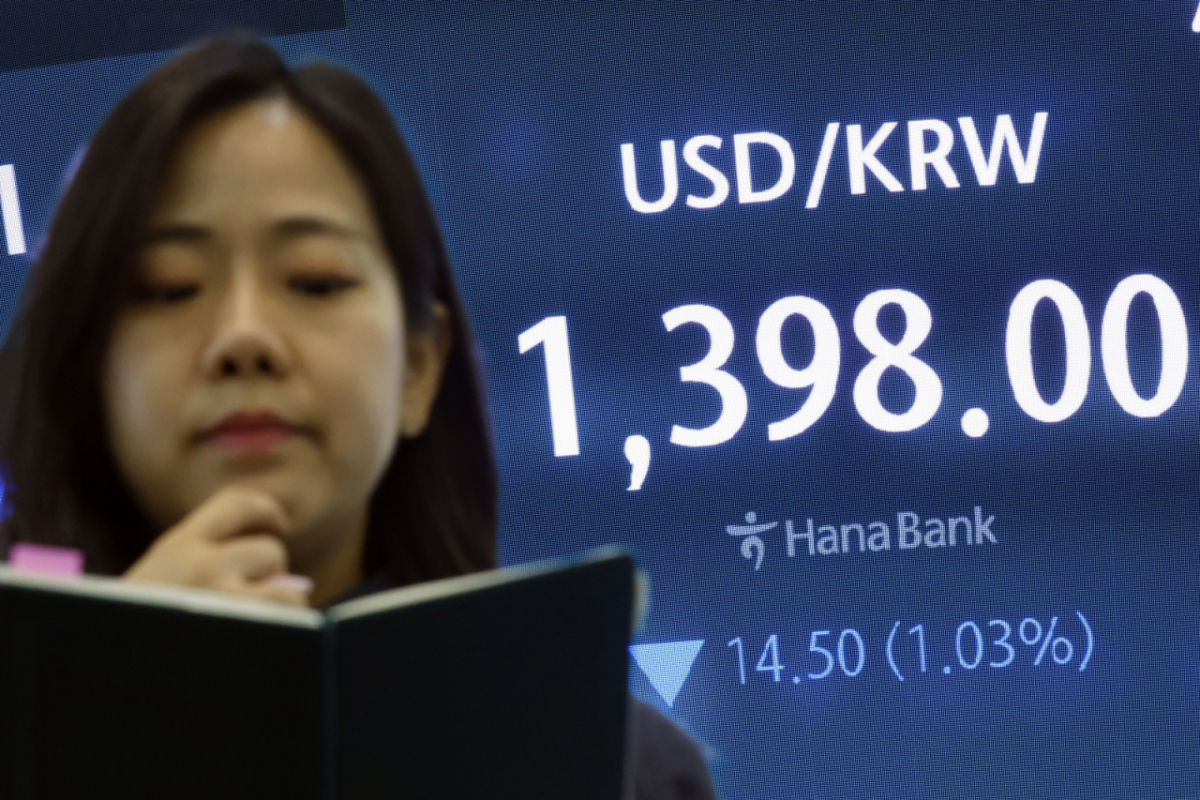
The domestic stock market on the 20th is expected to be influenced by the release of the U.S. Federal Open Market Committee (FOMC) minutes at 3 a.m. Seoul time on the same day and movements in U.S. long-term government bond yields. With KOSPI plummeting more than 5% on the 19th, Samsung Electronics and SK Hynix, regarded as the top two semiconductor giants, fell more than 7% and 9%, respectively, raising concerns that movements in U.S. semiconductor stocks could also become a variable.
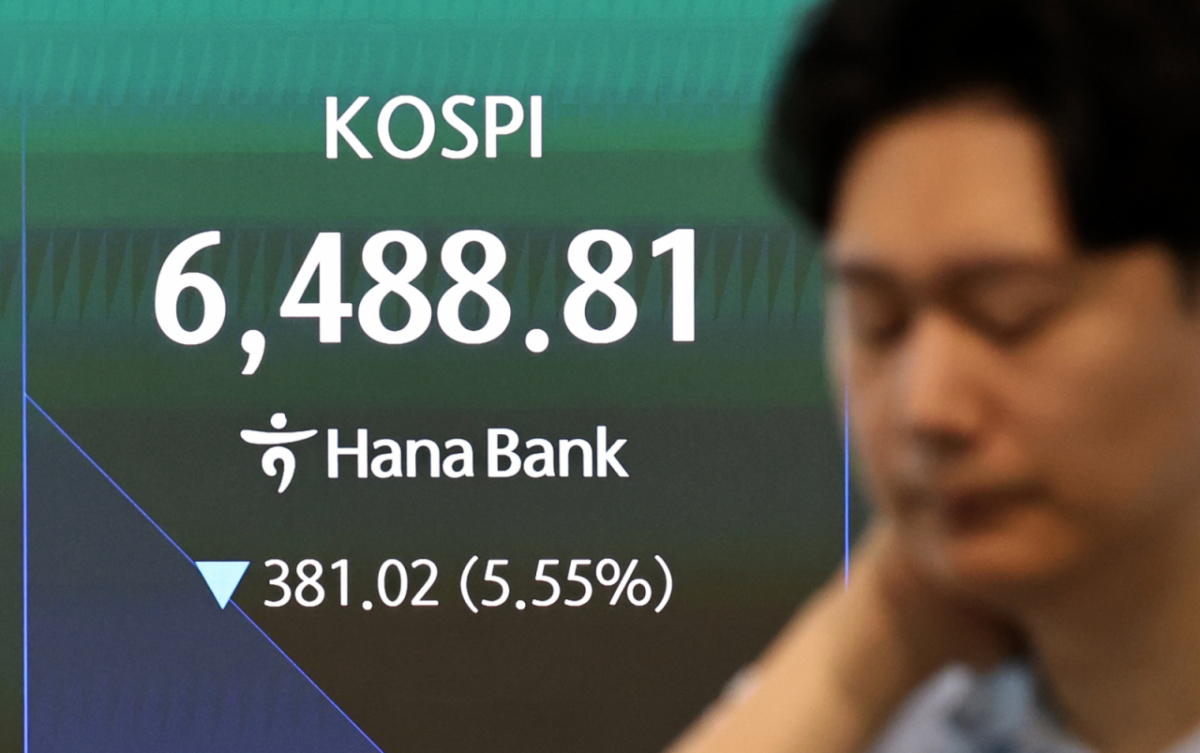
On the 19th, KOSPI closed at 6471.17, down 398.66 points (5.80%) from the previous trading session. During trading hours, it was pushed as low as 6400.81, a decline of 469.02 points (6.83%). Foreign investors and institutional investors sold net amounts totaling 3.4883 trillion won and 1.3244 trillion won, respectively. Retail investors purchased net amounts of 4.6368 trillion won.
Samsung Electronics closed down 7.82% at 247,500 won, while SK Hynix finished trading down 9.75% at 1.5 million won. Overnight in U.S. markets, weakness in semiconductor stocks was also prominent. The Philadelphia Semiconductor Index fell 4.98%, and Micron Technology, SanDisk, and Western Digital each dropped more than 7%. The yield on the U.S. 30-year Treasury bond rose intraday to 5.33% annually, reaching its highest level since 2007. With the extension of a truce agreement between the United States and Iran off the table, international oil prices have risen and inflationary pressures have intensified, leading to assessments that global long-term rates, including those in the U.S., are facing upward pressure.
Cho Ah-in, a researcher at Samsung Securities, stated, "The main background for this decline is the rise in global long-term interest rates," adding, "Rising long-term rates increase discount rates for future earnings, applying adjustment pressure centered on AI (artificial intelligence) growth stocks."
Accordingly, attention is focused on what content regarding future interest rate paths will be confirmed in the July FOMC minutes to be released on the 20th. At that time, the Federal Reserve kept the base rate unchanged (with nine members voting in favor), but three members advocated for a 0.25 percentage point increase, casting Ban (CEO). Through the minutes, it is expected to become clear how much the committee members' judgments on inflation and employment and arguments for rate hikes have spread internally.
The Jackson Hole Economic Policy Symposium, scheduled to be held from the 27th to the 29th (U.S. local time) at the Jackson Lake Lodge in Grand Teton National Park, Wyoming, is also a variable. If Federal Reserve System Chair Kevin Warsh makes remarks regarding future interest rate paths during his speech, long-term Treasury yields and stock markets could be affected. Researcher Cho stated, "If accommodative signals regarding future interest rate paths are confirmed in the FOMC minutes or in Chair Warsh's speech at Jackson Hole, the upward trend in long-term rates may partially stabilize." However, he added, "Given that structural factors such as the U.S. fiscal deficit and expanded supply of AI corporate bonds are unlikely to be resolved in the short term, it is difficult for interest rate levels themselves to easily decline from current levels."
Market participants are also paying close attention to Middle East tensions. Depending on whether negotiations between the United States and Iran resume, there are discussions that international oil prices and U.S. long-term Treasury yields could move. Observations suggest that after domestic single-stock leverage ETFs (exchange-traded funds) caused volatility in the stock market again following a period of external variables, market fatigue has increased. Han Ji-young, a researcher at Kiwoom Securities, said, "It is true that market fatigue is growing because we are facing macroeconomic uncertainty shortly after emerging from the July crash phase marked by concerns over AI profitability and leverage liquidation."
KOSDAQ closed on the 19th at 824.46, down 9.74 points (1.17%). It was pushed as low as 804.02 during trading hours, a decline of 3.62%, briefly turned upward but then returned to weakness. Foreign investors and institutional investors purchased net amounts of 14.8 billion won and 49.9 billion won, respectively, while retail investors sold net amounts of 71.6 billion won.

 in STOCK

