

As the Bank of Korea has continued to raise its base rate, it warned that the shock from rising interest rates could spread to vulnerable firms and self-employed individuals. While interest rate hikes are expected to ease financial imbalances such as housing prices in the Seoul metropolitan area and household debt, they may increase interest burdens for borrowers whose repayment capacity has already deteriorated.
On the 22nd, during its regular Monetary Policy Board meeting, the Bank of Korea reviewed recent financial stability conditions and stated, "Amid continuing upward trends in housing prices in the Seoul metropolitan area and pressure from increasing household loans, risks such as distress in vulnerable sectors and expanding volatility in financial and foreign exchange markets remain latent."
The Financial Vulnerability Index (FVI), which measures the degree of medium- to long-term financial imbalance, reached 46.5 by the end of the second quarter this year, rising to its long-term average level. It has continued to climb since recording 37 in the first quarter of 2024.
Based on currently available indicators, the Bank of Korea estimates that the FVI will remain higher in the third quarter than in the second quarter. However, it noted that the upward trend could be constrained by consecutive base rate hikes in July and August, government real estate measures, and deleveraging triggered by stock market corrections.
The financial stability effects of interest rate hikes are expected to materialize with a time lag. The Bank of Korea assessed that while interest rate hikes can mitigate risks from the accumulation of financial imbalances and the associated burdens are generally manageable, vulnerable sectors require continuous monitoring.
In particular, it was analyzed that interest rate vulnerability is greater in the corporate sector than in the household sector. While the share of variable-rate loans and vulnerable borrowers has declined among households compared to past interest rate hike periods, the proportion of marginal and vulnerable firms has risen, along with higher shares of variable-rate loans and delinquency rates among companies.
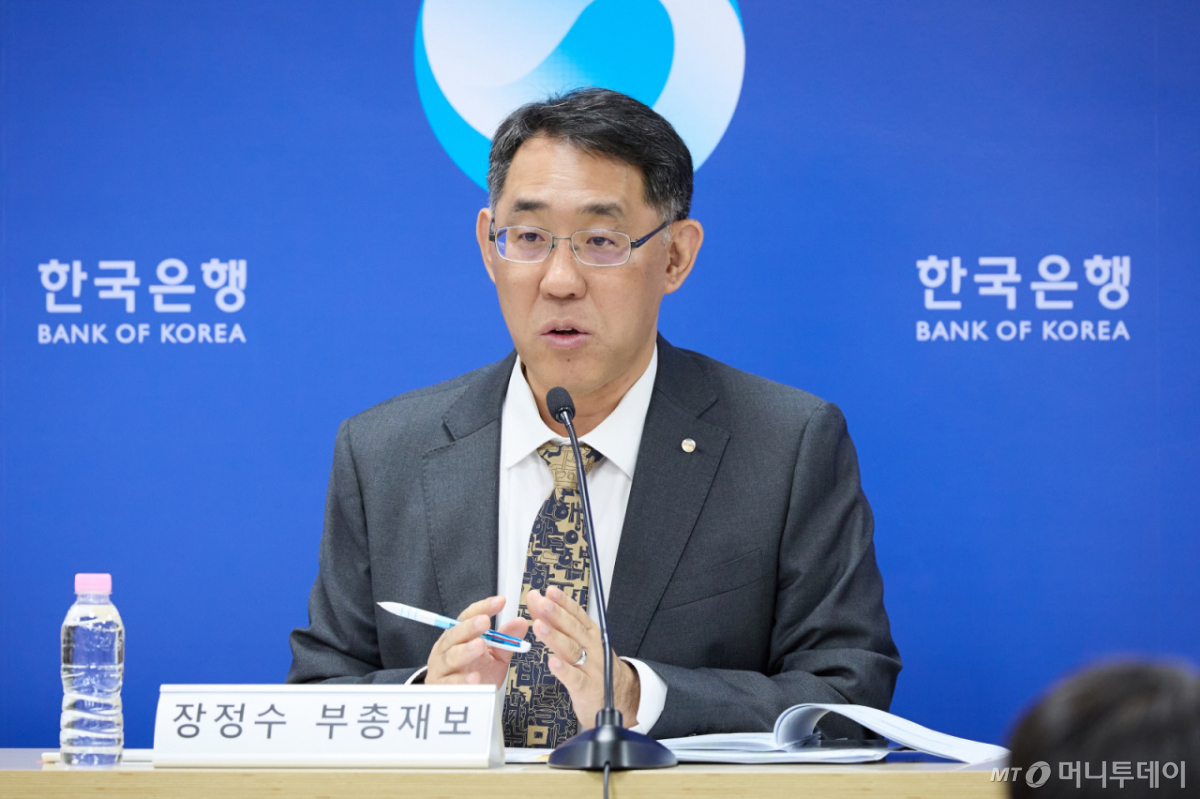
Jang Jeong-soo, Deputy Governor of the Bank of Korea, stated, "While the share of vulnerable borrowers has declined in the household sector, the proportion of marginal and vulnerable firms is rising in the corporate sector, and the share of variable-rate loans has increased further." He added, "It appears that the burden of rising interest rates on vulnerable corporate sectors is greater than on households."
According to Bank of Korea analysis, if the base rate rises by 0.25 percentage points, interest burdens would increase by approximately 3.3 trillion won for households and 3.6 trillion won for corporations, totaling an increase of about 7 trillion won.
The risk of distress among self-employed individuals and marginal firms has also grown. By the end of the second quarter this year, loans to the self-employed reached 1,098.5 trillion won, accounting for 28.2% of total lending across financial institutions. The delinquency rate for self-employed loans stood at 1.99%, exceeding the long-term average of 1.60%, while the delinquency rate for vulnerable self-employed individuals rose to as high as 12.71%. The new entry rate into delinquency among vulnerable self-employed individuals also increased from 3.17% at the end of last year to 3.60% in the second quarter this year.
Among corporations, the share of marginal firms that have been unable to cover interest expenses with operating profits for three consecutive years reached 19.1% as of the end of last year. Notably, while marginal firms have increased in domestic-oriented sectors such as real estate and accommodation/food services, loans to these firms are more concentrated in non-bank institutions than in banks. This implies that if shocks such as economic slowdown or interest rate hikes intensify, they could also burden the soundness of non-bank financial institutions.
On the other hand, quantitative indicators of household debt are improving rapidly. The ratio of household debt to nominal gross domestic product (GDP) is estimated to have fallen from 85.3% in the first quarter this year to approximately 81% in the second quarter.
Deputy Governor Jang stated, "If the current growth rate of household debt and the trend of nominal GDP growth continue, the ratio could fall into the high 70s by year-end." However, he also noted, "A significant portion of the decline in the household debt ratio is due to a substantial increase in nominal GDP."
He further added, "There are varying degrees of improvement across sectors regarding income effects, and risks such as continued rises in real estate prices must be considered. Nevertheless, there is no change in the view that the policy stance on managing household debt should continue despite the possibility of the household debt ratio falling below critical levels."
Volatility in financial markets also remains a variable. The Financial Stress Index (FSI), which measures short-term instability in the financial system, rose from 19.3 in July to 19.5 in August, moving up from the cautionary level. The Bank of Korea explained that while base rate hikes can reduce financial imbalances over the medium to long term, they may increase financial stress in the short term through higher principal and interest repayment burdens for borrowers and price adjustments in financial markets.
The Bank of Korea plans to conduct future monetary policy by considering not only inflation and growth but also financial stability conditions such as housing prices in the Seoul metropolitan area and household debt. Regarding vulnerable sectors, it emphasized that selective support through fiscal and financial policies should be pursued alongside efforts to minimize moral hazard.

 in ECONOMY
