

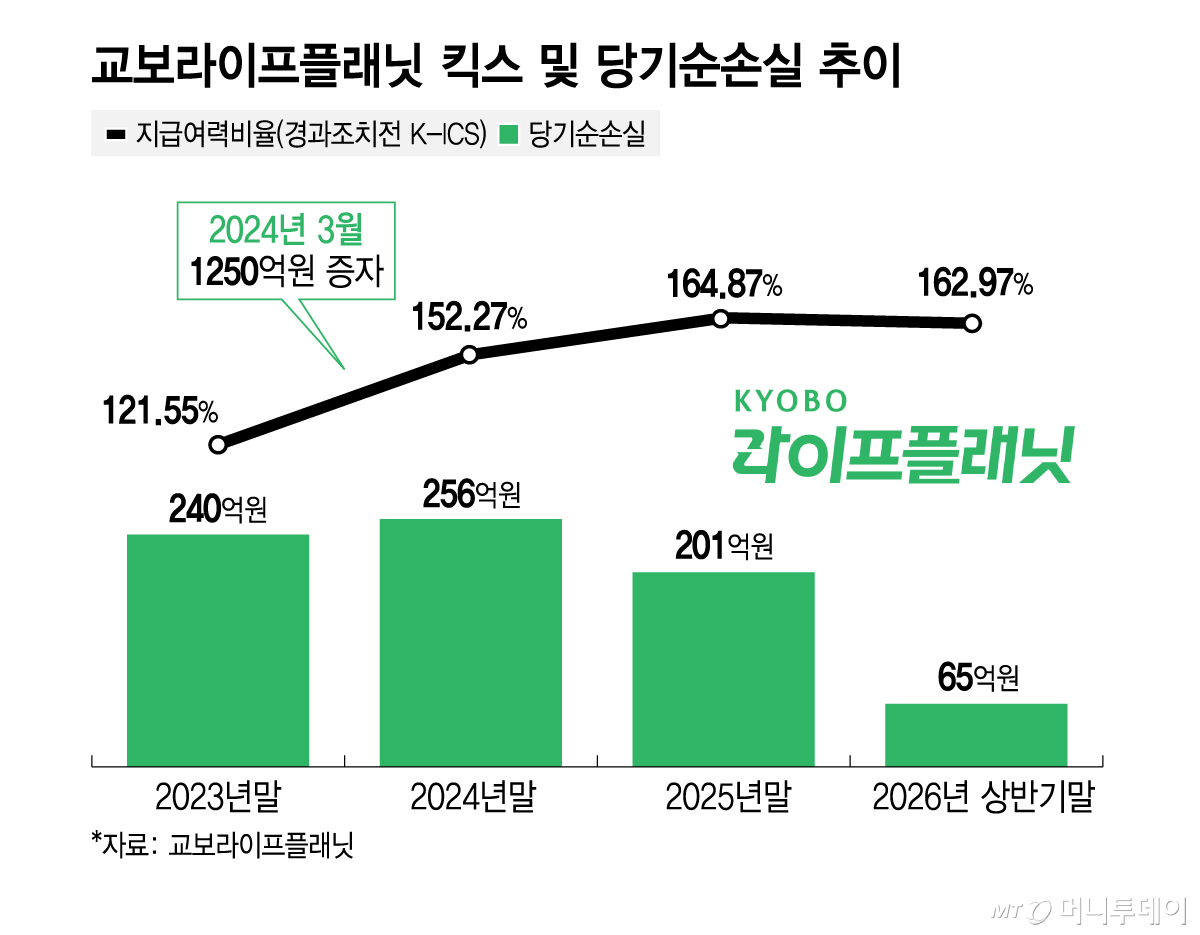
Kyobo Life plans to absorb and integrate Kyobo Life Planet (Kyobo Lapl), its digital life insurance subsidiary that has recorded losses since its inception, within this year. The integration with the parent company ultimately resulted from Kyobo Lapl's profitability limits and the burden of capital regulations.
According to the insurance industry on the 8th, Kyobo Life is considering a plan to absorb and integrate Kyobo Lapl. While specific details on the integration method and timing have not yet been finalized, internal discussions are focused on completing the integration within this year. Since Kyobo Life holds 100% of the shares, there appear to be no major obstacles to the integration itself.
Kyobo Lapl was established by Kyobo Life in 2013 as Korea's first fully digital life insurance company. It launched as a digital insurer selling insurance products primarily through online channels without sales agents or face-to-face sales organizations, gaining attention as a new growth model for the insurance industry.
However, since its launch, it has recorded net losses every year and has been labeled as Kyobo Life's "painful finger." While early on it highlighted advantages such as lower sales and management costs through online channels, it faced difficulties in securing profitability due to sustained marketing expenses required for initial customer acquisition and the burden of information technology (IT) investments needed for system construction and maintenance.
Kyobo Life has conducted seven capital increases totaling approximately 365 billion won to bolster Kyobo Lapl's capital over the years. The most recent capital increase occurred in March 2024 (125 billion won).
Despite Kyobo Life's continuous financial injections, Kyobo Lapl has failed to establish a stable profit base, forcing the parent company to continue bearing the capital burden. Consequently, Kyobo Life has been considering integrating with Kyobo Lapl rather than pursuing additional capital increases, aiming to improve efficiency in capital and management operations. In particular, the strengthening of basic capital regulations set to take effect next year is cited as a key factor behind the review of integration within this year. Indeed, last October, Carrot Insurance, a digital insurer in a similar situation to Kyobo Lapl, was absorbed into Hanwha Insurance.
Within the insurance industry, concerns have been raised that for small-scale online insurers like Kyobo Lapl, even minor fluctuations in profits or capital could significantly impact solvency indicators such as adequacy of capital. As a result, Kyobo Lapl, along with Shinhan EZ Insurance, requested regulatory authorities last June to ease capital regulations considering the unique characteristics of online insurers. The rationale was that online-based insurers lack face-to-face sales organizations, resulting in business models and cost structures different from traditional insurers; thus, applying current capital regulations uniformly would impose a relatively heavier burden. However, it is reported that financial regulators have not yet provided any specific response.
A Kyobo Life official stated, "We have made efforts to ensure Kyobo Lapl's independent survival through measures such as capital increases," adding, "While we are considering absorption and merger, no specific decisions have been finalized so far."

 in FINANCE
