

[For more diverse corporate information on the startup mentioned in this article, please visit Unicorn Factory's big data platform 'Data Lab'.]
"The core achievement was applying sound data, which had remained at the research level for decades, to actual industrial sites using AI and successfully acquiring customers."
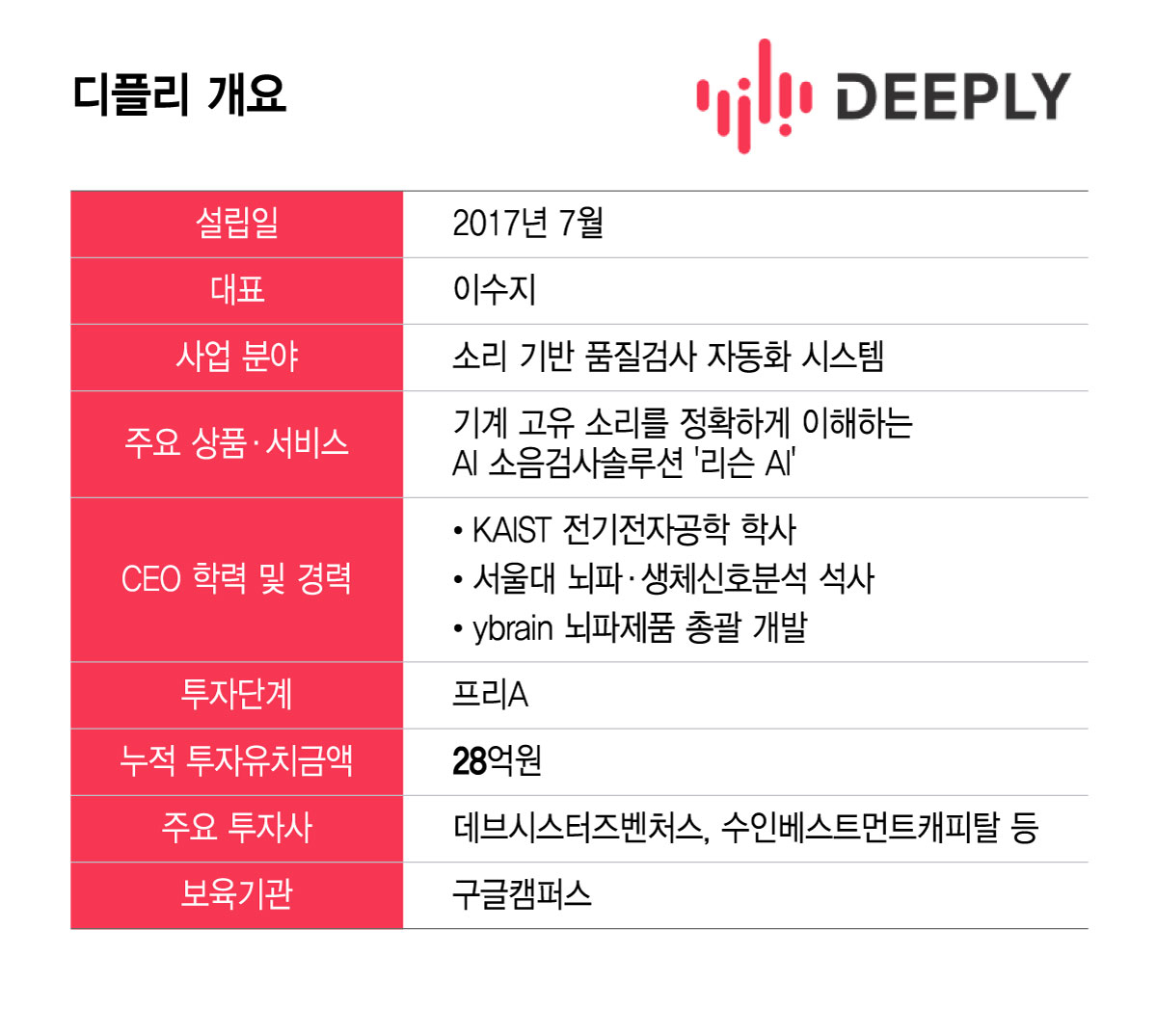
Research on utilizing sound data has been a long-term focus of government-funded research institutions and institutional investors. However, it remained limited to technology validation stages. Although meaningful results were achieved during the research phase, they fell short of the standards required by industrial sites. Then, a private startup broke through this barrier, prompting investors to act. The company in question is Defly, an industrial acoustic AI solution provider. Recently, Defly secured a pre-A investment totaling 2.5 billion won from Devsisters Ventures, Suin Bestment Capital, and Nautilus Investment.
Defly offers 'Listen AI,' which analyzes minute sound differences imperceptible to the human ear using AI for applications such as mechanical component quality inspection, fastening sound verification, and predictive maintenance. The company explains that it can accurately detect a faint abnormal signal of 1.77dB emitted by defective products even in environments with noise levels as high as 100 decibels (dB)—the same level experienced on subway platforms when trains arrive. A difference of 1.77dB is far smaller than the rustling sound of leaves (approximately 20dB) and is virtually undetectable by human ears.
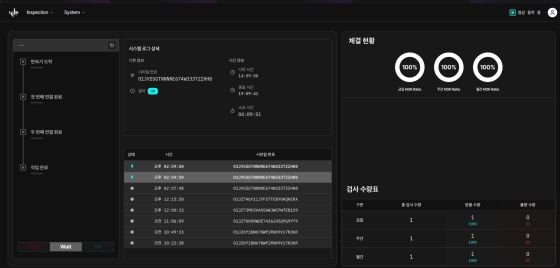
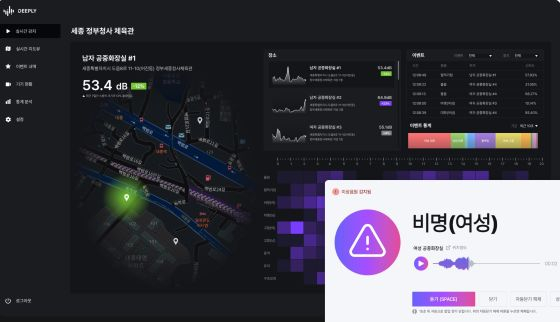
Lee, who led the investment from Devsisters Ventures, explained the rationale: "It is rare to find a startup handling sound data that has generated actual revenue in industrial settings." Defly is currently supplying or testing Listen AI-based products at over 20 locations, including the 'Sports and Cultural Facility Risk Detection Solution' installed in the gymnasium of the Sejong Government Complex, Company A's 'Fastening Sound Anomaly Analysis Solution,' and Company B's 'Construction Site Risk and Noise Detection Solution.'
The benefits of adopting Listen AI are also confirmed through data. According to Defly, defect detection accuracy reaches 96% to 99.6%. Inspection time has been reduced by up to 60%. The period required to achieve return on investment (ROI) after initial installation is approximately 6 to 9 months, which is another advantage as it places minimal financial burden on adopting companies.
Why has commercialization of sound data been difficult until now? Vice President Lee stated, "While video and image data benefit from abundant public datasets enabling general-purpose learning, sounds produced by specific machinery—such as motor joints, connector fastening (locking) sounds, and engine operation noises—lack public datasets and vary by machine, making general learning ineffective."
The challenge extends beyond data alone. He emphasized, "In noisy manufacturing environments, it is necessary to extract only the desired sounds, remove noise, and then derive meaningful indices from them. This cannot be solved through AI engineering alone; it requires expertise in signal processing as well." Defly addressed this by assembling a hybrid engineering team capable of handling both signal processing and AI simultaneously.
Traditionally, skilled workers in manufacturing sites perform 'auditory joint inspection,' listening to machine sounds to determine abnormalities. However, repeating such tasks in high-noise environments inevitably introduces subjective judgment, leading to unstable inspection yields. Vice President Lee visited actual client sites alongside Defly before the investment. He noted, "I witnessed firsthand that Listen AI is already substantially replacing roles previously held by employees responsible for sound-based quality diagnosis, as some were reassigned to other duties."
Beyond technical capabilities, Lee's determination, agile business judgment, and ability to communicate on-site were also key factors in gaining investor confidence. Defly was not originally focused on manufacturing quality inspection. In 2017, the company explored various fields such as childcare and healthcare based on sound analysis technology but pivoted in 2024 after discovering the scalability of its technology in analyzing facility noise at manufacturing sites. While the business direction changed, the company is praised for fully leveraging seven years of accumulated acoustic analysis technology assets.
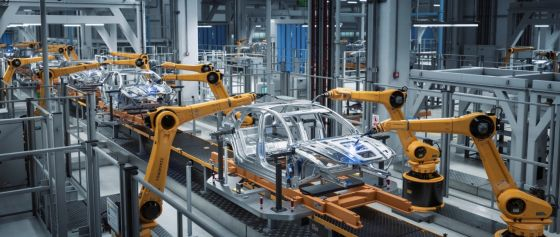
Confidence in long-term growth was also expressed. Vice President Lee referenced global initiatives toward 'dark factories (unmanned smart factories)' and the era of humanoids, stating, "In factories without humans where physical AI robots operate, a role for 'ears' to detect sound—complementing cameras ('eyes')—will become essential."
He added, "If Defly continues to accumulate industrial sound data from now on and understands the meaning behind that data, natural integration with robot companies will become possible." He further emphasized, "Even in the global market, few players have achieved meaningful results using sound data. Defly is well-positioned to play a leading role in this field."
Currently, Defly is pursuing overseas expansion targeting bearing manufacturers and automotive assembly lines in North America. It plans to fully enter the North American market by participating in 'Automate 2026' in Chicago, USA, on the 22nd of this month.
[MoneyToday Startup Media Platform Unicorn Factory]

 in FUTURE


