

[For more diverse corporate information on the startups mentioned in this article, please visit the Unicorn Factory big data platform 'Data Lab'.]
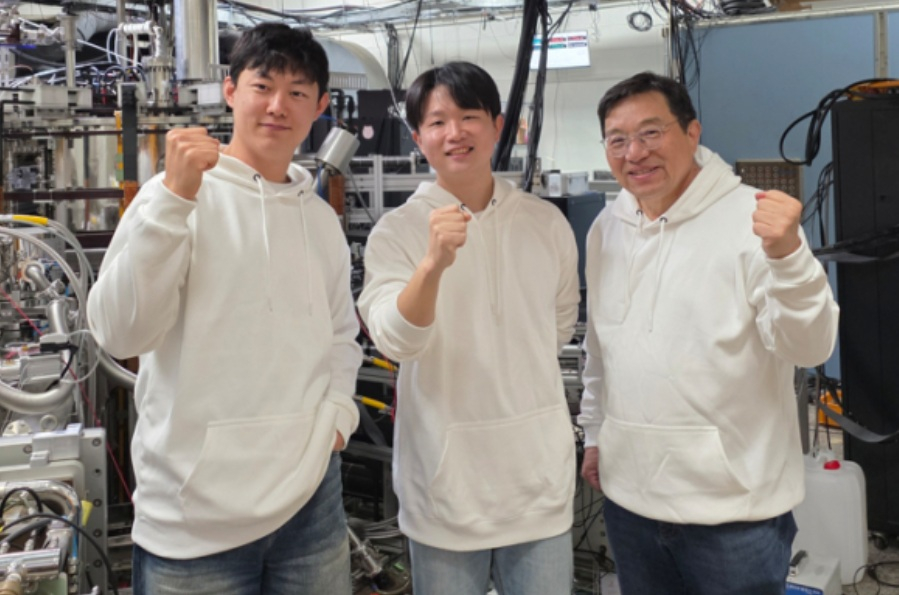
"Currently, global nuclear fusion companies are focusing on how high-performance plasma they can create. However, to become a power plant, it must stably produce electricity 24 hours a day. We aim to proactively solve the 'continuous operation' problem that we will inevitably face during commercialization."
Kim Tae-kyung, CEO of Eterna Fusion, recently made these remarks in an interview with MoneyToday's startup media platform, Unicorn Factory. Established last March, Eterna Fusion is a deep-tech startup developing 'continuous operation' technology for nuclear fusion power generation. Based on its proprietary technology, 'Tokamak Injection,' which continuously drives plasma current, the company is advancing the development of small, modular nuclear reactors. Recently, it secured approximately 2.3 billion won in seed funding from Bluepoint Partners, Seoul National University Technology Holdings, and Company K Partners.
Nuclear fusion power generation is a technology that implements on Earth the principle by which the sun produces energy. However, a power plant cannot rely solely on momentary high performance. To stably supply large-scale electricity, plasma must be maintained for extended periods to sustain power generation. Kim (CEO) stated, "The role expected of a power plant is a stable source that continuously supplies large amounts of electricity," adding, "If the nuclear reactor repeatedly turns off and on, it will be difficult to use as a reliable power source."
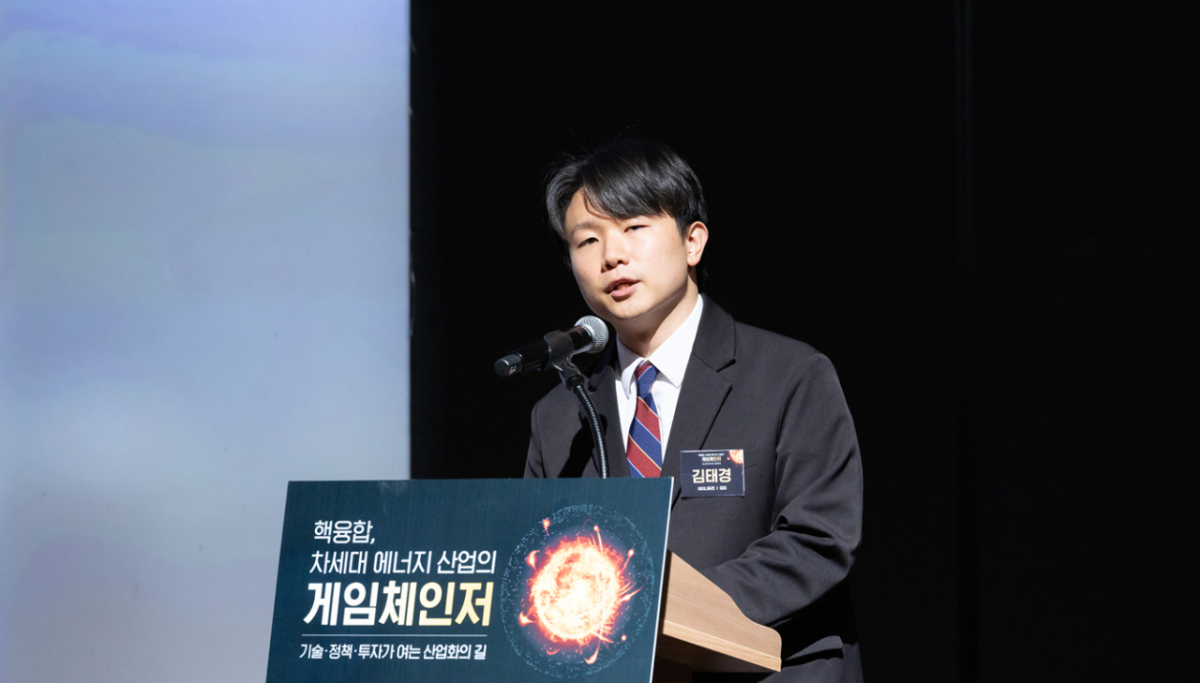
Eterna Fusion's differentiation lies in its focus on the continuous operation problem that will inevitably arise during future commercialization, while global companies concentrate on enhancing plasma performance. The core is maintaining the plasma current inside the tokamak continuously. Existing methods either have limitations in sustaining current for long periods or require complex external devices.
In contrast, Eterna Fusion's 'Tokamak Injection' technology continuously maintains internal current by repeatedly creating small plasmas and merging them with existing plasma. Kim (CEO) likened this to a spinning top. He explained, "If you keep creating and merging small tops into a large one, you can continuously supply the force that keeps it rotating," adding, "The key for plasma is also to maintain it by continuously creating small plasmas and merging them with existing ones."
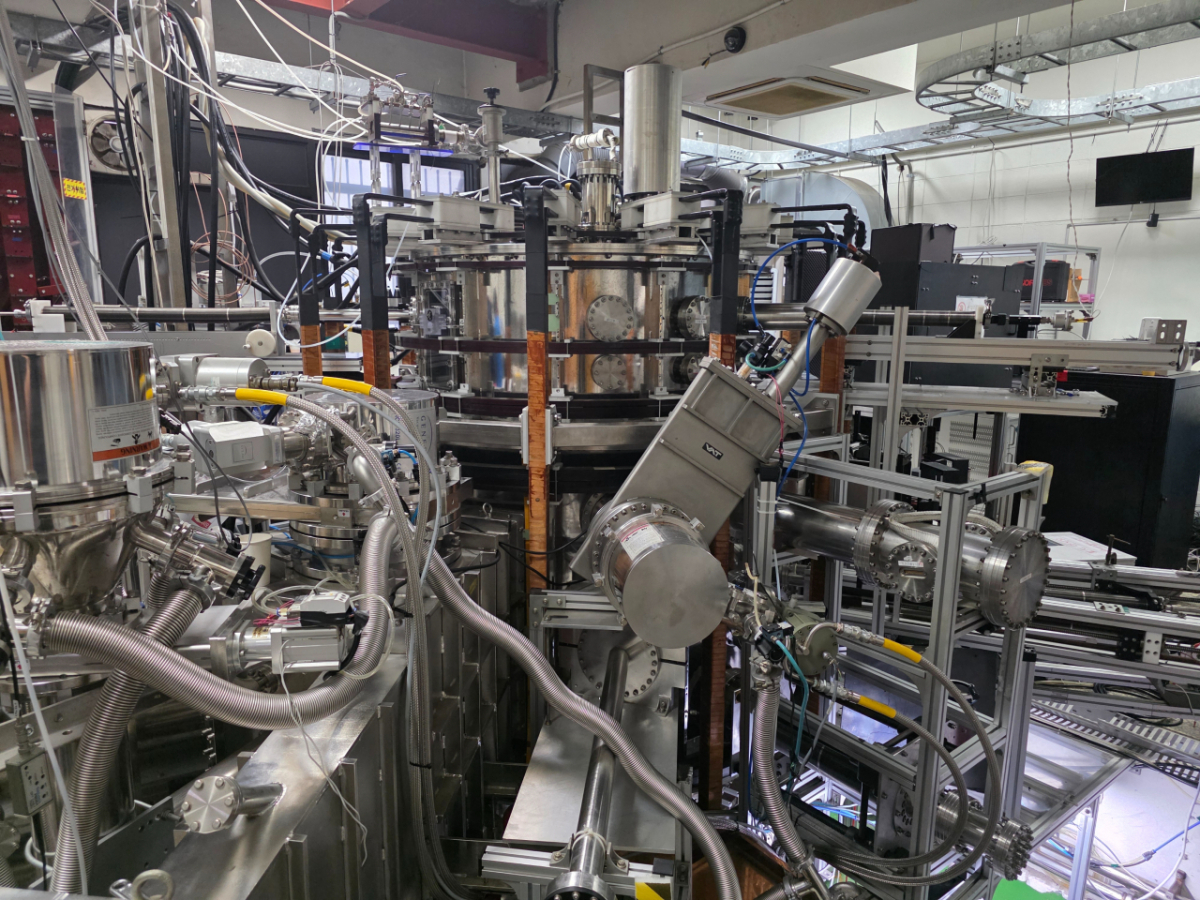
Based on this, the company is developing a small, simple, yet long-operable nuclear reactor called 'COSMOS.' This approach combines injection technology with spherical tokamak (ST) devices that can achieve high performance even in smaller units than conventional tokamaks. It has not yet achieved 24-hour continuous operation. Currently, it is building a proof-of-concept (PoC) device to implement the Tokamak Injection technology and plans to begin injecting small plasmas next year to verify whether existing plasma actually grows and sustains itself.
Kim (CEO) first became interested in nuclear fusion during middle school. The catalyst was encountering an explanation from the research team at the Korea Institute of Fusion Energy at a science event. He was captivated by its ability to produce large-scale electricity without being affected by weather, unlike solar and wind power, while simultaneously emitting no carbon.
In high school, he contacted the institute to visit nuclear fusion research facilities firsthand and joined a group tour from another school. Later, he majored in physics as an undergraduate at Seoul National University and studied atomic nuclear engineering in graduate school, continuing his nuclear fusion research. Notably, he participated in the development and operation of 'VEST,' the only spherical tokamak experimental device among domestic universities at Seoul National University, gaining experience in designing nuclear fusion devices and operating plasma.
Although his original goal was to become a researcher, his perspective changed after observing the rapid growth of private nuclear fusion companies centered in the U.S. following his graduate school enrollment. Kim (CEO) stated, "Government R&D can conduct stable and essential research, but it often requires long periods," adding, "Private R&D can move much more agilely and quickly, which I believe can accelerate nuclear fusion commercialization."
Another reason that led him to decide on entrepreneurship was concern over 'technology dependence.' Just as domestic smartphone companies have paid royalties to overseas firms holding core mobile communication patents, he judged that nuclear fusion could also become dependent on foreign technology if it seeks to secure foundational technologies after commercialization. Kim (CEO) remarked, "If we try to secure foundational technologies only after nuclear fusion becomes commercialized, it may already be too late," and added, "I believe we must now break free from a structure dependent on foreign technology."
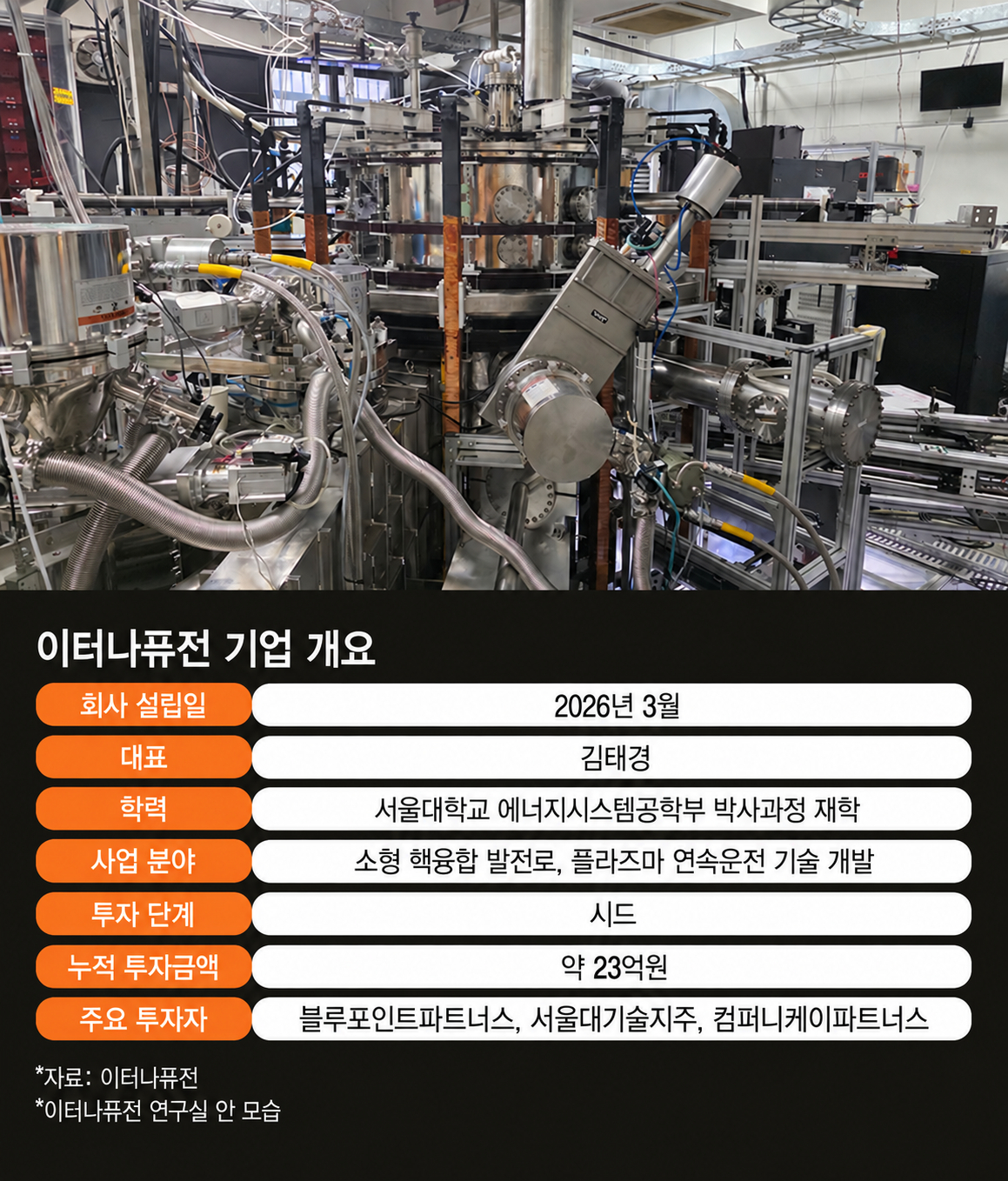
Eterna Fusion is embarking on phased verification with the goal of commercializing nuclear fusion power generation by 2037. First, it will verify the operating principle of Tokamak Injection by next year, then from 2028 onward, it will increase device scale and plasma performance to confirm applicability to actual nuclear reactors. After demonstrating high-performance plasma operation and electricity production, its goal is to build a commercial power plant capable of stably supplying hundreds of megawatts of power by 2037.
Given that Commonwealth Fusion Systems (CFS), a representative U.S. nuclear fusion startup that has already signed a power purchase agreement with Microsoft, is pursuing the construction of a commercial power plant in the early-to-mid 2030s, Eterna Fusion's commercialization timeline does not differ significantly from global leaders. Ultimately, its goal is to grow beyond merely selling nuclear reactors to becoming an energy company that directly builds power plants, generates electricity, and signs power supply contracts with customers. Especially with the spread of AI driving a surge in electricity demand for data centers and semiconductor factories, the importance of stable large-scale power supply capabilities is expected to increase.
Kim (CEO) stated, "While GPUs are important for running AI, ultimately there must be electricity to run the GPUs," adding, "Energy acquisition capability will also become a factor determining national and corporate competitiveness." He continued, "Our biggest goal is to build a Korean-type nuclear fusion power plant that can be used economically in our own unique way," and added, "We aim to contribute to solving global energy shortages and climate crises while developing technologies that support domestic industrial competitiveness and national energy security."
[MoneyToday startup media platform Unicorn Factory]

 in FUTURE


