

[For more diverse corporate information on the startup featured in this article, visit the Unicorn Factory big data platform 'Data Lab'.]

Korea's shipbuilding industry is at the world's top level, yet the field still relies heavily on manpower to operate. The process, from receiving plate steel—a key material for ships—to fabricating blocks and assembling them into complete vessels, requires human inspection at every step. Because the elegant curves of a ship are welded together stitch by stitch by skilled workers, it has been considered difficult to automatically assess process efficiency in the same way as conventional manufacturing industries that operate on conveyor belts.
Physical AI (artificial intelligence) startup Reops approached and decoded such irregular manufacturing processes through 'space.' It scans shipyard sites using LiDAR technology, typically employed in autonomous vehicles, to generate 3D data, then cross-references this with design drawings to verify whether the process is being operated correctly and how much progress has been made. Leveraging this technological capability, the company recently secured a Series A first round investment of 4 billion won.
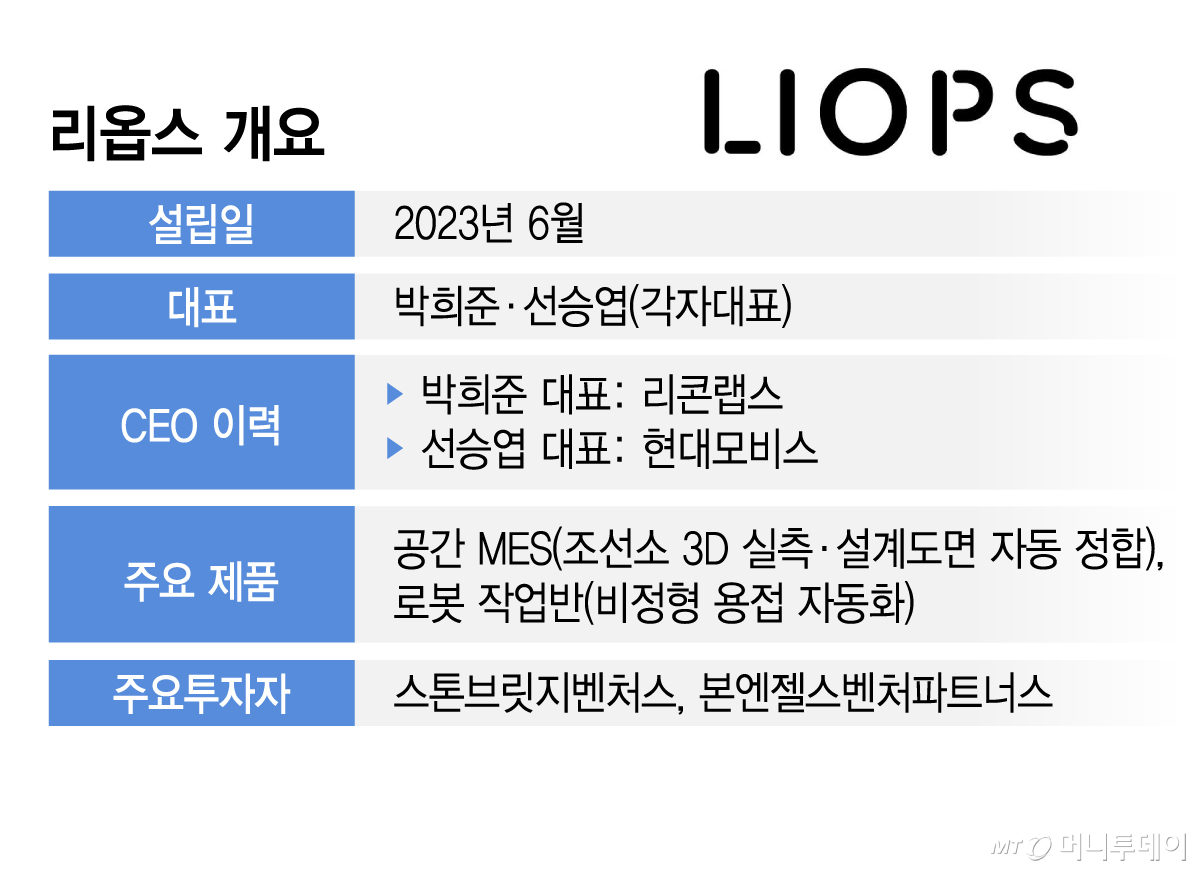
Jo Hyun-hoo, Senior Team Leader at Stonebridge Ventures, which led this investment round, explained the rationale behind the investment: "We have long recognized the on-site demand for AI solutions to support spatial MES (Manufacturing Execution Systems) in shipyards, a need shared by all so-called Big Three shipbuilders. Since Reops technically meets this requirement, orders are now coming from major shipbuilding companies."
Reops' 3D perception technology is led by co-CEO Sun Seung-young. Seon (CEO) previously achieved the world's No. 1 ranking in the 3D semantic segmentation category of the 'Waymo Open Dataset' competition, surpassing Waymo's own algorithm using driving data released by Google's autonomous driving subsidiary, Waymo. The company also independently developed an AI engine that is 3.7 times faster and has 8% less error than PointWorld, an AI model jointly created by Stanford University and NVIDIA.
Noh Ho-jung, Senior Analyst at Bon Angels, who participated in both the pre-Series A investment last year and this round, stated: "Despite severe labor shortages in shipbuilding and heavy industry sites, automation and intelligentization have been slow due to complex and irregular working environments. However, Reops demonstrated an approach to solving these issues through spatial intelligence." She added, "Thanks to the team's track record of achievements in 3D transformation and 3D segmentation—the foundation of this technology—paid PoC (Proof of Concept) with major corporations began at an early stage, leading to discussions on deployment and large-scale adoption."
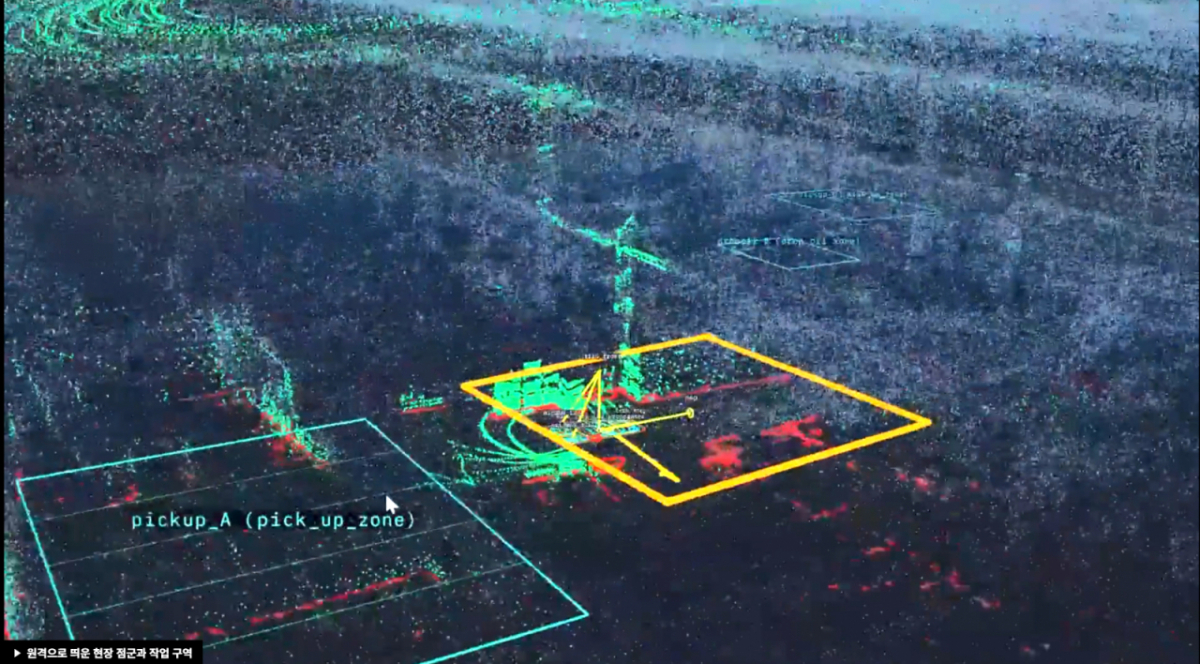
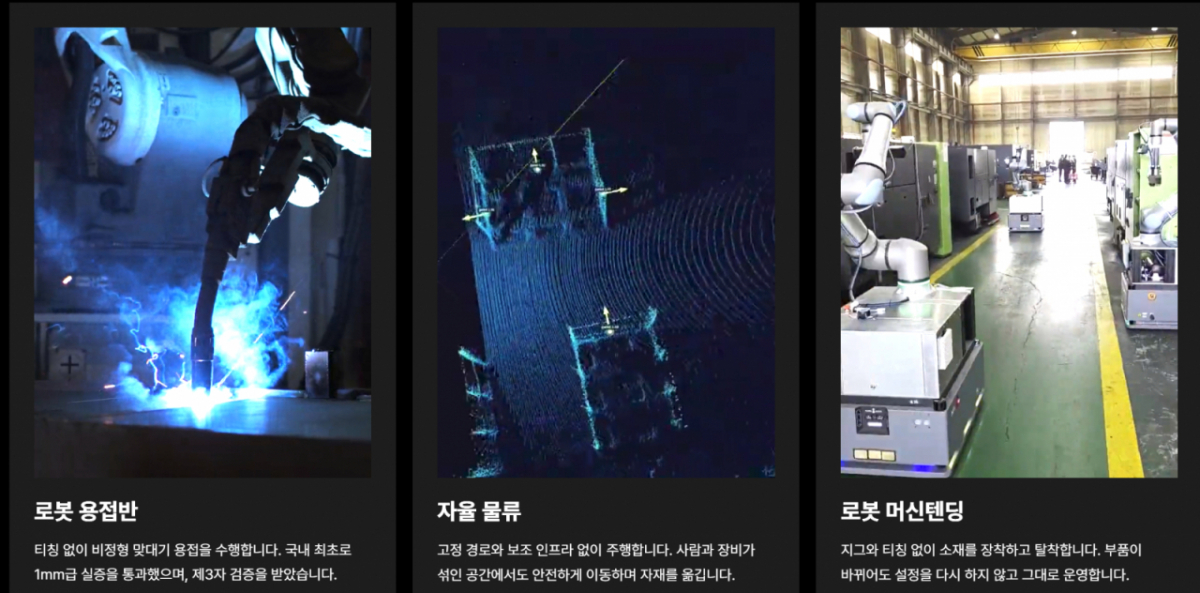
Reops plans to invest the funds secured this time in building its own testbed infrastructure for verifying spatial MES, as well as developing welding automation, outdoor autonomous driving robots, and autonomous forklifts. The aim is to proactively eliminate the risk of failure associated with technology adoption by repeatedly demonstrating thermal deformation and distortion in physical structures, outdoor driving environments, and 3D process scanning in one location before expanding from process inspection to actual welding. This is referred to as a 'robot work team.'
Jo Hyeon-hu (Team Lead) stated: "Reops' backbone technology is the LSM (Large Spatial Model), a spatial foundation model we developed in-house, so there is high potential for expansion when integrated with how robots are utilized." He added, "Reops is highly valued in shipbuilding sites because it covers not just hardware but also software."
Analyst Noh Ho-jung predicted: "The shipbuilding industry has had significant demand for automation because each block has a different shape and working conditions constantly change. However, the adoption of industrial robots so far has focused on standardized processes like those in the automotive and electronics sectors. If infrastructure that understands the entire site by approaching it through space, like Reops, is laid first, the introduction cost and time for robots and solutions built on top will decrease. Furthermore, when combined with data and references accumulated in actual shipyard and heavy industry sites, this will create a barrier to entry that latecomers find difficult to overcome in the short term."
In August, Reops was consecutively selected as a joint research and development institutional investor for two new projects under the Shipbuilding and Yangsan Industry Technology Development Project by the Korea Evaluation Institute of Industrial Technology (KEIT), an agency under the Ministry of Trade, Industry and Energy. The projects are led by HD Hyundai Samho, with total government support amounting to 28.4 billion won. The company also joined the TIPS Global Track, a technology startup support program by the Ministry of SMEs and Startups, and the NVIDIA Inception Program. It was selected as a collaboration partner by Italy's Fincantieri, Europe's largest shipbuilder, and is currently pushing for local market entry. Additionally, Reops was selected for '2025 SNU Big Scale-up,' an innovation startup acceleration program by Seoul National University.
Reops is also building a 'pay-per-use' revenue model. Unlike traditional equipment vendors that generate one-off sales by selling expensive hardware, this method charges based on the actual amount of work completed by robots. Analyst Noh viewed: "As more sites are equipped with Reops' spatial infrastructure, there is a high possibility of transitioning from current project-based supply to a structure involving recurring billing based on platform usage and workload." Team Leader Jo predicted: "If Reops builds a pay-per-use business model by integrating software and hardware, it will have a corporate valuation far exceeding its current stage valuation."
Co-CEO Park Hee-jun of Reops stated: "What we define as physical AI is robots implementing in real physical industrial sites the versatility that ChatGPT has demonstrated in the language domain." He added, "Having completed verification first in shipyards—the most irregular and high-difficulty environment—we will expand our scope to automotive parts and machine processing factories to become a global company that sells completed work results rather than equipment."
[MoneyToday startup media platform Unicorn Factory]

 in FUTURE


