

![[Seoul=NEWSIS] Samsung Electronics announced on the 12th that it has begun shipping the industry's highest-performance HBM4 to Yangsan for the first time in the world. This product proactively adopted the most advanced process node 1c DRAM (6th generation, around 10 nanometers), securing stable yields from the initial Yangsan production phase without redesign and achieving performance at the industry's highest level. (Photo=Provided by Samsung Electronics) February 12, 2026. photo@newsis.com *Resale and DB prohibited /Photo=Ryu Hyun-ju](https://thumb.mt.co.kr/cdn-cgi/image/f=avif/21/2026/08/2026080614030820066_1.jpg)
The cost burden for GPU manufacturers adopting HBM4 (6th-generation high-bandwidth memory) is expected to nearly double compared to previous generations. However, with expanded AI investment, it is anticipated that GPU manufacturers will be able to pass on the increased costs to product prices, keeping the average selling price (ASP) of HBM4 at a robust level. The strong performance streak of Samsung Electronics and SK Hynix, key suppliers of HBM4, is also expected to continue.
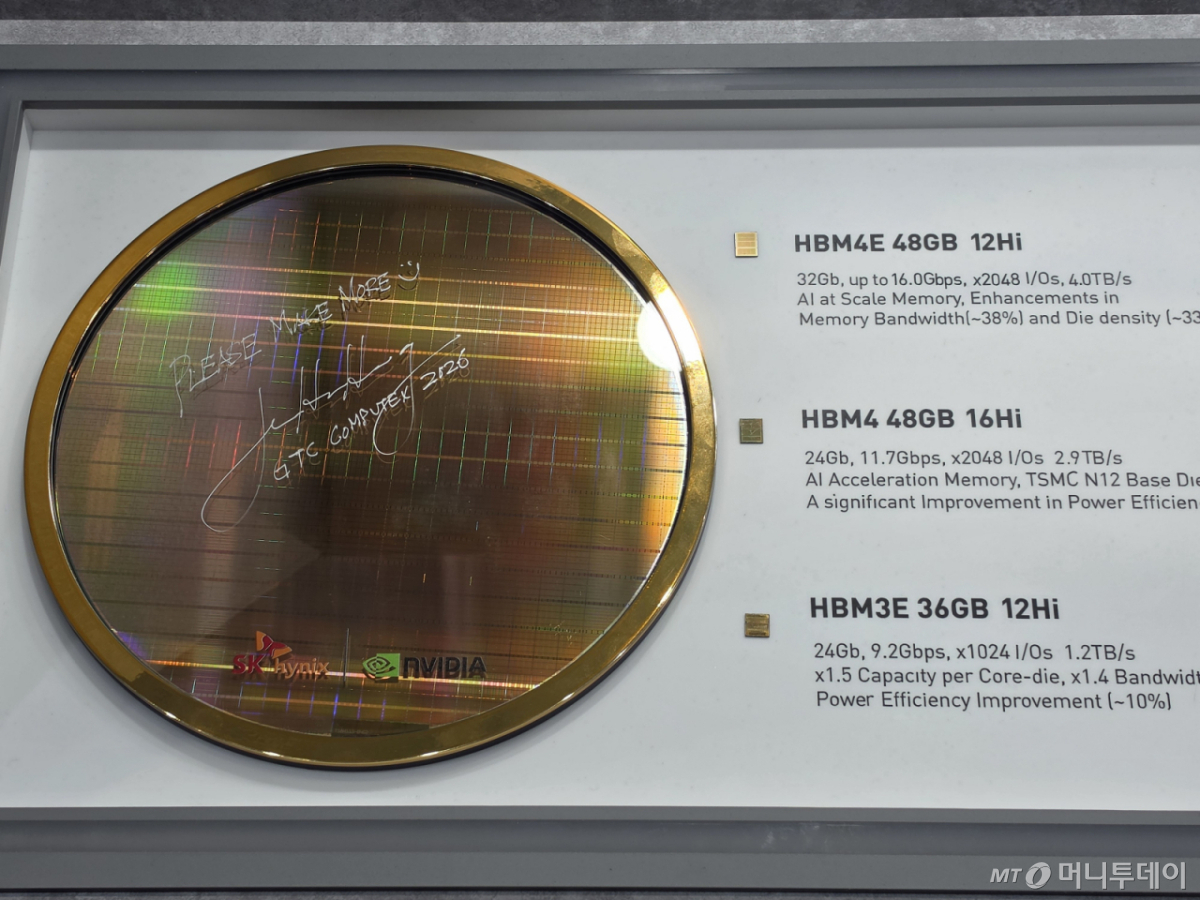
According to industry sources on the 6th, Fubon Research, an institutional investor under Taiwan's Fubon Securities, recently analyzed in a report that the cost of HBM4 used in Nvidia GPU manufacturing will rise to $31–$32 per gigabyte (GB). Considering that the cost for HBM3E (5th generation) was $17–$18 per GB, this represents an approximate doubling. This figure estimates the HBM cost reflected in the bill of materials (BOM) for GPU manufacturing, not the contract price with memory semiconductor manufacturers. In particular, HBM4 costs for GPU and custom ASIC manufacturers other than Nvidia are predicted to reach $35–$36 per GB.
As a result, the transition from HBM3E to HBM4 will inevitably increase the HBM cost burden on GPU manufacturers. However, with AI investment expanding centered around hyperscalers (large-scale data center operators), GPU manufacturers will be able to reflect rising costs in product prices. In fact, major hyperscalers' AI investment scale is estimated to exceed 1 trillion won (approximately 1,417 trillion won) next year.
Fubon Research forecasted that Nvidia's next-generation GPU, "Rubin," will see its unit price rise to the range of $78,000–$80,000 while maintaining a gross profit margin of 75%–80%. This is interpreted as meaning GPU manufacturers have room to pass on increased HBM costs to product prices. For memory manufacturers, this creates an environment where HBM4 ASP can remain robust. Additionally, limited supply conditions are cited as a factor supporting ASP.
In particular, with AMD and Google announcing the launch of GPUs and ASICs equipped with HBM4, the number of HBM4 demand sources is expected to grow rapidly. Global investment bank Morgan Stanley expects that HBM demand embedded in GPUs and ASICs next year will increase by more than 60% compared to this year on a bit growth basis.
The performance improvement trend for Samsung Electronics and SK Hynix, key suppliers of HBM4, is expected to accelerate further. Kim Jae-jun, Vice President of Samsung Electronics' Memory Business Division, recently stated during the second-quarter earnings conference call that "HBM4 sales in the second half of this year will comfortably exceed 60% of total HBM sales." Kim Ki-tae, who handles HBM Sales & Marketing at SK Hynix, also said, "In the second half, HBM4 volumes will expand significantly and shipments of 1c (6th generation, around 10 nanometers) DRAM will increase, positively contributing to ASP, further strengthening performance improvements in the second half."
Such expectations are also reflected in earnings forecasts. According to financial information provider F&Guide, the consensus estimate for the annual operating profit of Samsung Electronics and SK Hynix this year is 657 trillion 505.3 billion won. By 2027, it is projected to expand to 941 trillion 803.3 billion won. An industry official stated, "HBM4 prices are higher than existing HBM3E, but due to expanded AI investment, customers' capacity to absorb these costs is also increasing," adding, "The profit improvement trend of memory manufacturers will continue for some time."

 in INDUSTRY

