

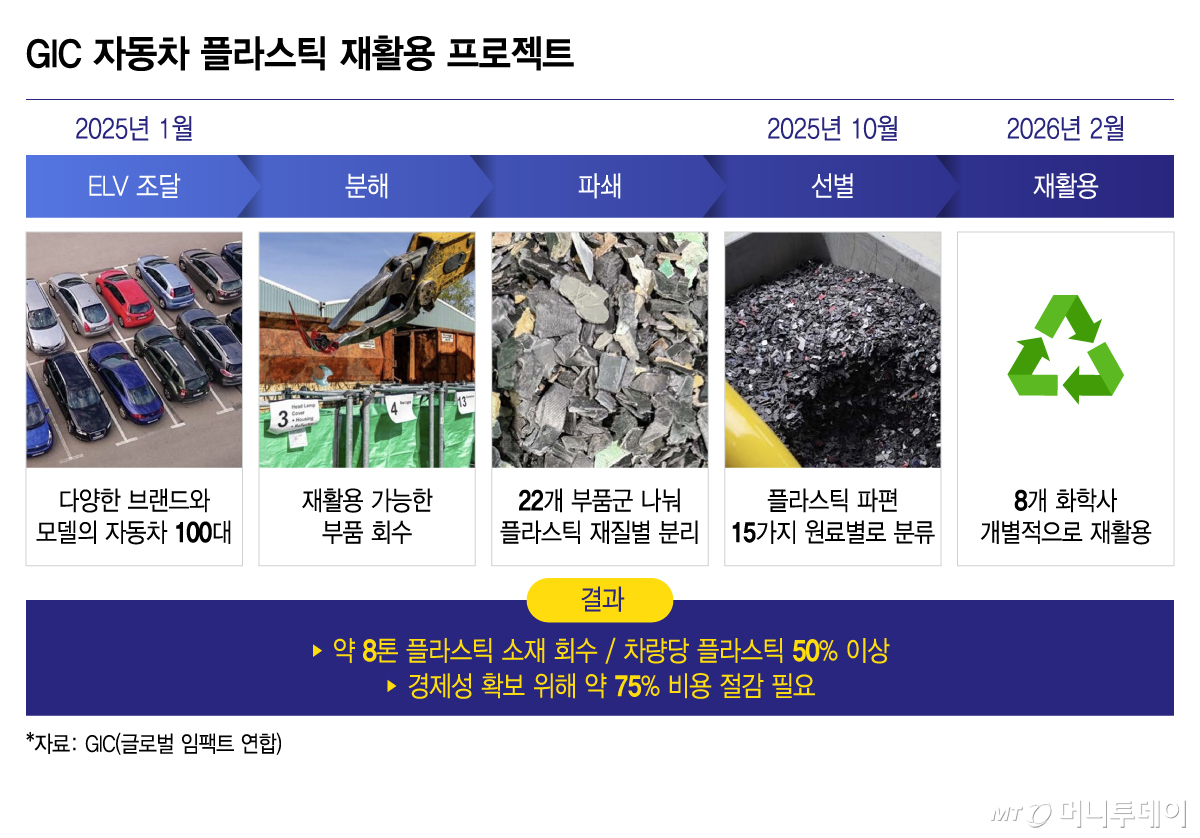
A consortium known as GIC (Global Impact Coalition), comprising leading global chemical companies including BASF, LG Chem, Mitsubishi Chemical, SABIC, and Suez, has conducted an intriguing project over the past year. The experiment aimed to determine how much plastic used in automobiles can be recycled. These competitors joined forces to commercialize end-of-life vehicle plastics, which are discarded in massive quantities annually.
A total of 100 end-of-life vehicles from various brands and models were utilized in this project. GIC recovered 8 tons of plastic materials from components such as bumpers, seats, and headlamps across these vehicles. On a per-vehicle basis, this accounts for roughly half of the total plastic content. The recovered plastics are expected to be transformed into approximately 15 types of raw materials, including PE (polyethylene) and PP (polypropylene), through chemical recycling processes.
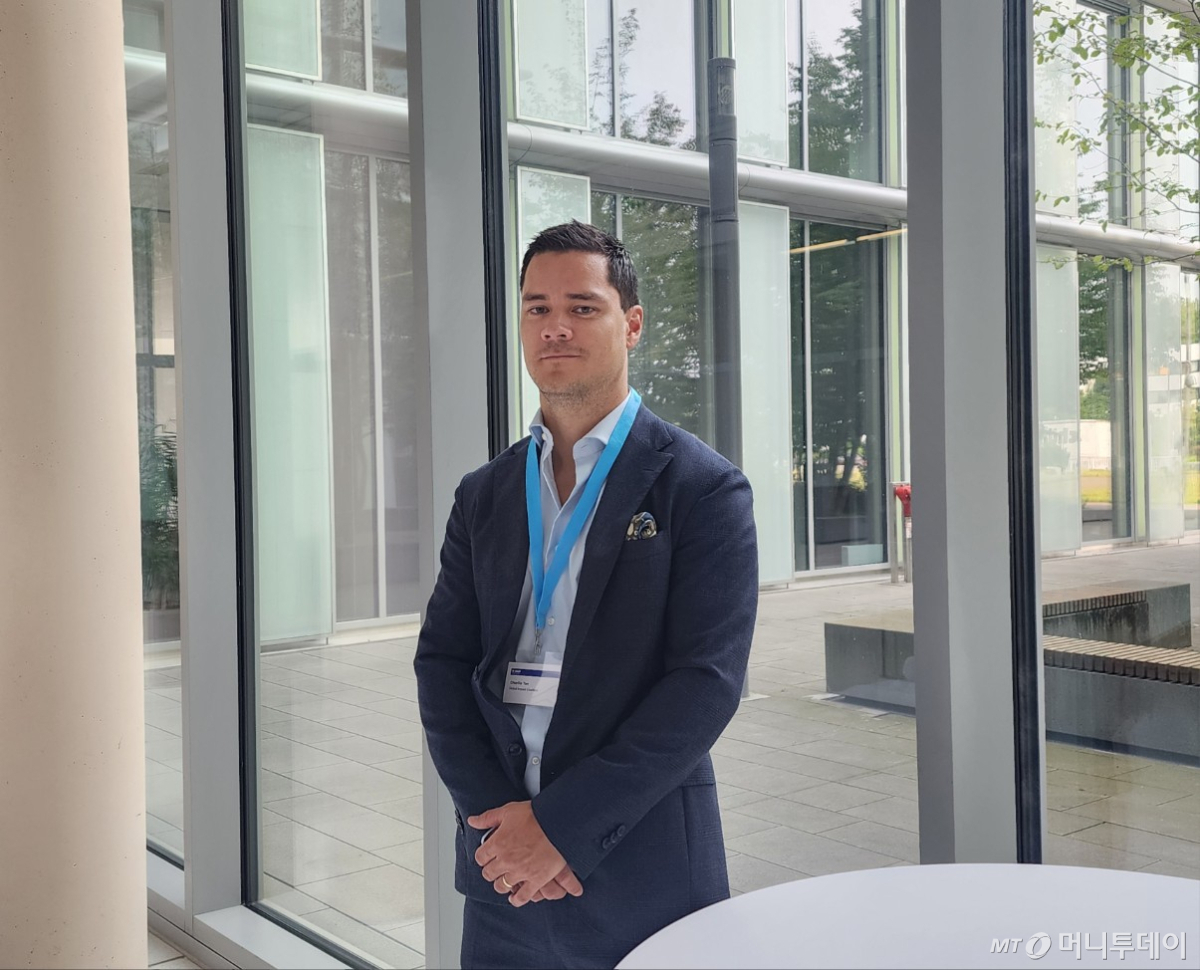
Based on these results, GIC evaluated that the technical foundation for recycling automotive plastics is already sufficiently established. Charlie Tan, CEO of GIC, stated, "The most encouraging finding is that our technological capabilities are far ahead of public perception," emphasizing that they have demonstrated the feasibility of a 'closed loop' where plastics recovered from end-of-life vehicles can be reused as materials for new automobiles. The challenge lies in cost. To ensure economic viability for automotive plastic recycling, costs must be reduced by more than 75% compared to current levels.
However, GIC maintains that the cost issue can also be resolved. Once a recycling plastic ecosystem reaches a certain level and cross-industry cooperation expands, costs can be significantly lowered. For instance, if vehicle manufacturers design cars to facilitate easier plastic recovery from end-of-life vehicles and expand automation in dismantling and sorting processes, labor costs can be reduced. Securing stable volumes of recyclable materials to achieve economies of scale could also improve processing efficiency. GIC further explained that sufficient demand must exist within the recycling market. When companies gain confidence in the existence of a stable market for recycled materials, they will actively invest in the infrastructure required for cost reduction.
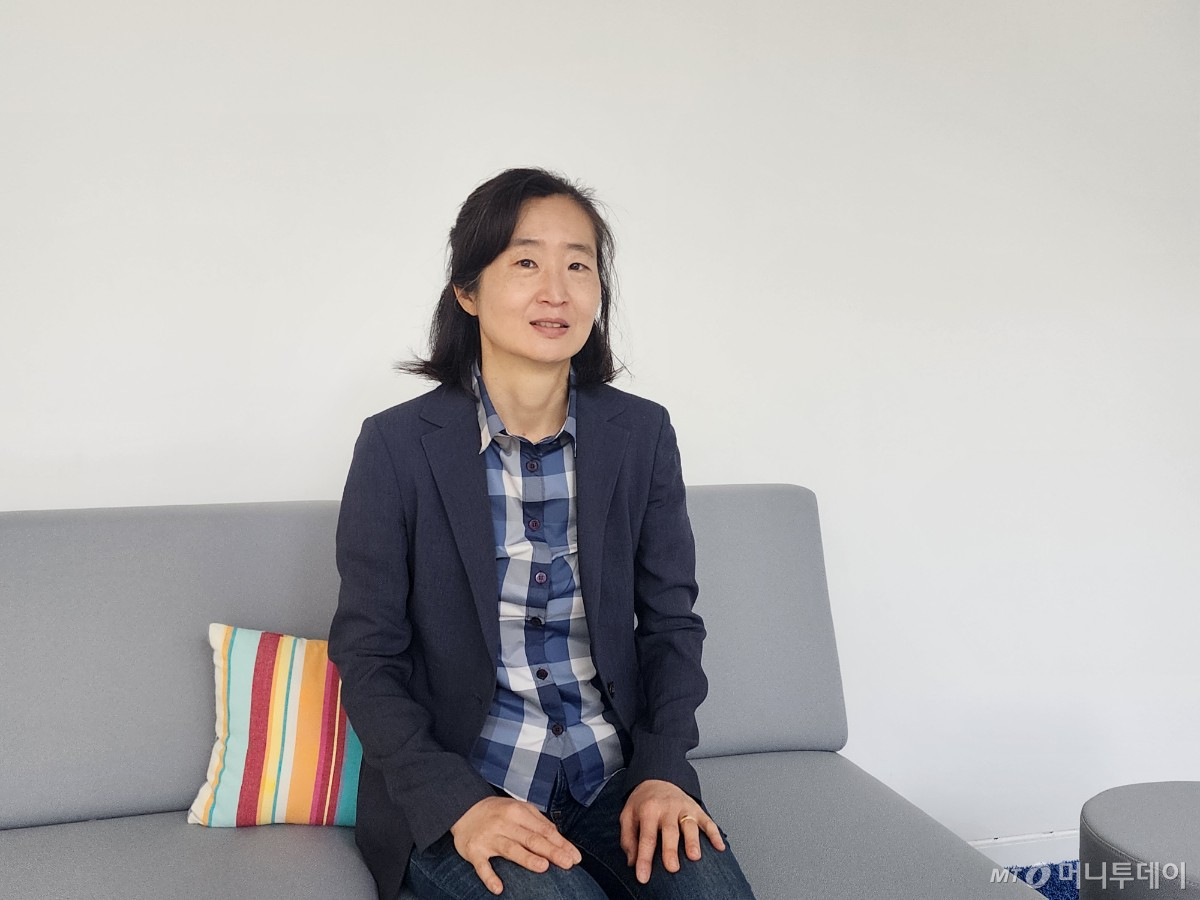
Choi Nok-young, a leader at BASF who participated in the project, agreed with this perspective. Leader Choi noted, "The biggest obstacle I perceived was the lack of experience among companies needed to build a circular ecosystem collaborating with one another," adding that "cooperation is essential to establish a new ecosystem." BASF is researching various recycling technologies, including gasification, depolymerization, and solvent-based recycling, in partnership with relevant partner companies. It is also broadening its understanding of sorting and classification technologies suitable for both existing and future end-of-life vehicles.
Based on the technical validation results achieved over the past year, GIC commenced commercial verification starting in April. Global automakers such as Valeo and Jaguar Land Rover have also newly joined this project. Over the next year, GIC plans to identify necessary changes for large-scale commercialization with partners across the entire value chain, develop relevant material specifications, and create concrete roadmaps that companies can practically implement.
CEO Tan remarked, "I believe both industry and government must play crucial roles," suggesting that "the best outcomes will be achieved when the government provides a clear framework and industries collaborate to solve practical challenges."

 in INDUSTRY


