

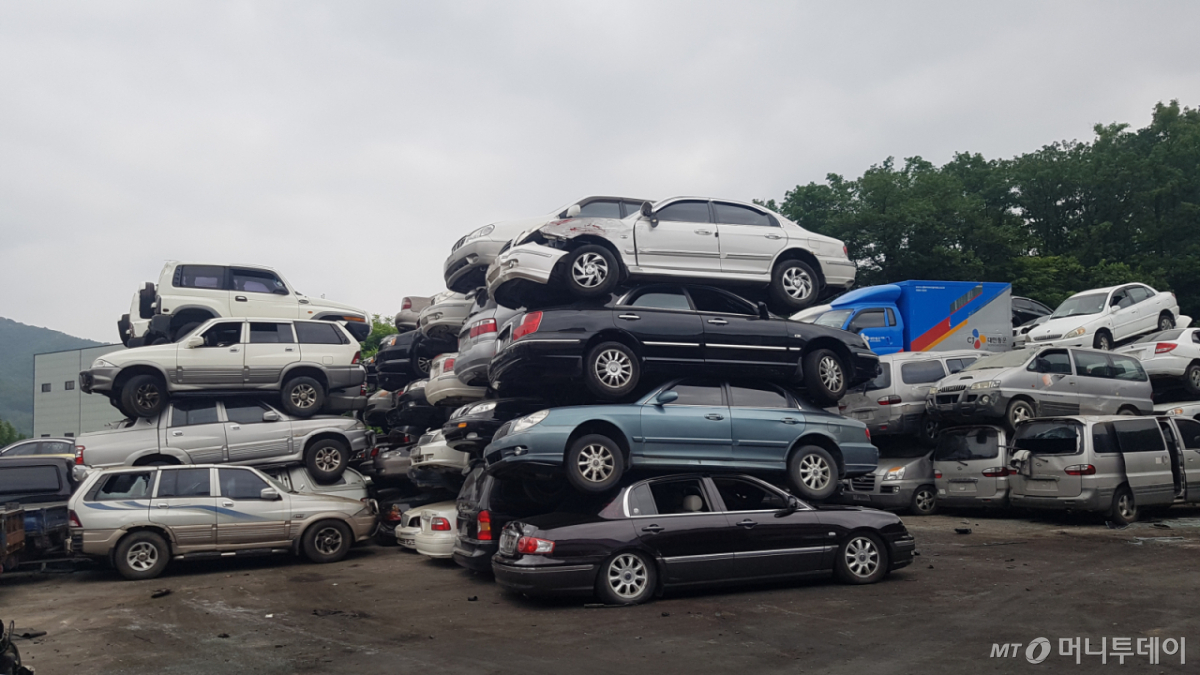
Waste cars, composed of steel, aluminum, various plastics, and chemical products, are themselves a treasure trove of resources. The problem is that resource recovery through scrapping has not been properly carried out so far. It is understood that annually 800,000 tons of plastic from waste cars in Europe alone are classified as trash and incinerated or landfilled.
Against this backdrop, moves to mandate recycling rates are being observed. The EU (European Union) has mandated that after 2032, 15% of plastics used in new vehicles must be made from recycled raw materials. After 2036, this ratio will surge to 25%. At least 20% of this must be satisfied with plastics derived from vehicle parts removed during scrapping or the usage phase.
For South Korea, which is both a resource-poor nation and an automobile exporter, there is no choice but to turn attention to waste car Lisa Ecycle (recycling). Failure to properly implement the re-resourceification of waste cars would not only result in the massive waste of resources but also make it difficult to sell automobiles in overseas markets. In particular, recycling material regulations in Europe and other regions are interpreted as trade barriers targeting China. Considering the reality of Korean manufacturing strengthening its role in a de-China value chain, this is an unavoidable path to take.
Since the inauguration of the Lee Jae-myung administration, the Ministry of Climate, Energy and Environment has been pushing hard on waste car Lisa Ecycle. The Ministry of Climate, Energy and Environment identified waste cars as one of the four key items in the 'K-Circular Economy Re-born Project'. Through this, it aims to build an ecosystem where scrap yards, pre-processing companies, material companies, parts manufacturers, and vehicle assemblers collaborate. According to the government, major automakers including Hyundai Motor are constructing cooperation networks with over 120 major scrap yards nationwide and are conducting demonstrations to recover plastics and other materials for reuse in automobile manufacturing.
The key challenge is building a value chain that proceeds from 'scrap acquisition → disassembly → shredding → sorting → raw material recovery → new vehicle deployment'. The goal is to increase the waste car resource recovery rate while simultaneously meeting overseas regulations to ensure no disruptions in automobile exports. The use of automated separation robots for waste cars is also being discussed. A Ministry of Climate, Energy and Environment official stated, "There are differing interests between the scrap industry and automobile manufacturers, requiring coordination," and added, "We plan to concretize collaboration measures around the second half of this year."

 in INDUSTRY
