

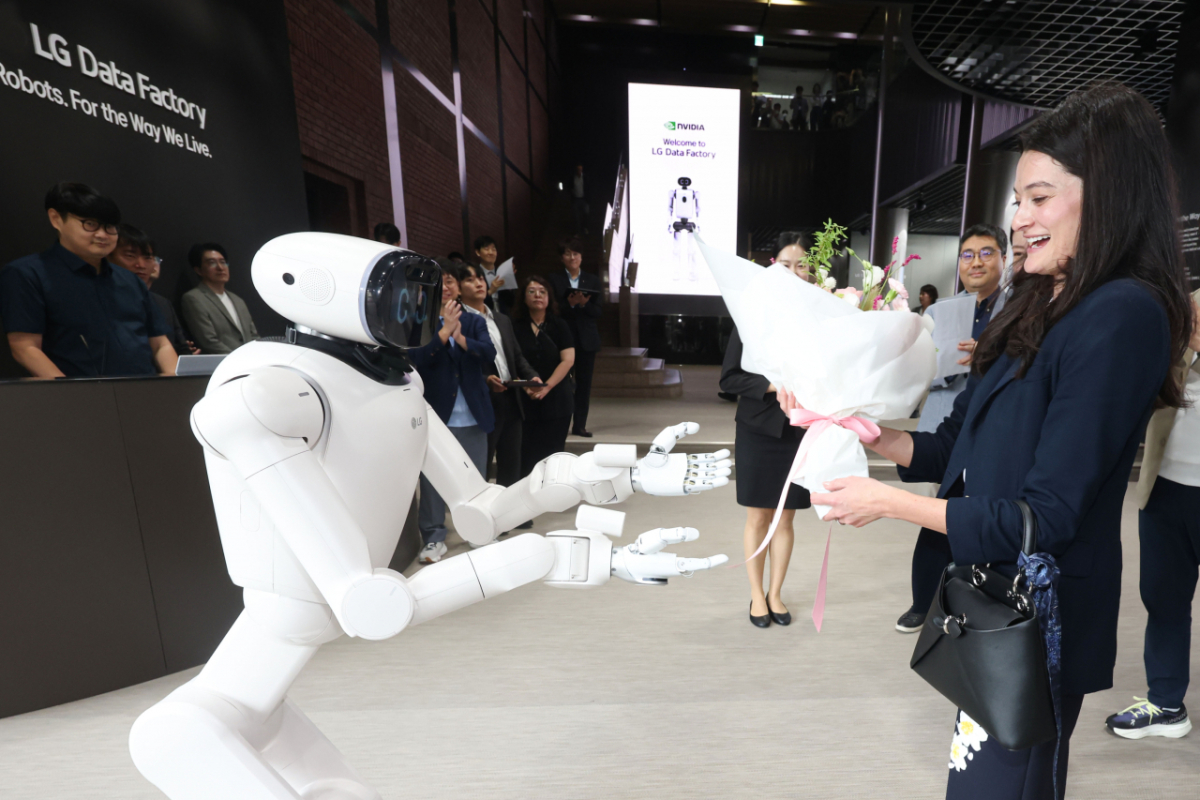
LG Electronics and NVIDIA are accelerating cooperation on Physical AI (Artificial Intelligence) centered around the "Data Factory," which will generate robot learning data in Yangsan. Just four days after signing an MOU at NVIDIA's headquarters in the United States, both companies met again at the site of LG Electronics' robot Data Factory construction to concretize collaboration and commercialization plans in the robotics field.
LG Electronics announced on the 18th that it invited key NVIDIA executives, including Madison Huang, Senior Vice President of Omniverse and Robotics Product Marketing at NVIDIA, to inspect the "LG Data Factory" currently under construction in Seoul Seocho-gu and review collaboration directions between the two companies. Attending the meeting were LG Group's top management, including Ryu Jae-cheol, CEO of LG Electronics; Hyun Shin-kyun, CEO of LG CNS; and Jung Soo-heon, Representative Director of LG Science Park.
Previously, LG and NVIDIA signed an MOU for cooperation in future strategic business areas at NVIDIA's headquarters in Santa Clara, California, USA, on the 13th (local time). The fact that they met again just four days later at the robot Data Factory construction site is interpreted as a reaffirmation of their determination to solidify the collaboration framework in the robotics field and fully launch commercialization beyond declarative cooperation.
Executives from both companies inspected the operational status of LG Electronics' Yangjae Data Factory on this day. The Yangjae Data Factory, which aims for full operation by the end of this year, has begun deploying "LG CLOiD," manufactured and verified by LG Electronics, to generate, collect, and learn data.
The Data Factory consists of spaces where robots learn various tasks and verify and refine collected data. LG CLOiD performs cleaning tasks in a space simulating a home environment and moves, loads, and assembles parts in a manufacturing environment mimicking the process at LG's laundry factory in Tennessee, USA. Robots are also used to collect data in LG CNS's logistics automation solution spaces and LG Innotek's robot hand learning areas. The data secured through these means is linked with NVIDIA's robotics solutions, undergoes augmentation and synthesis processes, and is processed into high-quality data required for robot learning.
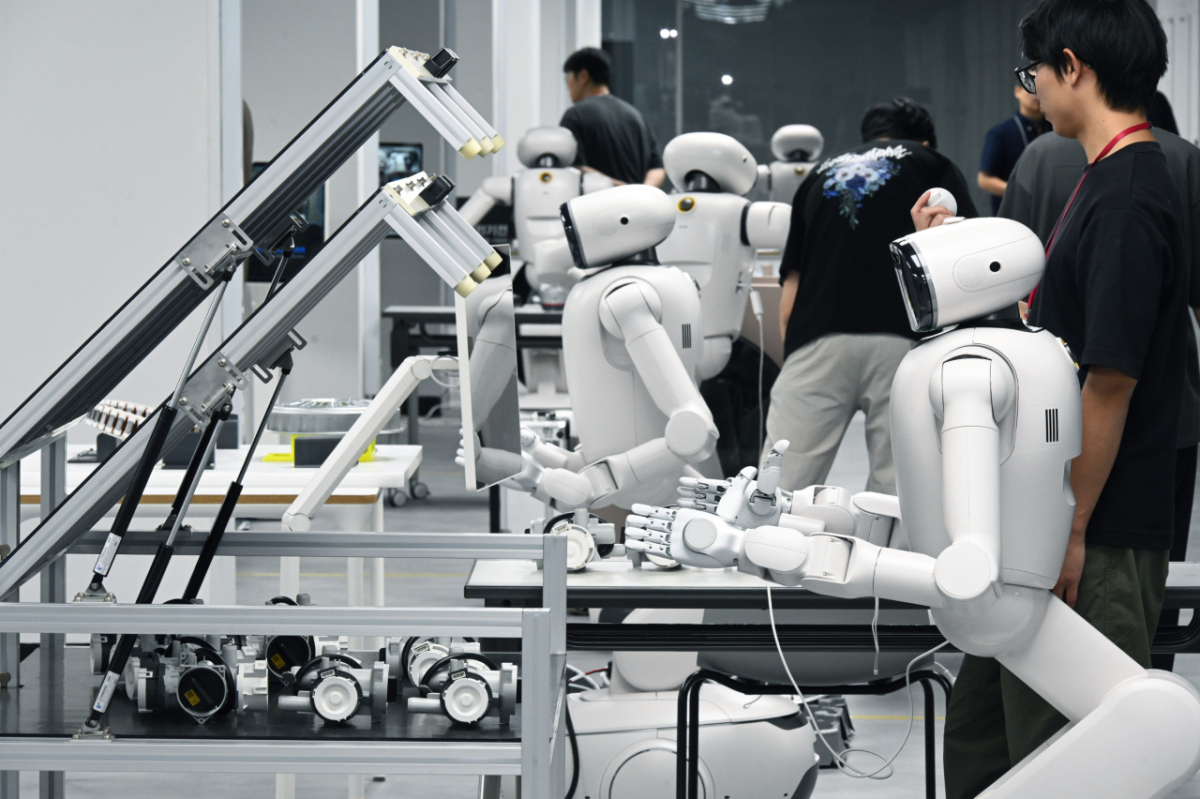
LG Electronics believes that the core competitiveness of Physical AI lies in establishing a "Data Flywheel" system that secures high-quality data and repeats learning and improvement. In particular, the company plans to build a differentiated data flywheel system by combining NVIDIA's robotics solutions with high-quality data accumulated over decades from manufacturing and logistics sites, including the know-how of skilled workers.
In particular, the Yangjae Data Factory serves as a forward base for robot learning data that not only collects physical learning data for robots but also expands, synthesizes, and amplifies data secured by LG Electronics through global manufacturing/logistics sites and home appliances. Technologies such as NVIDIA's Omniverse library, Cosmos Open World Model, and Isaac Open Robotics development platform are utilized for data collection and processing.
The Yangjae Data Factory will be built across four floors, from one basement level to three above-ground levels, with a total floor area of 10,000 square meters. LG Electronics plans to expand the number of robots deployed by the end of this year to several hundred units and continuously enhance its data learning system. By the end of this year, it is expected that learning data directly collected or generated through amplification and synthesis at the Yangjae Data Factory will reach a total of 100,000 hours, equivalent to approximately 12 years' worth of data. Based on this, LG Electronics aims to strengthen its robotics competitiveness by enhancing the "RFM (Robot Foundation Model)," which determines the performance of humanoid robots.
LG Electronics is designating this year as the inaugural year for the leap in its robotics business and is strengthening its business capabilities. Last month, it established a Robotics Business Center directly under the CEO to oversee the company's entire robotics business. This is to build an organizational foundation that can consistently pursue the overall robotics business, thereby improving execution and efficiency. LG Electronics aims to establish itself as a "Robotics Total Solution Provider" by leveraging its manufacturing and development capabilities for core components such as actuators and its robot LINE lineup covering industrial, commercial, and home use.
Ryu Jae-cheol, CEO of LG Electronics, stated, "Through the synergy based on 'One LG,' which gathers key capabilities within the group, and strategic collaboration with global partners, we will secure competitiveness in Physical AI and transform into a Robotics Total Solution Provider."

 in INDUSTRY

