

Samsung Electronics is targeting the niche of the AI memory semiconductor (hereinafter "memory") market by adding computing functions to LPDDR (low-power DRAM). It introduced 'LPDDR5X (7th Gen LPDDR)-PIM', which performs some computations directly in memory, as a new option for edge AI systems such as smartphones, PCs, and robots that find it difficult to use expensive HBM (high-bandwidth memory).
According to the semiconductor industry on the 26th, Samsung Electronics announced the structure and performance of LPDDR5X-PIM at the semiconductor academic event 'Hot Chips 2026' held at Stanford University in the U.S. on the 25th (local time), under the theme 'World's First LPDDR-Based PIM for AI Inference'.
PIM (Processing in Memory) is a technology that places computing devices inside memory to perform some computations directly. LPDDR5X-PIM won the 'Next-Generation Memory Award' at 'FMS 2026' held on the 5th, and its detailed structure and test results were revealed today.
In existing AI systems, data stored in DRAM is transferred to an NPU (neural processing unit) or GPU (graphics processing unit) for computation, and the results are then stored back in memory. If this process is repeated, a large amount of data flows between the computing device and memory, causing problems such as processing delays and increased power consumption.
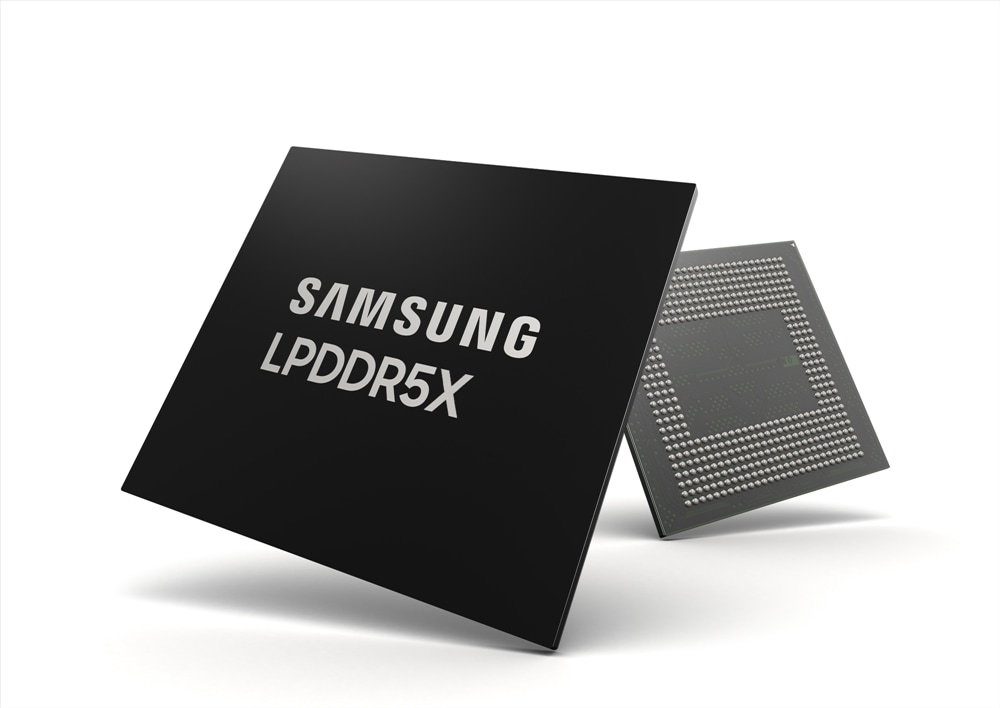
LPDDR5X-PIM reduces the amount of data movement by placing simple computing devices in each memory, thereby improving the speed and power efficiency of AI inference. Compared to existing devices, it can achieve effects similar to increased bandwidth by processing data internally without sending it outside the memory.
Performance improvements were also confirmed in tests using actual AI models. Samsung Electronics connected general LPDDR5X and LPDDR5X-PIM separately to its own 'Edge AI Accelerator SoC (System on Chip)' and ran Meta's 'Llama 3.1 8B' model. As a result of the test, the model execution time for the system applying LPDDR5X-PIM decreased from 12.3 seconds to 5.4 seconds, and tokens processed per second increased from 27 to 81.3, approximately tripled. This means the speed at which AI generates answers has become about three times faster.
LPDDR5X-PIM can serve as an alternative to HBM in the AI inference market where cost and power efficiency are critical. HBM stacks multiple DRAMs to achieve high bandwidth. While suitable for training large-scale AI models and high-performance inference for data centers, it is expensive and has drawbacks such as high power consumption and heat generation.
In particular, edge AI semiconductors that perform real-time AI inference directly on individual devices such as smartphones, PCs, automobiles, and robots are constrained by battery capacity, product size, and cooling performance, and are also sensitive to memory costs. Recently, HBM prices have risen so much that they account for 63% of the component cost of AI chips.
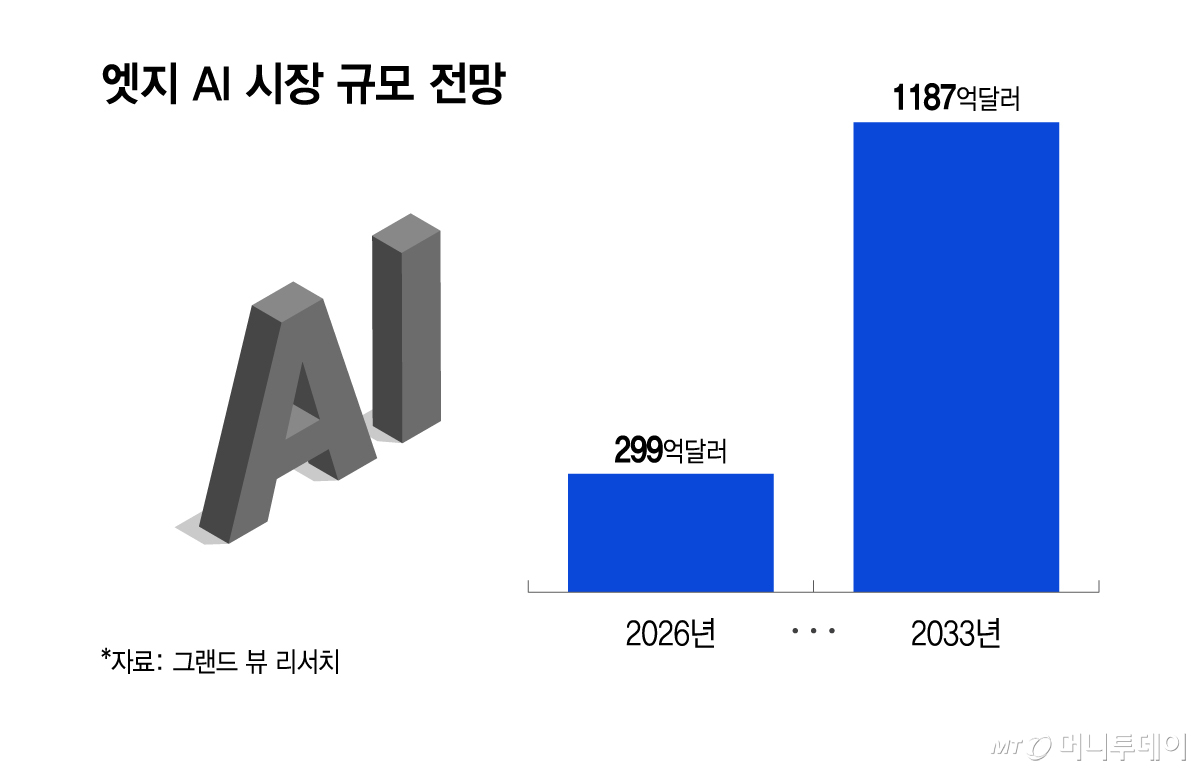
LPDDR is a memory focused on power efficiency. It is cheaper than HBM and has lower power consumption and packaging burdens. The market can be divided by using HBM for AI training requiring top performance, and applying LPDDR-PIM for edge AI inference where price and power efficiency are important. According to market research firm Grand View Research, the edge AI market size is expected to grow from $29.9 billion this year to $118.7 billion in 2033 (approximately 164 trillion won).
The business structure of holding both foundry (semiconductor contract manufacturing) and memory is also cited as a strength. It enables turnkey (all-in-one) order sales that combine foundry processes, AI semiconductor design ecosystems, and LPDDR. Discussions are already underway to support the development of edge AI semiconductors combining 8-nanometer foundry processes with LPDDR5X.
Hwang Ga-ram, a Samsung Electronics executive, stated at today's announcement that "HBM provides the bandwidth required for AI inference but has high power consumption and complex packaging," adding, "As a solution to address these issues, we are proposing a new memory form factor, LPDDR-PIM."

 in INDUSTRY

