

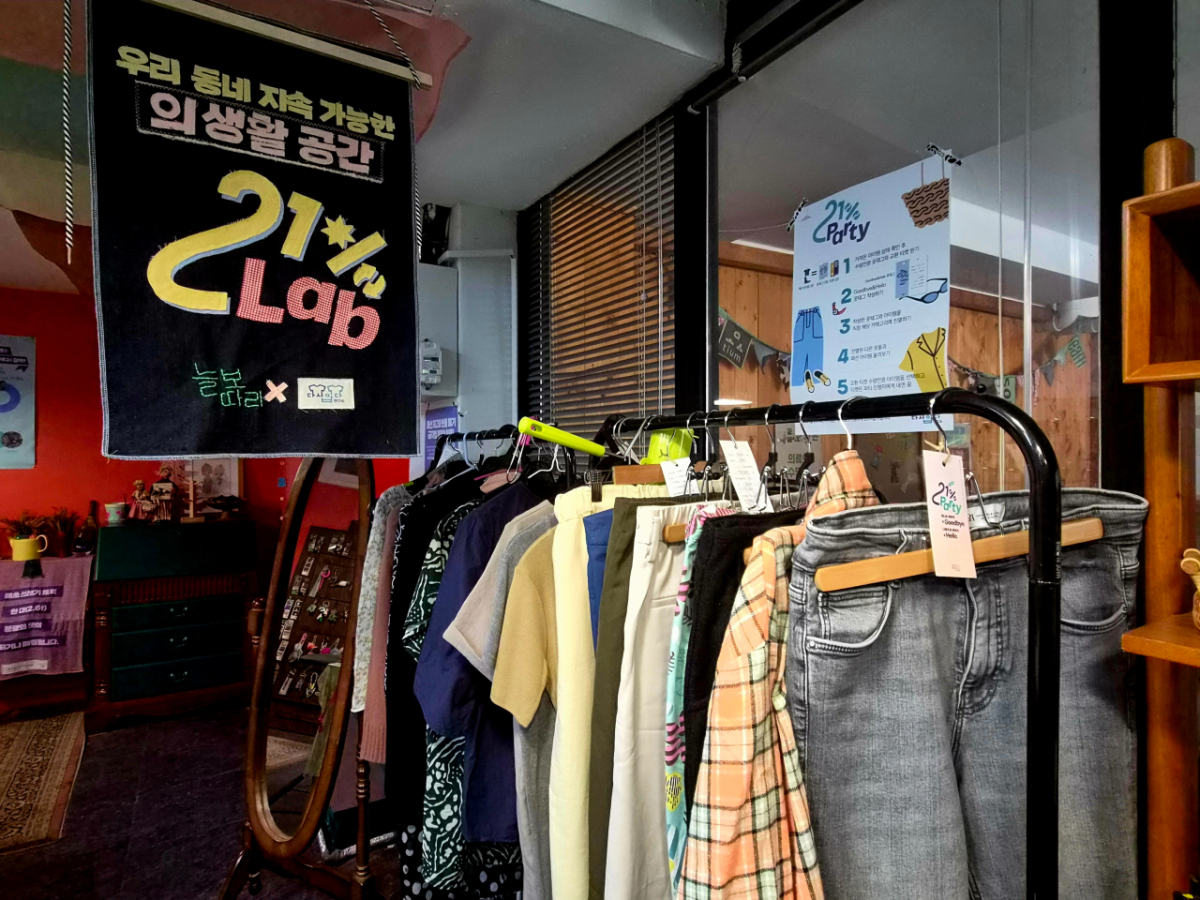
On the 25th, I visited an alley on Yeonhui-ro 4-gil in Seodaemun-gu, Seoul. Stepping into a shop with a small sign reading "Neulbottari," I saw shirts and jeans hanging neatly on one side of a rack. Instead of price tags, each garment bore a "Story of the Garment" written by its previous owner—a card detailing when and why it was bought, along with memories associated with the item.
Here, clothes are not bought or sold. When you bring clothes you no longer wear, write a card, and hang them on the rack, you receive one exchange ticket per outfit. With this ticket, you can select clothes you like at Neulbottari and other locations. This is not a donation model where you simply give away clothes; it is a "one-on-one exchange" system where you swap items for others of equal value.
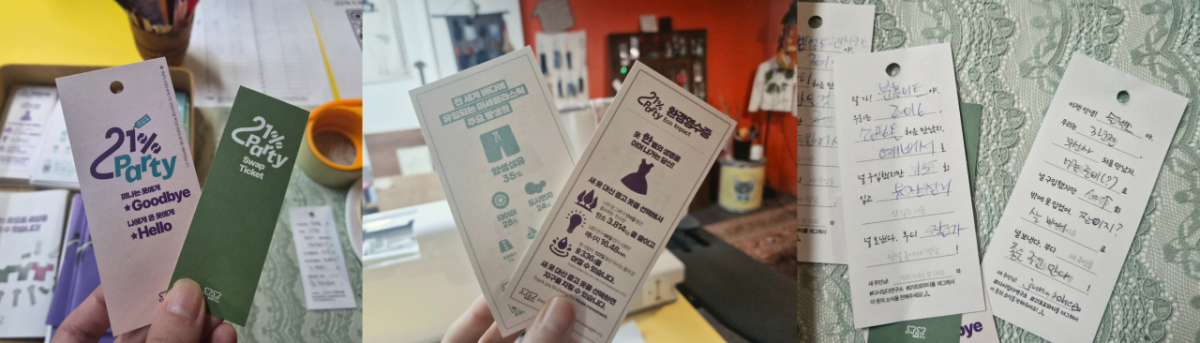
Neulbottari is a zero-waste shop opened by Lee Yun-i (CEO) and her daughter in 2020. Initially, it sold detergents, toothpaste, toothbrushes, soaps, and other products free from environmentally harmful substances. However, the concern remained that eco-friendly products still require continuous purchases to sustain their existence. Lee (CEO) said, "It was upsetting when items didn't sell, forcing us to take actions to drive consumption again," adding, "This led us to consider ways to reduce consumption itself."
What they discovered then was the "21% Party" by the Re-wear Institute (Sadanbeopin Daesipda Research Institute). The 21% Party is an event where participants bring clothes they no longer wear and exchange them one-on-one with items brought by other attendees. They also learned about the "Mending Revolution School," which aims to spread a culture of repairing and re-wearing through sewing and mending techniques, via the Re-wear Institute. Sharing the philosophy that "clothes can be used for the longest time only when worn as clothes again," this became the catalyst for Neulbottari to focus on clothing exchange and mending.
Neulbottari currently has sewing machines and overlock machines available. Users can repair their own clothes, and workshops on sewing and mending are held regularly. They also operate sewing and mending classes in collaboration with a startup club at nearby Yonsei University. Lee (CEO) explained, "In an era where new clothes are easily accessible, it is not easy to even spark interest in mending," but added, "Once you have personally repaired something, the effort you put into it makes the garment feel too precious to throw away."
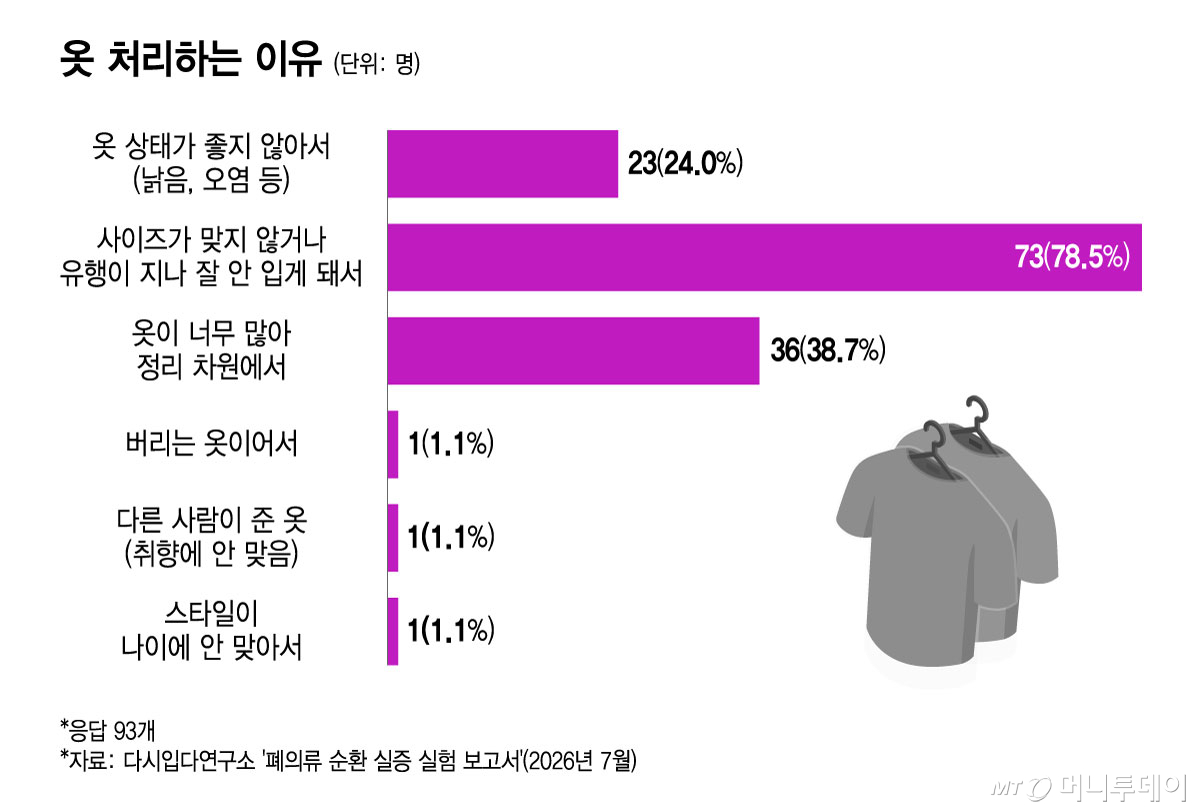
The "21%" in the 21st% Party refers to a figure derived from a 2020 survey conducted by the Re-wear Institute among 150 participants. The results showed that, on average, 21% of the clothes owned by respondents were purchased but never worn. This means one out of every five garments in a wardrobe is essentially dormant.
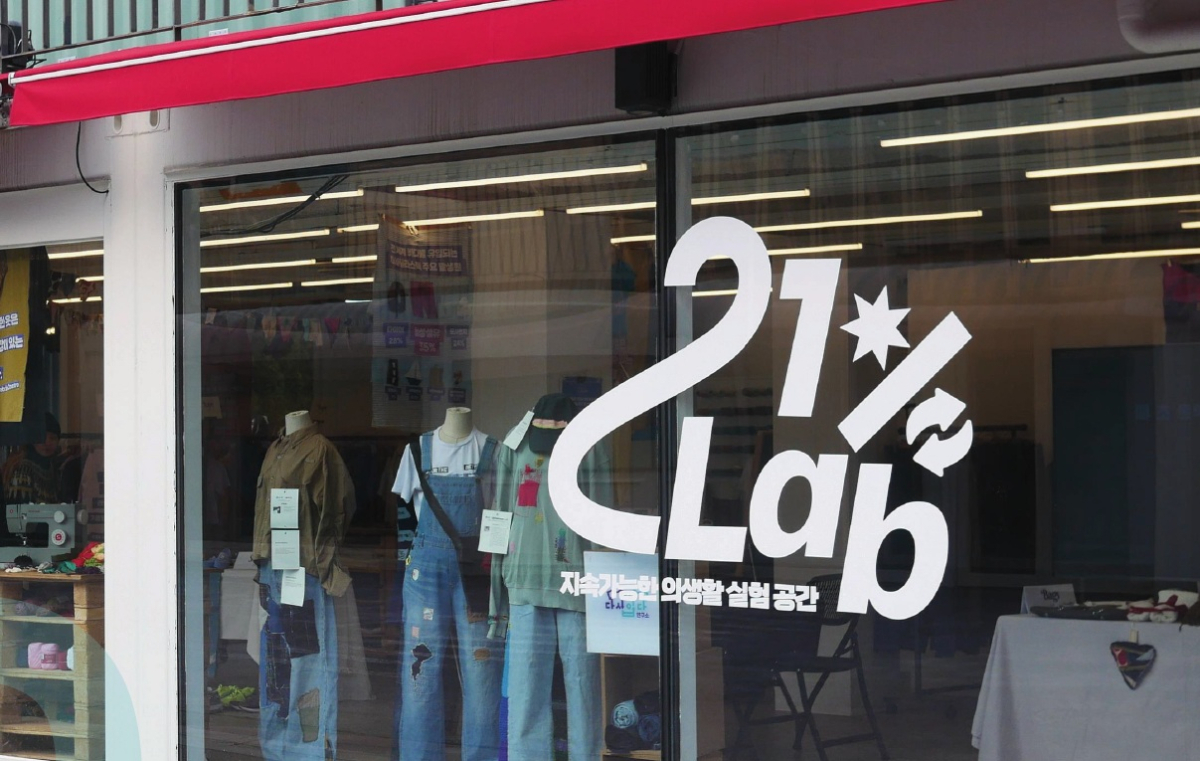
To move beyond the one-off "21% Party" where unworn clothes are exchanged only during events, the Re-wear Institute launched 21% Lab to create a permanent space where people can change and repair their clothes anytime. Jung Ju-yeon, CEO of the Re-wear Institute, explained, "It is a space designed to experiment with exchanging clothes that sit unused and repairing damaged garments to wear them until the very end."
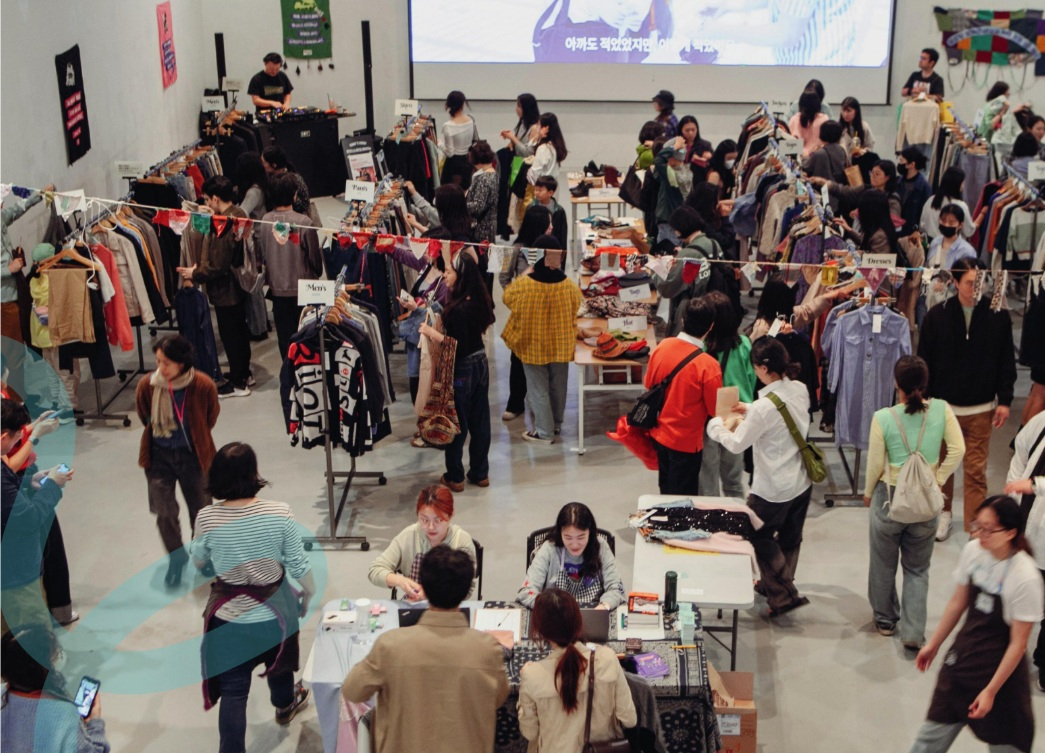
In the 21st% Lab operated for two months in Seongsu-dong last year by the Re-wear Institute, 1,650 people brought 2,554 clothing items and exchanged them for 2,077 items. There were even local residents who visited almost daily to hem pants or learn how to use a sewing machine. Regional hubs have been established in Seoul's Neulbottari, Jeonju, Gwangju in South Jeolla Province, and other locations.
The effect of exchanging one outfit is also confirmed numerically. According to the Re-wear Institute's "2025 Impact Report," approximately 3,950 items of clothing were presented at 65 events organized, co-hosted, or supported by the institute last year, with 3,436 items finding new owners. The exchange rate was 87%. The institute estimated that the environmental impact of these 3,436 exchanged items equates to a carbon reduction of 13,105 kilograms, energy savings of 56,625 kilowatt-hours (kWh), and water conservation of 1,257,576 liters. This amounts to reducing approximately 3.8 kg of carbon per exchanged item.
The Re-wear Institute became interested in the structure where human consumption destroys the environment, focusing on clothing as a consumer good that most clearly reveals this problem. They began their activities following a Seoul city public project in 2020 and established a corporation in 2022.
The 21% Party, where unworn clothes are exchanged; the Mending Revolution School, where people learn how to repair clothes themselves; and 21% Lab, which allows continuous experience of these practices in daily life, are results of translating this awareness into concrete options. Jeong (CEO) stated, "We started from the awareness that consumption beyond what is necessary destroys the environment," adding, "Through clothing, which sits at the peak of consumption, we wanted to discuss the problems of fast fashion."
The change the institute aims for does not stop at individual action. It also includes proposing policies that can transform the production structure where more clothes are made than can be sold and remaining inventory is discarded. The European Union (EU) has banned large corporations from discarding unsold clothing, clothing accessories, and shoes as of last month, with these regulations set to apply to mid-sized companies starting in 2030.
Jeong (CEO) emphasized, "The biggest problem with fast fashion is not that it is made only in the quantities needed, but rather the structure of mass-producing goods and then discarding the remaining inventory." She added, "While proposing methods for individuals to practice sustainability, our goal is to drive structural changes at the national and corporate levels to enable companies to produce sustainably."

 in INDUSTRY


