

[For more diverse corporate information on the startups mentioned in this article, visit the Unicorn Factory big data platform 'Data Lab'.]
AI (artificial intelligence) entertainment tech company Galaxy Corporation is pursuing a U.S. stock market listing instead of the domestic Korean market. To this end, it plans to establish a holding company in the United States soon via a 'flip'.
According to investment banking (IB) industry sources on the 29th, Galaxy Corporation officially confirmed at a shareholder meeting held on the 25th at its Seoul Yeouido headquarters that it would pursue a so-called flip, designating its newly established U.S. holding company as the listing entity instead of its Korean subsidiary. After over a year of considering listings on KOSPI or KOSDAQ, the company has now shifted course to directly list on NASDAQ or the New York Stock Exchange. The company plans to proceed with a shareholder approval process soon.
A flip is a corporate governance restructuring method in which a newly established U.S. holding company is created and the existing Korean subsidiary is incorporated as its 100% subsidiary. While business operations and personnel remain unchanged, the top-level parent company shifts to the United States, enabling listing on the local stock market.
Galaxy Corporation's decision to pursue a flip is interpreted as stemming from the U.S. capital market's tendency to assign higher valuations (corporate valuation) to companies with growth potential and innovative technologies. Additionally, positive assessments of its new business ventures confirmed through recent meetings with global institutional investors also influenced the decision. Since early this year, the company has been conducting behind-the-scenes contacts with key figures at NASDAQ and the New York Stock Exchange to concretize its entry into the U.S. stock market.
Galaxy Corporation achieved a turnaround in performance, recording consolidated revenue of 298.8 billion won and operating profit of 12.5 billion won based on 2025 figures. The release of G-Dragon's regular album and the success of his global world tour drove external growth. However, its single-revenue structure overly concentrated on a specific artist has been identified as a challenge to be resolved.
To address this, the company has accelerated diversification of its business centered on IP (intellectual property), AI, and robotics since last year. In the IP sector, it has sequentially recruited actor Song Kang-ho, singer Kim Jong-kook, SHINee's Taemin, and Ryu Jun-yeol. Additionally, it is expanding its own IP pipeline by concurrently holding virtual idol auditions in overseas markets such as the United States and Japan.
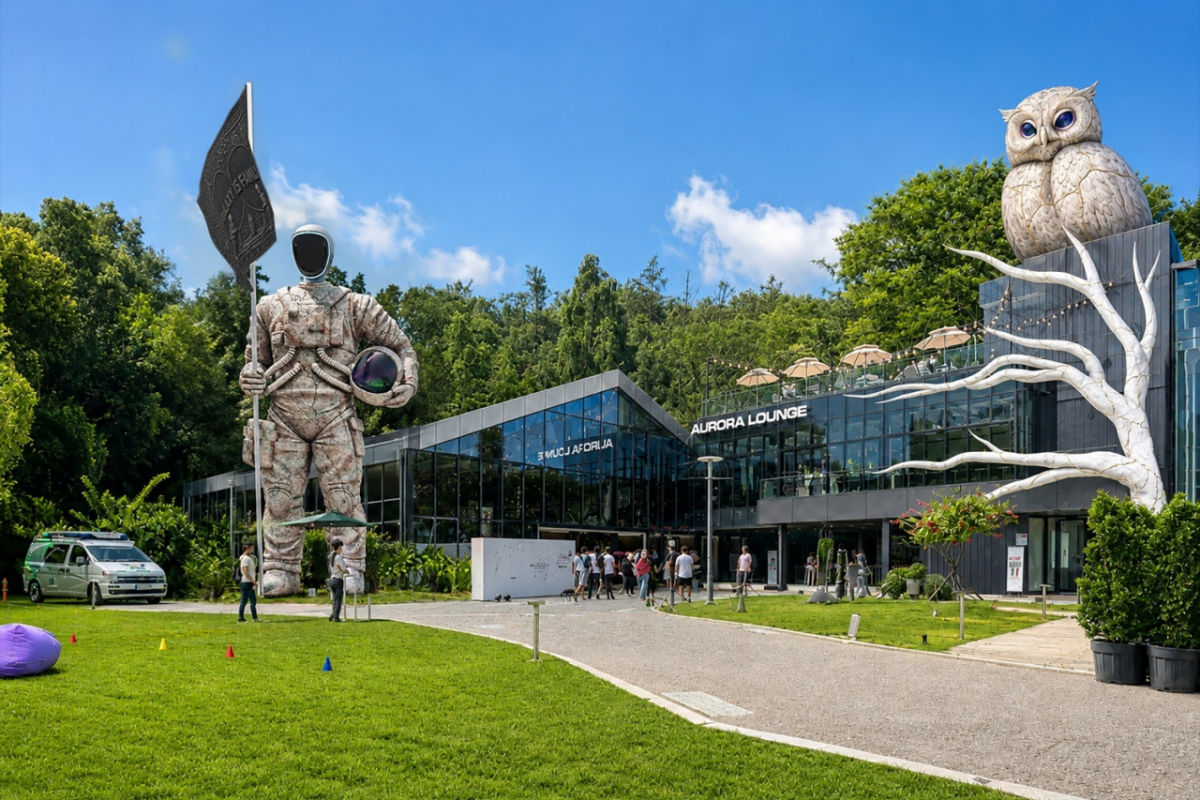
In particular, the company plans to reduce reliance on artists by integrating robotics technology and build a sustainable revenue base. The core battleground for this strategy is 'Galaxy Robot Park', established in Gangdong-gu, Seoul, spanning approximately 5,000 pyeong (about 16,500 square meters).
At Galaxy Robot Park, visitors can watch robot group dance performances combining K-pop and robotics technology, as well as experience robots drawing portraits or preparing beverages. During the pre-opening period, advance tickets for all sessions sold out, accumulating over 20,000 visitors.
Having validated its business viability domestically, Galaxy Corporation plans to expand its robot entertainment business model to a global stage. First, it will open a second Robot Park location in Dubai, United Arab Emirates (UAE), and is considering expansion into Los Angeles (LA) and Manhattan, New York, in the United States.
Furthermore, the company is making progress on its robot idol project. It plans to officially launch robot idols in the first half of next year and embark on a world tour featuring them starting from the second half. The strategy aims to overcome the physical limitations of human artists—such as stamina depletion and travel constraints—using physical AI robots, thereby expanding K-pop's performance stages globally.
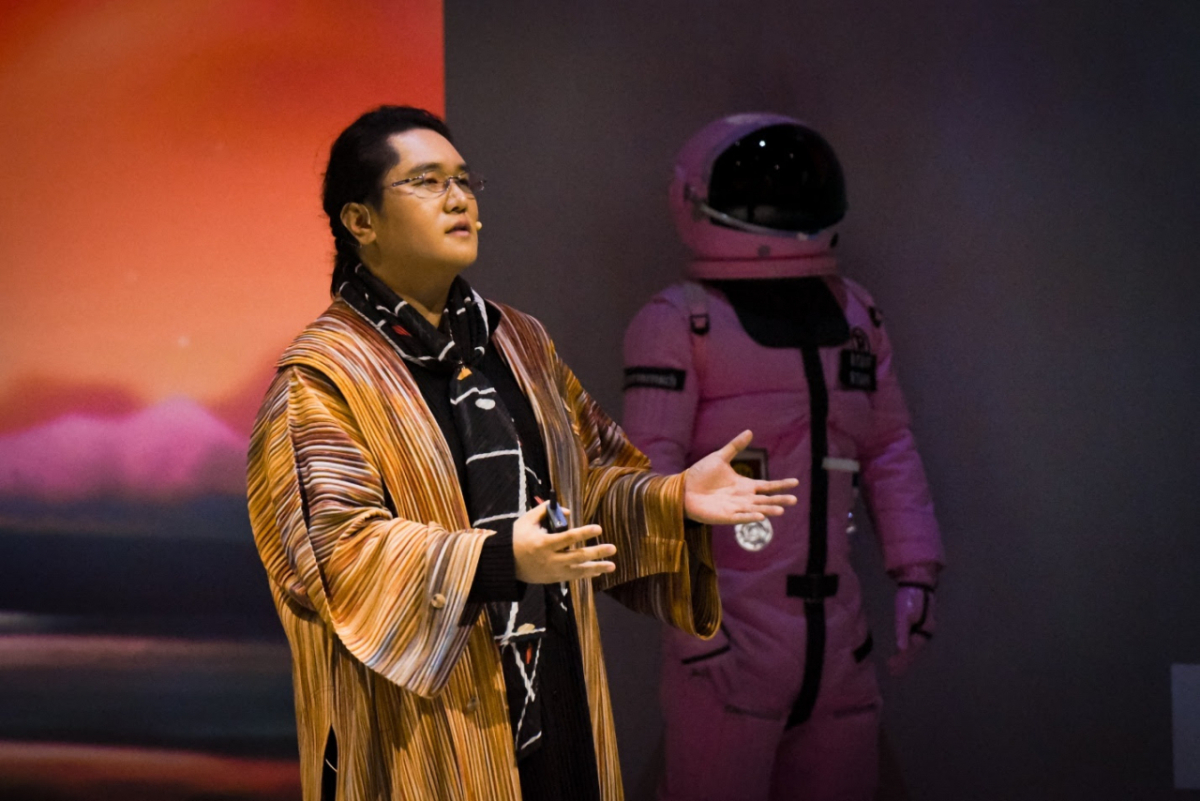
Choi (CEO) stated at a press conference held on the 21st at Galaxy Robot Park: "K-pop world tours are currently limited to around 30–35 countries," adding, "Through robotics, we aim to expand the performance arena to up to 100 countries."
An IB industry official remarked: "While the domestic stock market reacts sensitively to artist risks in entertainment companies, the U.S. market assigns higher scores to the growth potential of platforms integrated with AI technology." The official further noted: "Ultimately, whether the new robot entertainment business ventures being pursued in the global market can achieve tangible profitability will be the decisive factor for a successful listing."
[MoneyToday startup media platform Unicorn Factory]

 in FUTURE

