

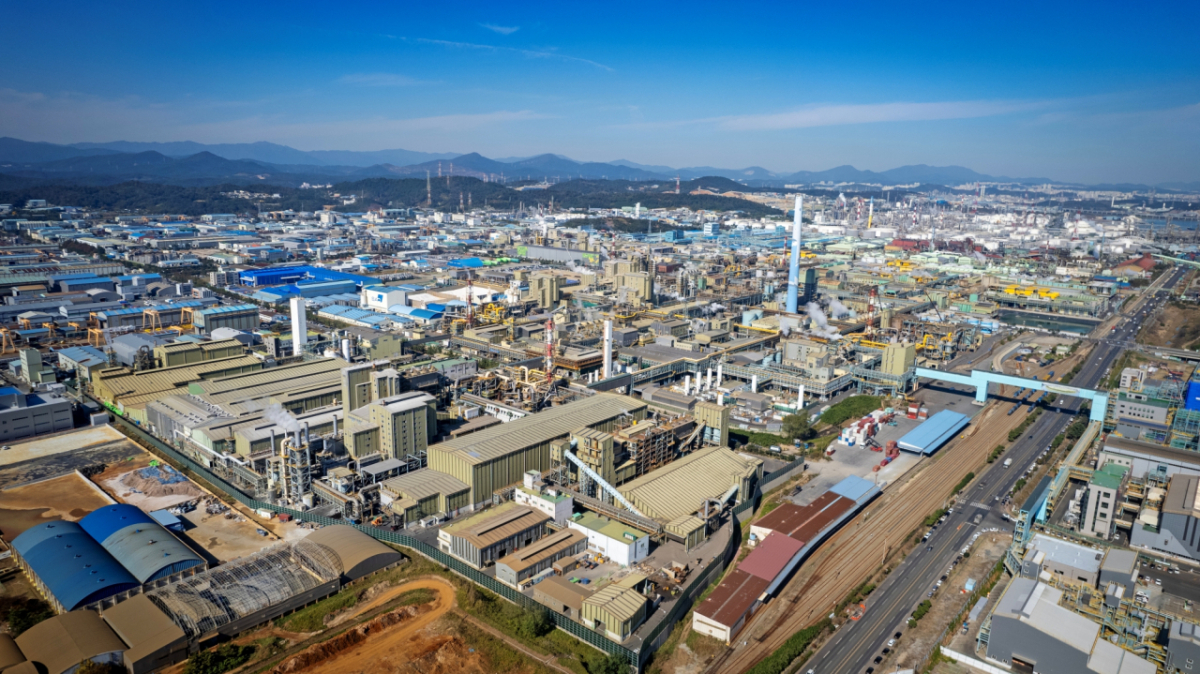
Corya Zinc announced on the 2nd that it has completed the expansion of Production Lines No. 20 and 21 for semiconductor sulfuric acid at its Onsan Smelter in Ulsan and has officially begun operations. This expansion, undertaken to proactively respond to the startup of new production facilities by major domestic semiconductor manufacturers driven by expanded investments in artificial intelligence (AI) infrastructure, added an annual production capacity of approximately 40,000 tons. As a result, Corya Zinc's semiconductor sulfuric acid production capacity has increased from the previous 280,000 tons to 320,000 tons.
Semiconductor sulfuric acid is a key material in the cleaning process that removes organic matter and fine contaminants from the surface of wafers (thin discs used to make semiconductor chips) during semiconductor manufacturing. As semiconductor circuits become more miniaturized, the allowable level of impurities decreases, meaning the purity and consistency of sulfuric acid directly impact semiconductor yield and reliability. Unlike general-purpose products that can be supplied immediately once production lines are ready, this product requires customer quality approval and process validation, along with a proven track record of stable supply.
Corya Zinc is currently the largest domestic supplier, accounting for more than 60% of Korea's semiconductor sulfuric acid demand. Approximately 95% of its production is supplied to major domestic semiconductor manufacturers, while the remainder is exported to semiconductor companies in Japan, Singapore, and other overseas markets.
Corya Zinc produces ultra-high-purity "Six Nines (6N)" grade semiconductor sulfuric acid with a purity of 99.9999% or higher by recovering and refining sulfur dioxide (SO₂) generated during the zinc and lead smelting processes through multiple stages. Unlike conventional production methods that source sulfur externally to produce sulfuric acid, Corya Zinc utilizes SO₂ generated during smelting as its raw material, giving it a relatively stable production base even amid fluctuations in global sulfur prices and supply chain changes.
Since the Busan water from the smelting process is converted into semiconductor sulfuric acid, the company is also recognized for its strong environmental competitiveness. In December 2024, Carbon Trust, a UK-based global climate change-focused institutional investor, granted Carbon Footprint (PCF) certification to Corya Zinc's semiconductor sulfuric acid products. This is expected to enable effective compliance with low-carbon and environmentally friendly supply chain standards required by future global semiconductor manufacturers and their suppliers.
Corya Zinc plans to gradually expand its semiconductor sulfuric acid production capacity up to 500,000 tons in line with the expansion schedules of domestic semiconductor manufacturers. It is also considering establishing a production line capable of producing approximately 100,000 tons of semiconductor sulfuric acid annually at its integrated smelter under construction in Tennessee, U.S., with trial operations scheduled for 2029 and commercial production targeted for 2030. The plan aims to steadily supply products to domestic and foreign semiconductor manufacturers expanding their production bases in the U.S. while extending its domestically accumulated production and quality management capabilities to the U.S. semiconductor supply chain.
A Corya Zinc official stated, "Through this expansion, we will timely respond to the startup and production increases of new facilities by major domestic customers and contribute to stabilizing the domestic semiconductor materials supply chain. Going forward, we will gradually expand domestic production capacity in line with customer demand and investment schedules while also building a semiconductor sulfuric acid supply base in global markets including the U.S., positioning ourselves as a core partner in the global semiconductor materials supply chain."

 in INDUSTRY
