

As I pressed the accelerator, the car quietly gained speed. Even when exceeding 100 km/h, the vibrations transmitted to the driver's seat were not significant. There was a clear sense of speed, but less tension. The Volvo flagship electric vehicle ES90 was a car that even a novice driver like me could comfortably enjoy its powerful acceleration.
My first impression after test-driving the ES90 Twin Motor AWD Ultra on the 16th was comfort that overcomes power output. Equipped with two electric motors, front and rear, it delivers a maximum output of 456 horsepower and a peak torque of 68.4 kg·m. It takes 5.4 seconds to reach 100 km/h from a standstill. These numbers were not easy for me, who is still not fully accustomed to driving, but in actual driving, smoothness came first.
The most impressive moment was when accelerating. Pressing the accelerator pedal made the car glide forward smoothly. I could simultaneously feel the immediate response and quietness unique to electric vehicles. Even after acceleration, the vehicle's movement remained calm. The comfort expected from a sedan naturally connected with the joy of acceleration, allowing me to comfortably utilize high power output.
The impression was similar when stopping. Even when braking hard to reduce speed quickly, the stopping process was relatively comfortable. The stability from acceleration to deceleration reduced the burden of driving.
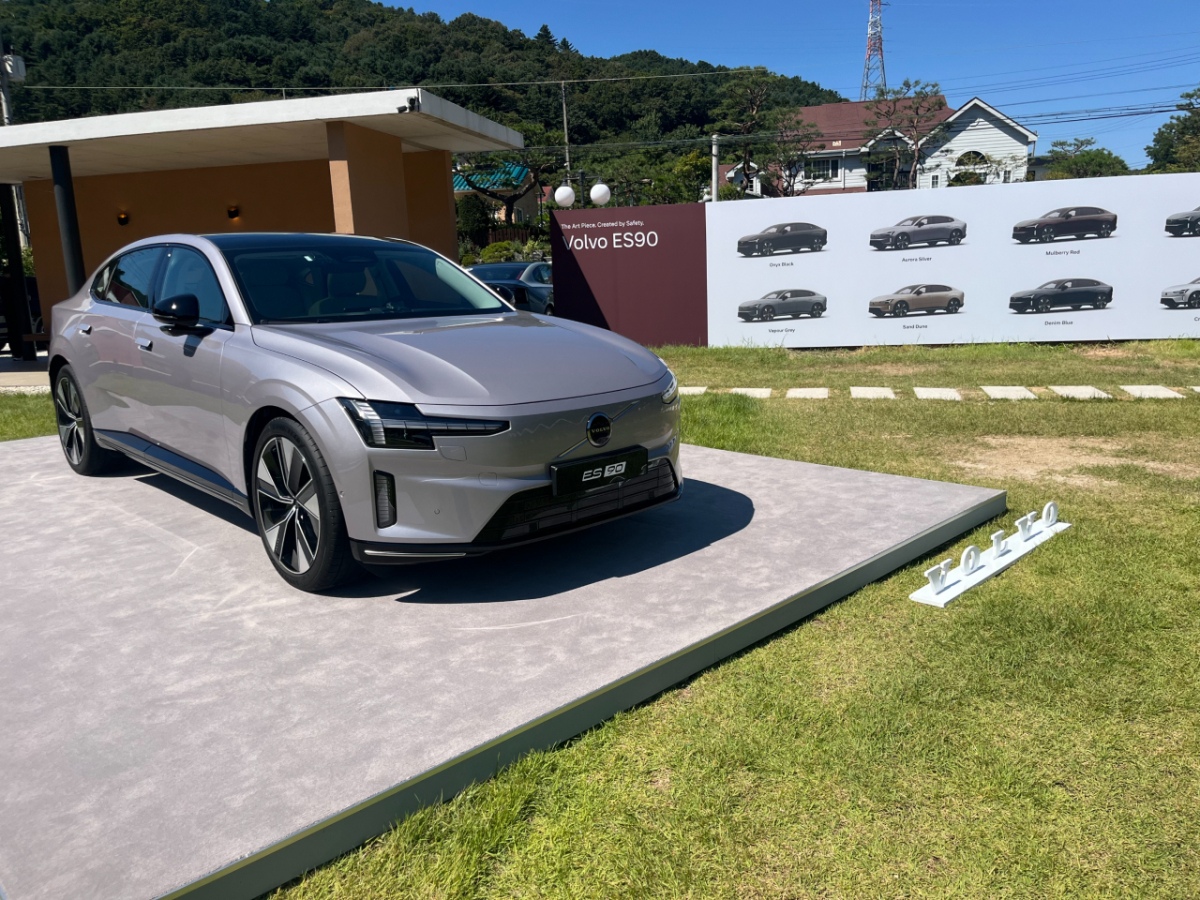
The character of pursuing both comfort and practicality was also evident in the exterior. The smoothly connected roofline evokes a sedan, but the high body gives an SUV (multipurpose sports vehicle) feel. Overall length is 5000 mm, width is 1940 mm, and height is 1545 mm. The wheelbase, the distance between the front and rear axles, is 3102 mm, accounting for about 62% of the body length. A long wheelbase was utilized to secure interior space.
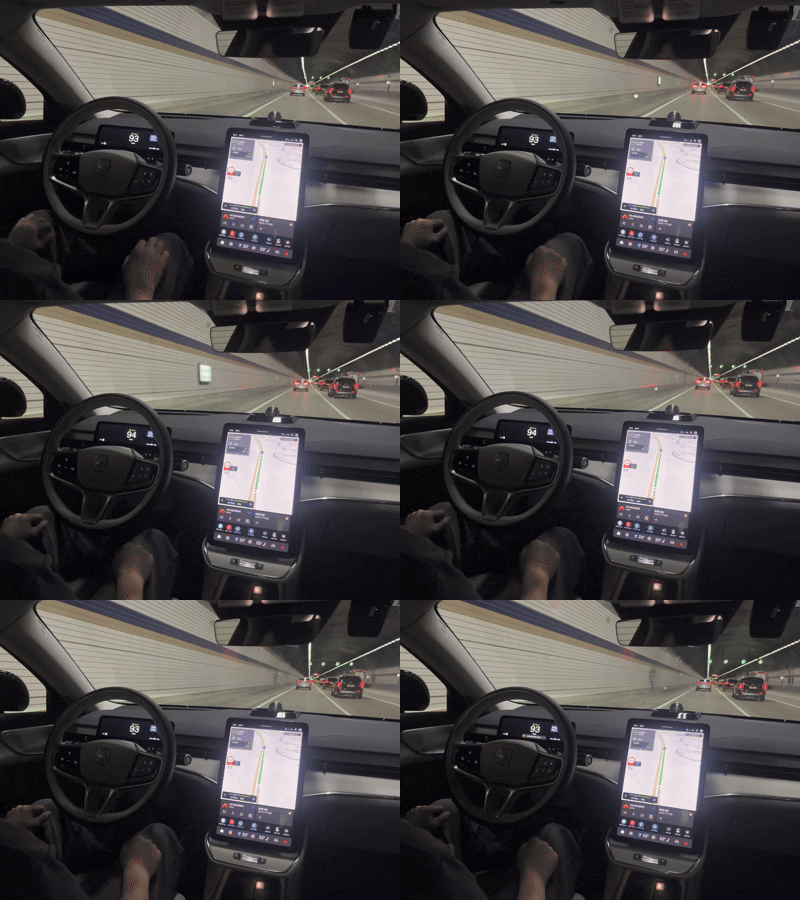
When activating the driving assistance function 'Pilot Assist,' the car naturally followed the center of the lane while maintaining the set speed and distance from the vehicle ahead. Even when I briefly took my hands off the steering wheel, the vehicle continued with stable movement without swaying or leaving the lane. Of course, this is not a feature that drives for the driver, so it requires monitoring the front and being ready to intervene immediately, but for novice drivers, it felt like a function that reduced the burden and tension of steering control.
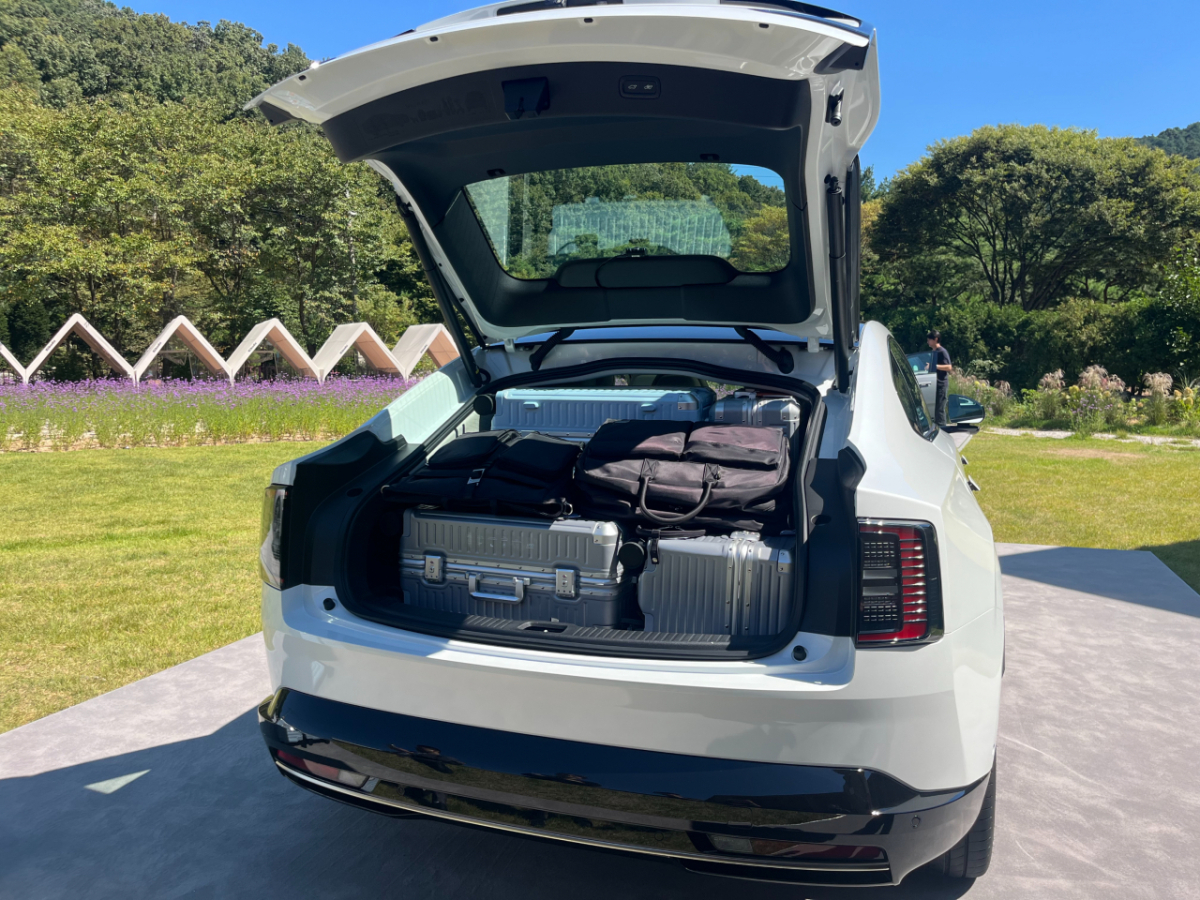
Along with the high body, the trunk drew attention. The ES90 adopts a liftback structure that raises the rear window together. The large opening makes it advantageous for loading and unloading bulky items. The trunk capacity is 409 liters as standard, expanding to a maximum of 1445 liters when the rear seats are folded down. There is also a 27-liter storage space under the hood. It adds the space utility expected from an SUV to the smooth driving feel of a sedan.
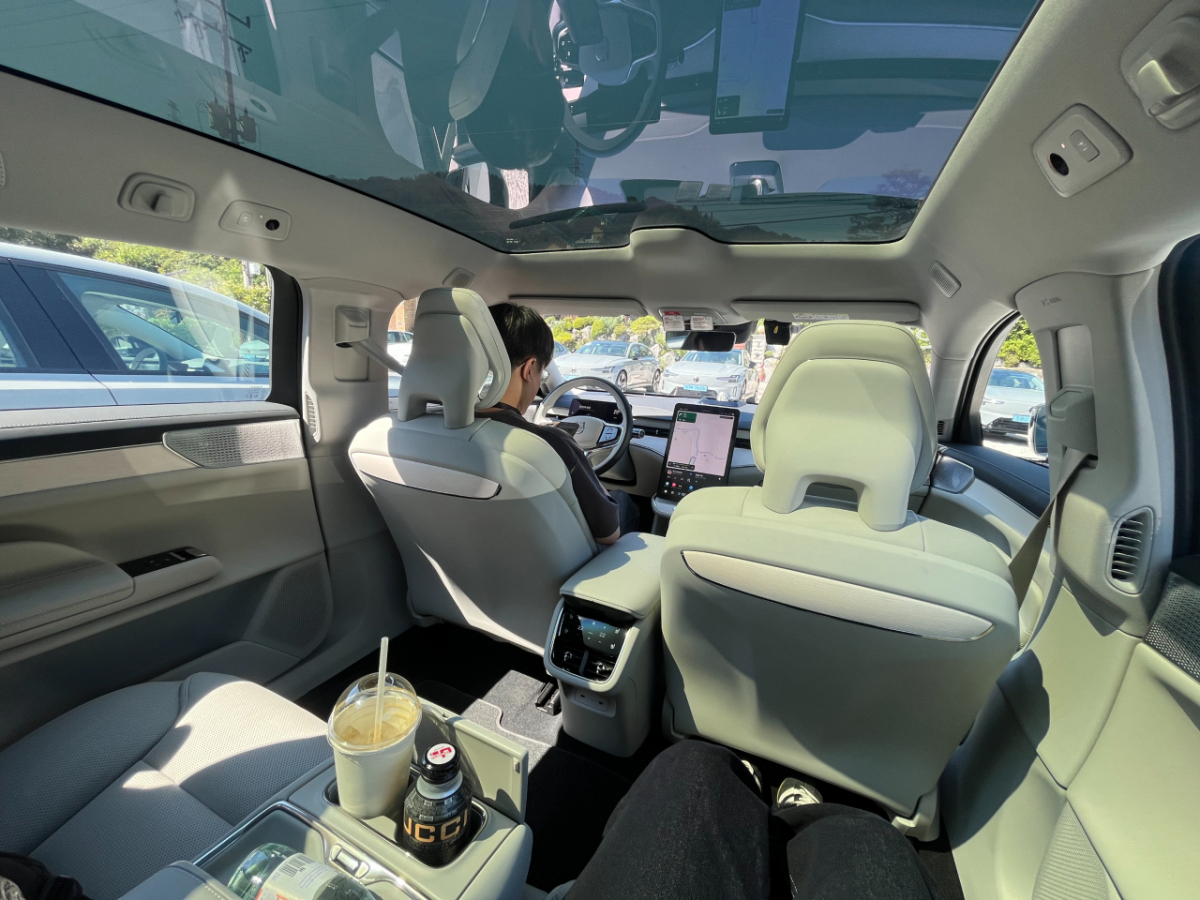
The rear seats are also equipped with convenience features befitting a flagship model. The flat floor unique to electric vehicles combined with the high body allowed for comfortable seating without feeling cramped. The long wheelbase of 3102 mm also supported ample interior space.
It is worth examining the basic capabilities as an electric vehicle. The Twin Motor model is equipped with a 106 kWh battery, and according to Volvo's publicly disclosed domestic certification standards for combined driving range at room temperature, it is 520 km. According to the company, applying an 800V system allows charging the battery from 10% to 80% in approximately 22 minutes under a 350 kW fast-charging environment. Actual charging time varies depending on the charger and battery condition, as well as external temperature.
The domestic sales price starts at 72.94 million won for the Single Motor Extended Range Plus model. The base price of the Twin Motor Ultra I test-drove is 87.41 million won, and it becomes 90.41 million won if Dual Chamber Air Suspension is selected. These are prices based on Volvo's proposed environmental-friendly tax incentives.

 in INDUSTRY


