

As sodium-ion batteries (SIBs) emerge as a candidate for the energy storage system (ESS) market, South Korea's battery materials industry has begun racing to secure hard carbon, the next-generation anode material. Following battery manufacturers such as Samsung SDI and LG Energy Solution, materials companies including Aekyung Chemical and POSCO Future M are accelerating their development of hard carbon and expansion of production capacity.
According to relevant industry sources on the 24th, South Korea's battery industry is researching hard carbon as an anode material for sodium-ion batteries. Samsung SDI is conducting research to enable the application of hard carbon anode materials in line with the commercialization of sodium-ion batteries. LG Energy Solution, which aims to ship samples to ESS customers next year, plans to initially use some existing graphite during the early stages of commercialization and gradually increase the proportion of hard carbon before ultimately replacing it entirely.
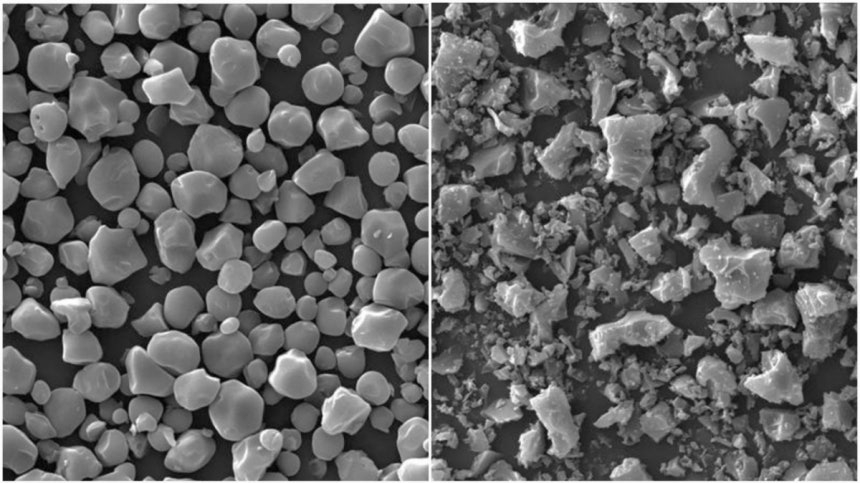
Sodium-ion batteries use sodium, a material commonly found around us, as their raw material. The South Korean battery industry is focusing on hard carbon as an anode material for sodium-ion batteries due to the characteristics of sodium ions. Sodium ions have a larger ionic radius than lithium ions. Existing graphite has a dense particle structure, making it difficult to stably store sodium ions. Hard carbon, which has a slightly looser pore structure than graphite, is considered a viable alternative.
In South Korea, Aekyung Chemical has been leading the development of hard carbon. Since launching hard carbon for anode materials in 2012, it has focused on developing new raw materials to reduce costs. It shifted its raw material base from initial polyurethane resin to biomass by 2024 and also introduced products with improved performance last year. Based on this, the company is expanding production facilities for hard carbon anode materials for sodium-ion batteries centered around its Jeonju factory. It plans to gradually expand production capacity in line with future market conditions.
POSCO Future M also included the development status of hard carbon anode materials and its Yangsan plan when it recently established plans for battery cathode and anode material development and next-generation materials strategy. The company aims to complete the development of hard carbon anode materials by the third quarter of 2027 and plans to begin operations at its Yangsan facility in 2028.
The background behind materials companies entering the hard carbon market for sodium-ion batteries lies in the potential expansion of the ESS market. Sodium-ion batteries have lower energy density than lithium-ion batteries, meaning a larger battery volume is required to achieve the same capacity. While there are limitations in applying them to electric vehicles, ESS has relatively fewer constraints on space and weight, making it less likely that the low energy density of sodium-ion batteries will act as a disadvantage. Accordingly, the industry is paying attention to the possibility that sodium-ion batteries, emphasizing price competitiveness and stability, will expand their market centered around ESS.
An industry official stated, "Although the sodium-ion battery market is still in its early stages of formation, if demand expands centered on ESS in the future, competition among materials companies to secure the performance and cost competitiveness of hard carbon through development and capacity expansion will become even more intense."

 in INDUSTRY
