

"If we had done this in the past, we would have said, 'This design is impossible.'"
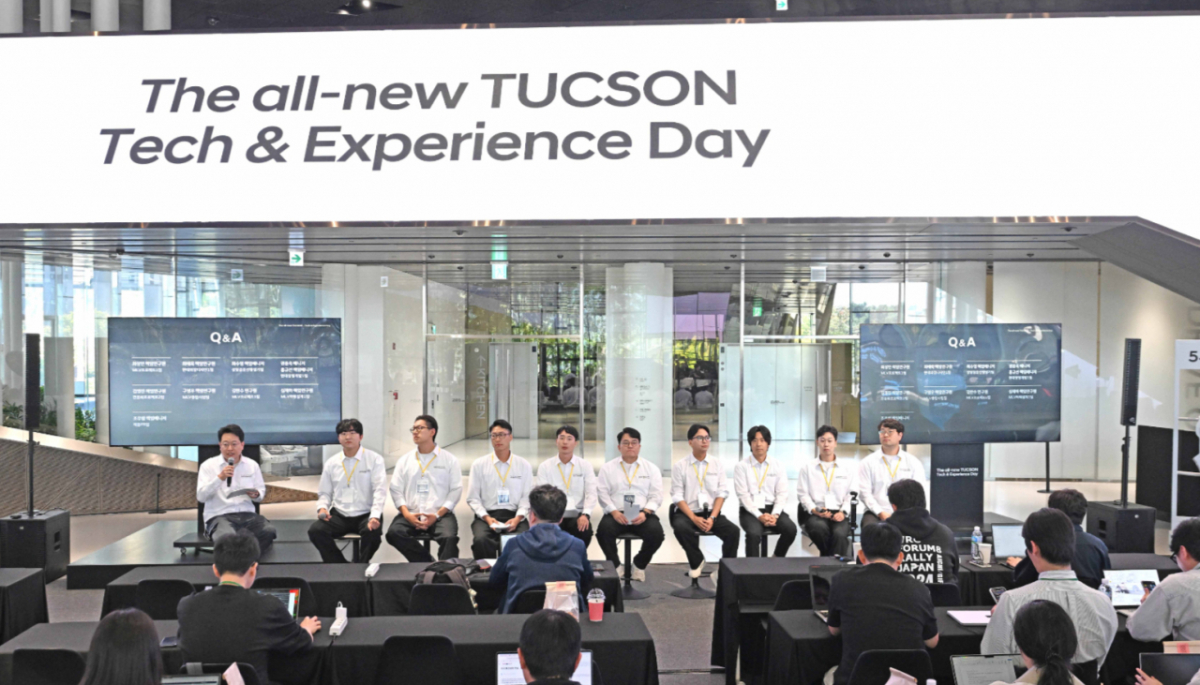
At the "All-New Tucson Tech & Experience Day" held on the 7th at Hyundai Motor Studio Goyang in Goyang, Gyeonggi Province, Hong Kyu-sun, Senior Manager of the Hyundai Forming Development Team 1 at Hyundai Motor, recalled his initial reaction to the bold exterior design of the new Tucson. He noted that leaders had previously instructed the team to "implement this design if we want to survive in the future." The development team extended the initial verification period by approximately two months to find a solution.
The exterior of the new Tucson reflects the design language "Art of Steel," which emphasizes the tension and strength of metal. The volume of the rear fenders was increased by 20%, and the volume on both sides of the hood by 50% compared to the previous model. The hood, which is 15% longer in overall length, is designed to extend down and cover the side of the front fender.
As the visible volume increased, so did the difficulty of the manufacturing process. The forming depth of the side outer panels increased from the previous 40 mm to 71 mm. This means the sheet metal had to be formed into deeper and more complex shapes. If the sheet metal stretches excessively, its thickness decreases, leading to cracks; conversely, if the material gathers, wrinkles form. Manager Hong stated, "It was a very difficult situation where contradictory problems—cracks and wrinkles—occurred in the same area."
The development team focused on finding forming conditions that would allow them to maintain the design. Choi Su-young, Senior Manager of the Forming Verification Pre-Development Team, explained, "If we simplified the design to match formability, it could deviate significantly from the originally intended design concept," adding, "From the early stages of development, design and forming technology worked together to review the shape."
Forming analysis was conducted more than three times for the side outer panels and more than five times for the hood compared to other vehicle models. Before creating actual molds, the team simulated how the sheet metal would stretch and where cracks or wrinkles might occur, then revised the shape and re-verified it in a repeated process. A technology that pulls the sheet metal in multiple directions was applied to the side outer panels. Additional tensile force was applied at the point where wrinkles formed to reduce material gathering, and a method of creating the shape in stages suppressed crack occurrence. Conditions to realize the rear fender volume were secured by adjusting the door opening and surrounding shapes. Manager Hong emphasized, "What customers see is the design, but within it lies numerous technical challenges to realize that design."
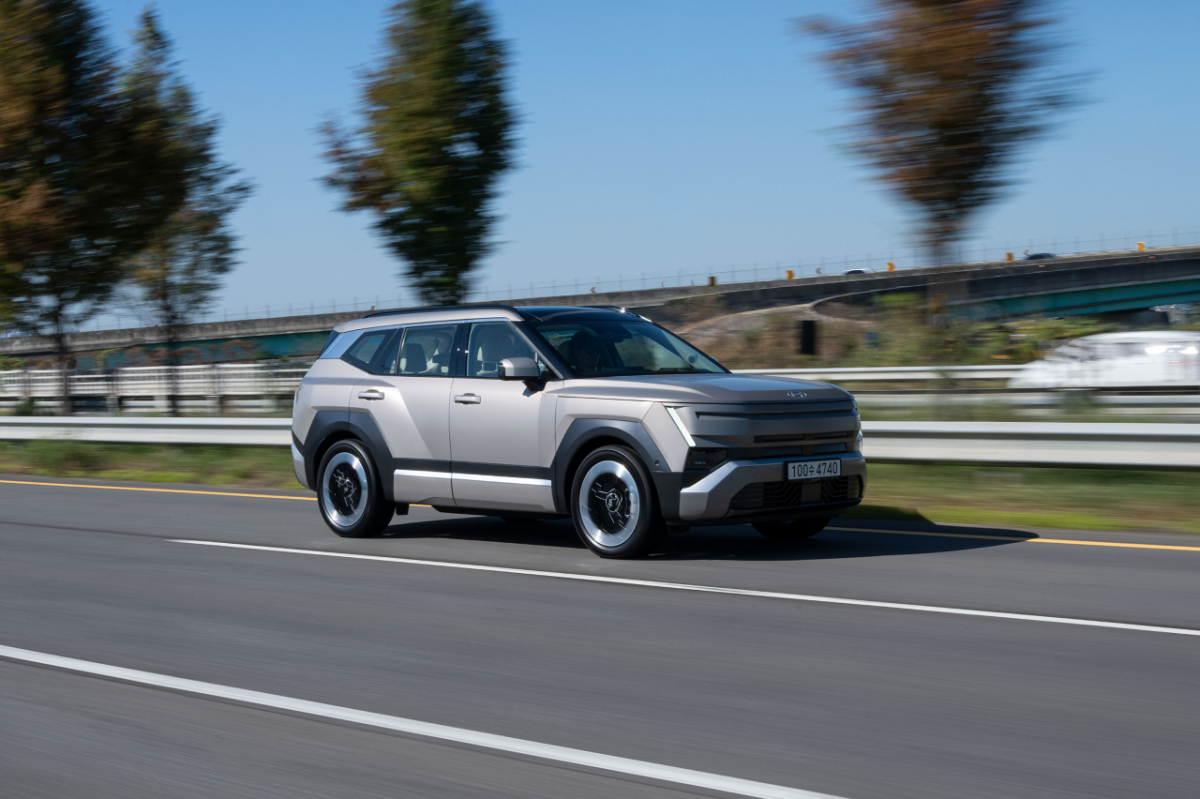
Koo Young-woo, Senior Researcher of the MLV Overall Testing Team at Hyundai Motor, described the development direction of the Tucson as "a car responsible for the journey of the entire family". This means that within the bold and daring exterior completed with strong curves lies meticulous consideration for "a car I want to ride in with my family."
Hyundai Motor first expanded the space of the new Tucson. The overall length increased by 60 mm, width by 40 mm, height by 20 mm, and wheelbase by 30 mm compared to the previous model. Second-row legroom and headroom were expanded by 14 mm and 29 mm, respectively, and shoulder room was widened by 6 mm in both the first and second rows. The changes in vehicle size were translated into comfort for rear-seat passengers.
The moments of loading children and luggage, as well as the driving feel, were tailored to family comfort. Hyundai Motor first applied a new wide-open hinge to the second-row doors, allowing them to open up to 83 degrees. This allows for a convenient posture when placing a child in a car seat or moving bulky items. Based on the 1.6 turbo gasoline model, trunk capacity was increased from the previous 622 liters to 645 liters, securing space for strollers and camping equipment.
Senior Researcher Koo clearly stated, "As it is a car responsible for the journey of the entire family, we aimed to implement a stable driving feel that transcends its class." They increased the stiffness at the junction where the front body and suspension meet, and added a crossmember rear stay to the rear wheels to reduce road vibration transmitted to the rear seats. The piston and valve structure of the shock absorbers were also refined to mitigate road impact during both low-speed and high-speed driving.
The area of the sound insulation layer separating the engine room and the interior was also expanded by approximately 51%. The application range of the floor sound-absorbing pads was widened to cover the entire area under the seats, and a dual stopper structure was applied to the transmission mount for the first time at Hyundai Motor to distribute load. This reduced startup vibration in gasoline models and vibration during engine-motor transitions in HYBE (Hyundai Electric) models.
Improvements in quietness also extended to the rear seats. Sound-insulating glass, previously applied only to the sides of the first row, was expanded to the second row, and the thickness of the first-row glass was increased by 1 mm. The glass run surrounding the door glass was changed to a seamless integrated type. Senior Researcher Koo added, "Even during high-speed driving, wind noise is significantly reduced, allowing for comfortable conversation with family members in the rear seats."

 in INDUSTRY

