

Domestic cake production value has surpassed 2 trillion won for the first time. As cakes have shifted from being consumed only on special occasions like birthdays and anniversaries to becoming everyday snacks, the related market has grown significantly. Small-sized mini cakes and slice cakes targeting one- or two-person households are leading overall market growth.
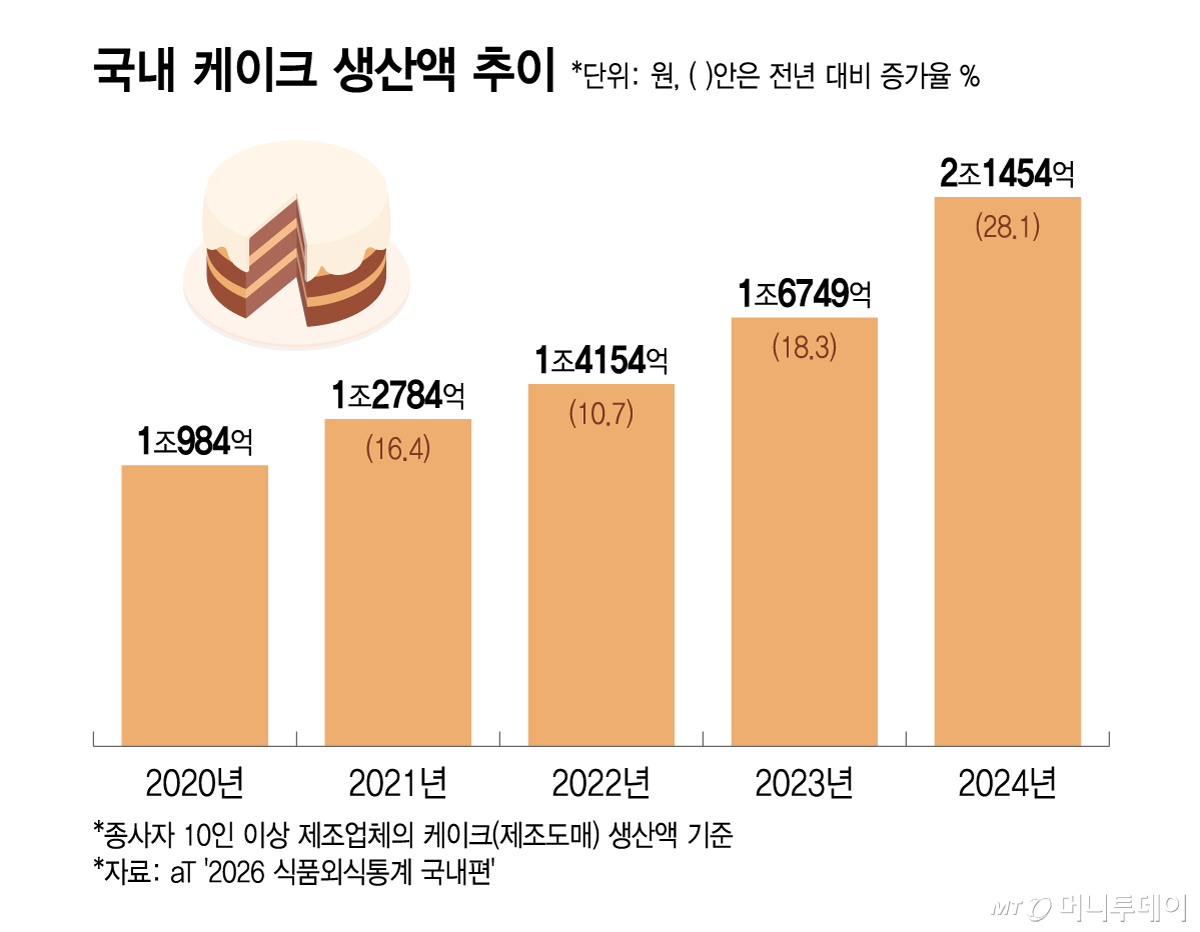
According to Korea Agro-Fisheries & Food Trade Corporation's (aT) "2026 Food and Dining Statistics: Domestic Edition" released on the 3rd, domestic cake production value in 2024 was recorded at 2.1454 trillion won. This represents a 28.1% increase from the previous year (1.6749 trillion won). Compared to 2020 (1.0984 trillion won), it has nearly doubled within four years. Cake production value has maintained a clear upward trend for four consecutive years since 2020.
The coffee franchise industry analyzes the changing consumption patterns of cakes as a key factor in market growth. The shift is from a past model where whole families gathered to share large whole cakes, to recent trends where desserts are enjoyed lightly with coffee by individuals or pairs, or purchased via mobile platforms as small gift items—significantly expanding the consumer base.
Especially amid consumer trends prioritizing cost-performance, demand for mini cakes priced under 10,000 won is surging. According to Shinsegae Food, E-Mart Bakery's mini cake sales rose 78% year-on-year last year. This figure exceeds the growth rate of whole cake sales (6%) during the same period by more than twelve times. The company explains that unlike whole cakes, which see concentrated sales during specific seasons like family-oriented holidays, mini cakes have recorded steady sales throughout the year.
Starbucks Korea's best-selling slice cake in the first quarter of this year, "Blueberry Marble Cheese Cake," saw sales increase by approximately 40% compared to the same period last year. Starbucks reports growing demand for sharing small portions of various flavored slice cakes at small gatherings and launched three new slice cake varieties in May accordingly.
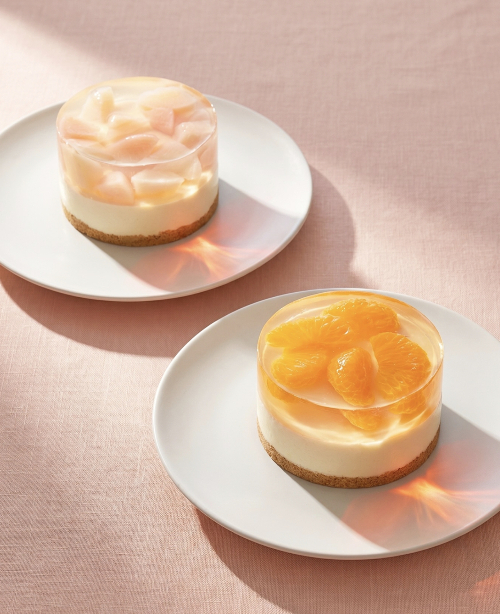
On the 30th, Starbucks Korea launched two jelly-topped products: "Citrus Jelly Cheese Cake" and "Peach Jelly Cheese Cake." These feature soft cheese and crispy cookies layered beneath refreshing jelly, combining summer-appropriate jelly with everyday dessert cakes.
In response to surging demand, production and distribution structures are also becoming larger-scale and more specialized. The number of businesses in the "retail trade of breads, confectioneries, and sugars" that receive and sell finished products from factories increased by 86.4%, from 7,851 in 2020 to 14,634 in 2024. Their total sales volume also more than doubled, rising from 787 billion won to 1.631 trillion won.
Cake manufacturing plants themselves have grown in size. While the number of cake production companies increased only modestly by 31.2%, from 77 in 2020 to 101 in 2024, average production value per company rose from 14.3 billion won to 21.2 billion won—a 48.8% increase. This indicates a restructuring of the industry toward centralized mass production in large factories rather than baking cakes directly at individual stores.
However, the cake market's boom does not appear to have directly translated into overall growth for the confectionery and bakery industry. For instance, bread—a traditional meal substitute—saw its 2024 production value reach only 825.6 billion won, a 7.8% increase from 2021 (766.1 billion won). This contrasts sharply with the 67.8% growth in cake production value over the same period. Industry observers note that while cakes have driven overall confectionery and dessert market growth, this momentum has not yet extended to the bread market for staple meals.

 in LIVING

