

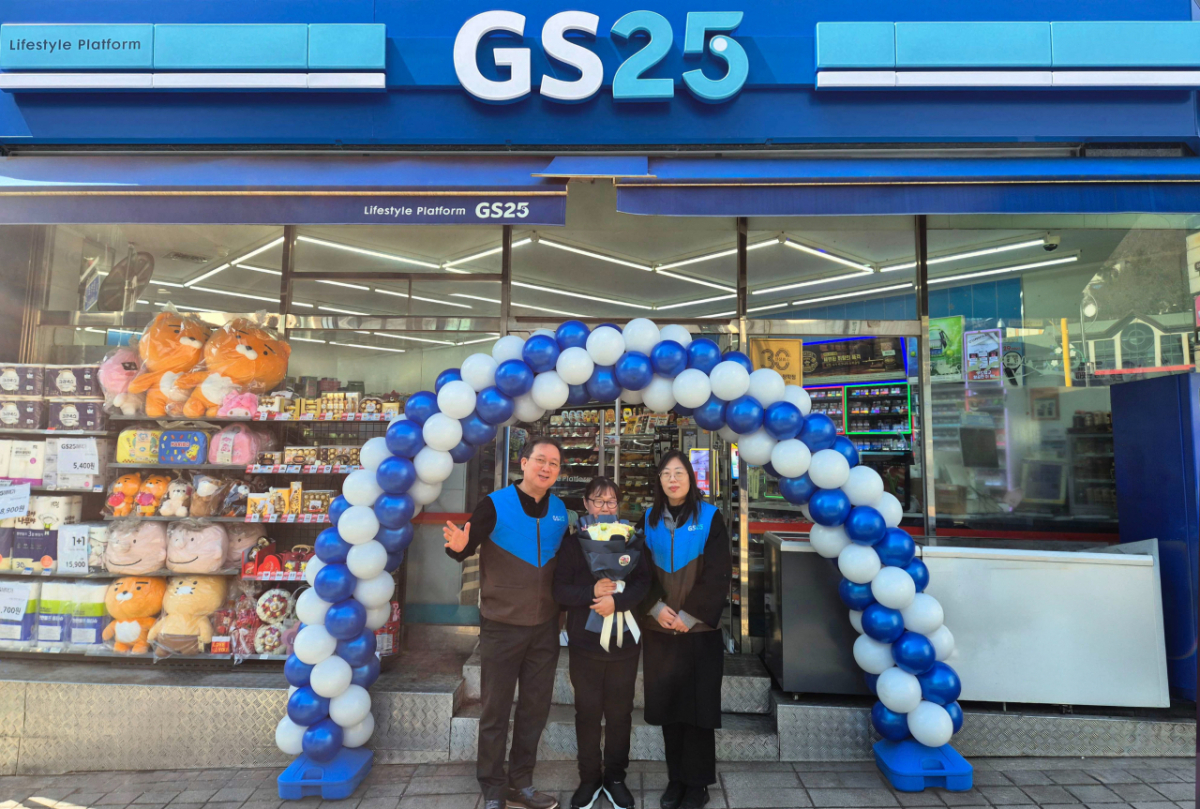
The convenience store industry is strengthening welfare benefits and mutual-growth support to secure franchisees. In addition to welfare perks comparable to those offered by large corporations, such as health checkups and tuition assistance, companies are providing incentives for store operations to encourage long-term management.
According to the convenience store industry on Monday, major operators including GS25, CU, 7-Eleven, and E-Mart24 are implementing welfare programs and store operation support systems for franchisees.
GS25 offers welfare benefits including health and psychological care, as well as support for weddings and funerals. Starting this year, the company has also increased inventory disposal support and strengthened incentives tied to revenue improvement and sales profits.
CU provides medical discounts of up to 49% to franchisees, their families, and staff. It also offers scholarships covering up to 50% of tuition for undergraduate programs at Chung-Ang University, along with free enrollment in seven types of insurance. 7-Eleven operates welfare systems that include medical discounts and interest subsidies on student loans for franchisees’ children.
The company is also reducing the operational burden on stores by covering up to 50% of disposal costs for key products such as triangle kimbap and bento boxes. E-Mart24 provides access to resort facilities, health checkup discounts, and tuition support at a level comparable to that offered to its own employees.
The convenience store industry is strengthening welfare and mutual-growth support in order to secure stores with long-term operations. In the convenience store sector, not only the number of stores but also sales and profitability per store are critical.
The strategy is to prevent existing franchisees from leaving and to support stable operations in order to cultivate high-quality stores. While store sales are a key factor in contract renewals, industry officials explain that welfare and mutual-growth support serve as a lubricant that leads to long-term contracts.
Given this situation, a significant number of franchisees have been operating their stores for extended periods. In the case of GS25, as of the end of last month, 307 operators had been running their stores for more than 20 years, and 19 operators had been in business for over 30 years. The average operating period was 8 years and 2 months as of last year.
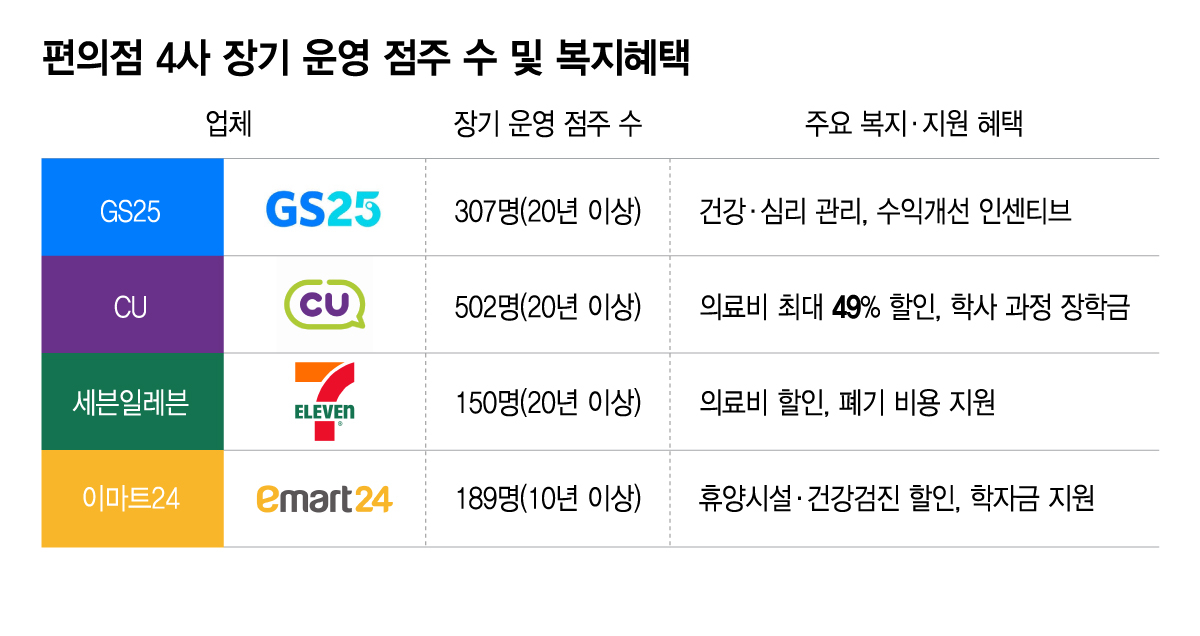
CU has 502 franchisees who have been operating their stores for more than 20 years. The average operating period for its franchises was approximately 7 years and 8 months as of 2024. One franchisee has been operating a store for 34 years, dating back to the early days of the convenience store business.
7-Eleven has 150 franchisees who have been in operation for more than 20 years. The company also has its longest-serving franchisee, who has been operating since 1989, when convenience stores first emerged in South Korea. E-Mart24, which has a shorter history in the industry compared to other chains, has 189 operators with more than 10 years of operation and three operators with more than 15 years.
An industry official said, “The goal is not only to prevent the departure of long-term operators but also to foster a spirit of mutual growth with franchisees,” adding, “Welfare programs for franchisees help enhance their sense of belonging to the brand.”

 in LIVING

