

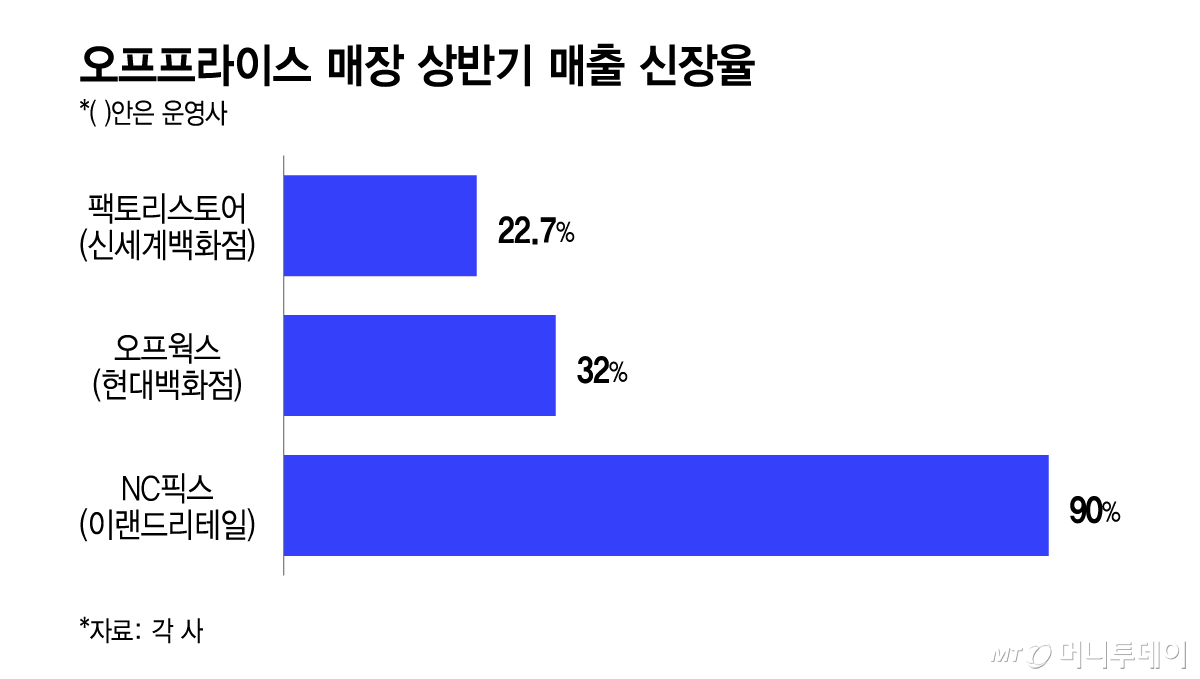
As high prices persist, the retail industry is expanding off-price stores. With consumption clearly bifurcating into high-end and ultra-low-priced goods—a phenomenon known as "K-shaped consumption"—demand to purchase branded products at reasonable prices is surging toward off-price stores.
According to industry sources on the 18th, off-price stores operate by having distributors directly purchase leftover or inventory items remaining after sales at regular brand stores, or through parallel imports, and selling them at prices lower than the standard retail price. Discounts range from 30% to 80% compared to the regular price, with some reaching nearly 90%. A key feature is that leftover and inventory goods from various brands are mixed together, and unlike department stores or outlets where stock levels are high, the assortment changes frequently.
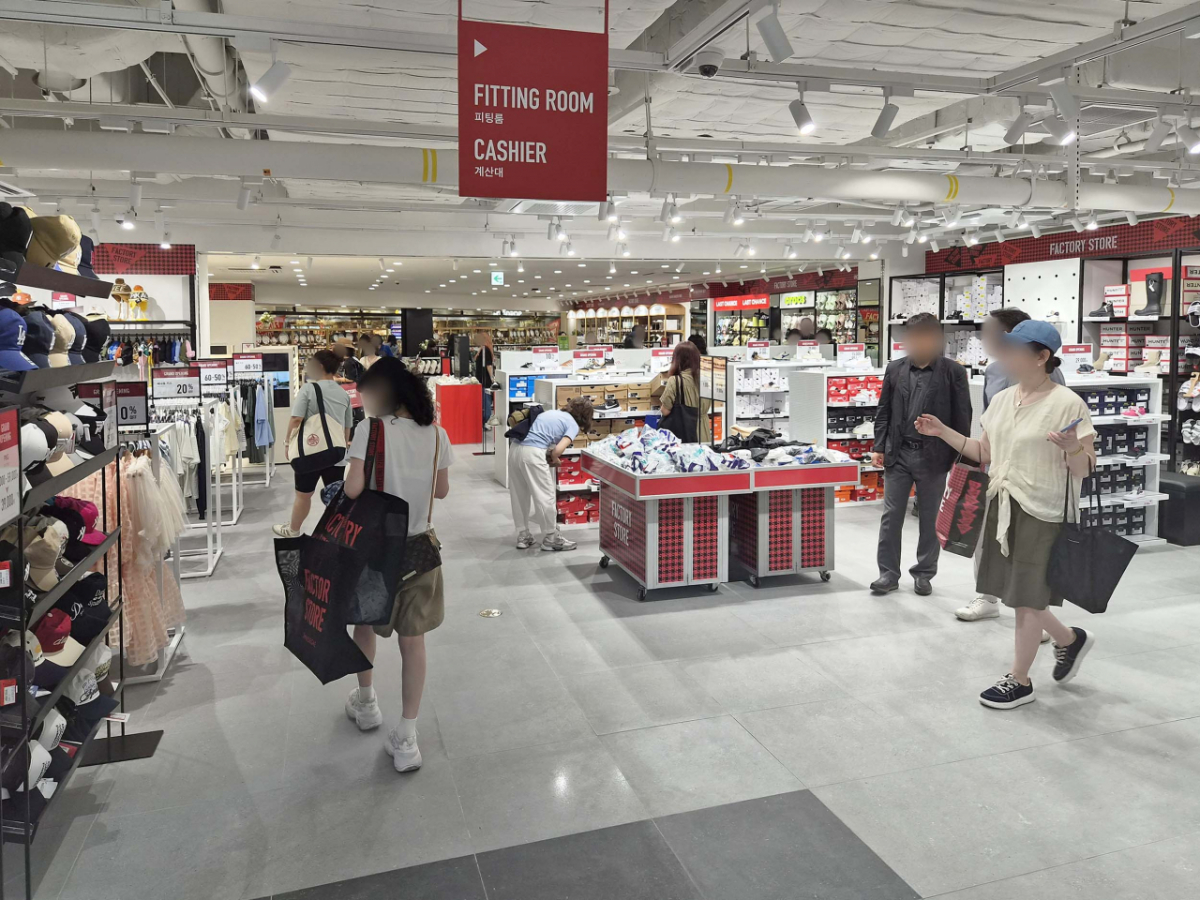
Shinsegae Factory Store, an off-price store operated by Shinsegae Department Store, recorded a 22.7% increase in sales and a 23% rise in customer numbers in the first half of this year compared to the same period last year. Launched in 2017, Factory Store expanded its outlets from two in 2018, five in 2019, to nine in 2020, and reached 18 stores by 2024, achieving annual sales of 100 billion won. Currently operating 20 locations, the company aims to reach annual sales of 130 billion won by adding three new stores in the second half. New store openings continue in major commercial districts such as Uijeongbu, Gimhae, and Wolgye, and the company is also considering smaller-format stores tailored to local market characteristics.
Leveraging this success, the product range is being expanded. The Gangnam store has grown from its original 330 pyeong (approximately 1,090 square meters) to 420 pyeong (approximately 1,390 square meters), broadening its focus beyond fashion to include beauty products, children's goods, travel accessories, small home appliances, sports shoes, and character IP merchandise.
Factory Store procures products through three methods: direct purchase, specific operations managed directly by the brand, and consignment where brands only supply inventory. The proportion of direct purchases stands at about 45%, with plans to increase this to around 60% in the long term.
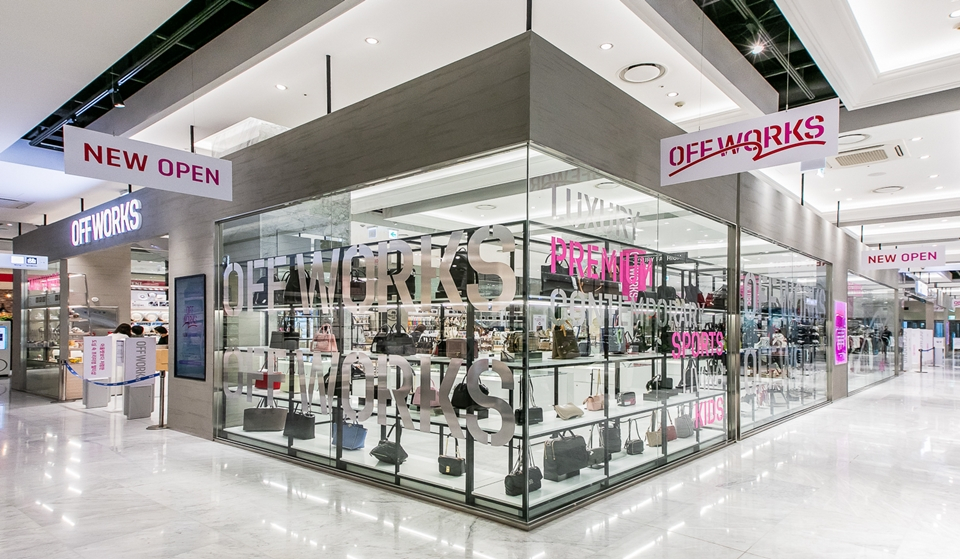
Sales for the first half of the year at OFF WORKS, Hyundai Department Store's off-price store chain comprising seven locations, increased by 32%. Since its launch in 2019, it has maintained double-digit sales growth annually. New customers account for 30% to 40% of all visitors, positioning the stores as anchor tenants that draw traffic from outlets. Discount rates range from 40% to 80%, which is 10 to 20 percentage points higher than the typical 30% to 50% discounts at regular outlets. New items are also sold at prices 15% to 25% lower than usual.
Sales for the first half of the year at NC Fix, an off-price store chain operated by E-Land Retail consisting of 10 locations, surged by 90%. Notably, the Gangseo branch, which reopened after renovation on July 15th following its expansion last month, saw sales increase by 285% compared to the same period last year between the 15th and the 31st.
The Gangseo branch introduced a 45-pyeong (approximately 149 square meters) living zone for the first time, offering bedding, small home appliances, snacks, and small furniture. Shoe displays were expanded to approximately twice their previous volume, while the children's section was enlarged from 2 pyeong to 15 pyeong, increasing both floor space and display capacity by more than sevenfold.
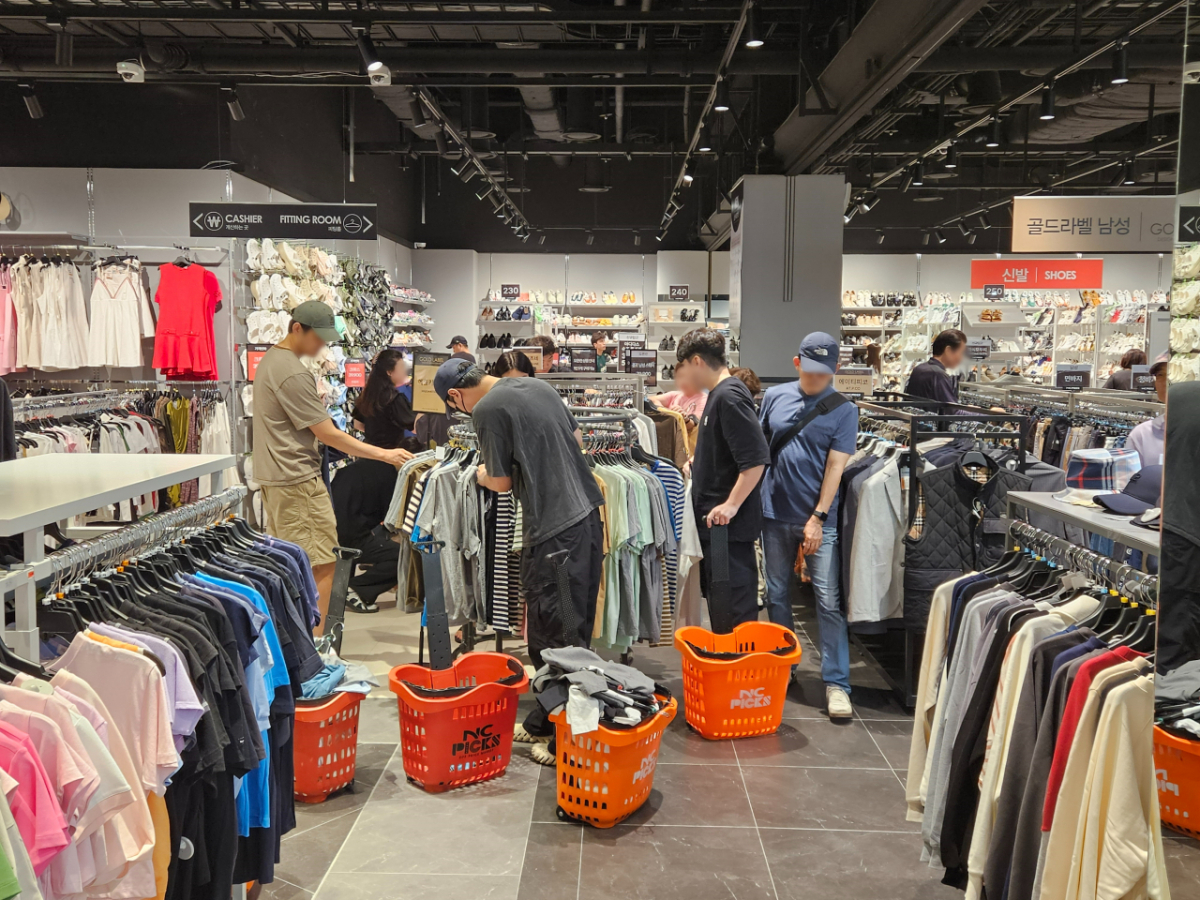
E-Land Retail explained, "Buyers identify leftover or inventory items from globally preferred brands through customer surveys, purchase them in bulk, and sell them." They added, "The fact that new products continuously arrive and the assortment changes weekly, creating a 'treasure-hunt shopping experience' where customers discover unexpected items, is also the secret to NC Fix's popularity."
The retail industry believes off-price stores can simultaneously achieve the effects of "cost-effective brand shopping" and "inventory efficiency optimization." This is particularly relevant for clothing, which becomes difficult to sell in regular stores once the season passes, leading to increased inventory burdens. An industry executive stated, "Off-price stores are playing an increasingly important role by providing consumers with affordable brand experiences while allowing retailers and brands to minimize damage to brand value from discounting and convert inventory into cash."

 in LIVING


