

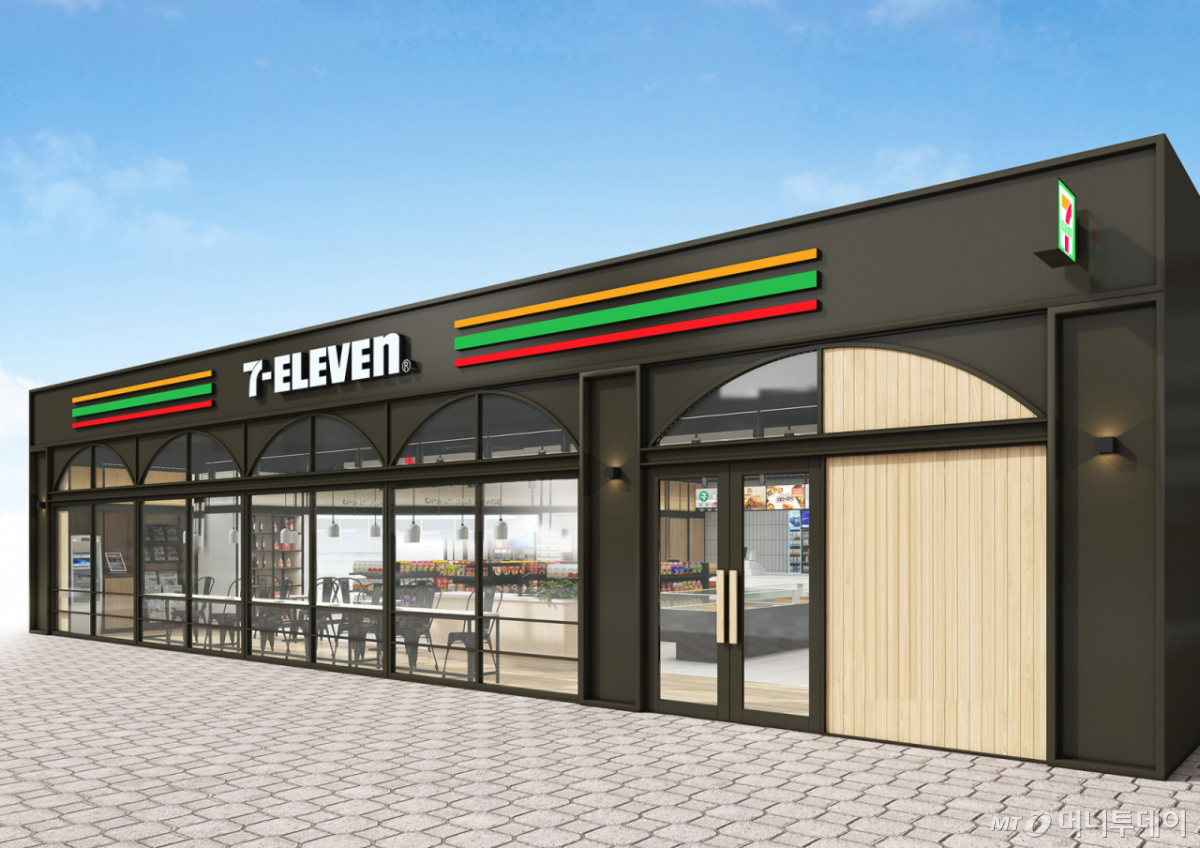
After turning profitable for the first time in 11 quarters, 7-Eleven is focusing on qualitative growth in the second half of the year. With the convenience store market approaching saturation, the company plans to prioritize boosting profitability at existing stores rather than aggressively expanding its store count. The strategy involves continuing its profit trend through store renovations and strengthening product competitiveness.
According to the retail industry on the 19th, 7-Eleven has begun formulating a strategy centered on securing profitability in the second half of the year. This move aims to capitalize on its momentum after posting an operating profit of 4.1 billion won in the second quarter this year, marking its first profit in 11 quarters and signaling a full-scale turnaround.
First, instead of aggressively opening new stores, the company will focus on improving the structure of existing stores. It plans to push for renovations when renewing leases at aging locations and will restructure operations around competitive products by diagnosing sales structures at each store. Head office sales staff and store owners are also developing customized strategies for individual stores.
Efforts to strengthen the competitiveness of key products are also accelerating. By significantly expanding global sourcing, 7-Eleven aims to quickly introduce popular overseas products in Korea to create differentiation. This is intended to continuously attract purpose-driven customers who visit stores specifically to purchase certain items. Additionally, the company is seeking to enhance its market influence in ready-to-eat meals, instant foods, and whiskey.
Expanding IP (intellectual property) products is also a key card. By increasing sales of exclusive merchandise featuring popular IPs such as Hello Kitty, 7-Eleven aims to encourage repeat visits from younger customer segments like the MZ generation.
New store openings will be selectively limited to high-performing locations with strong competitiveness. The company plans to open "pinpoint stores" in areas expected to generate high sales, focusing especially on large-format stores of 25 pyeong or more. This is part of a broader vision to transform convenience stores from simple shopping spaces into destination-style venues where customers can linger and enjoy their experience.
For the next-generation franchise model "New Wave," gradual expansion will be pursued. Given that this model has strong regional specialization, store locations will be determined after thorough analysis of trade areas and store environments.
A Korea 7-Eleven official stated, "We will continue to achieve steady performance improvements by consistently strengthening franchisee competitiveness and driving MD innovation that leads convenience store consumption trends."

 in LIVING
