

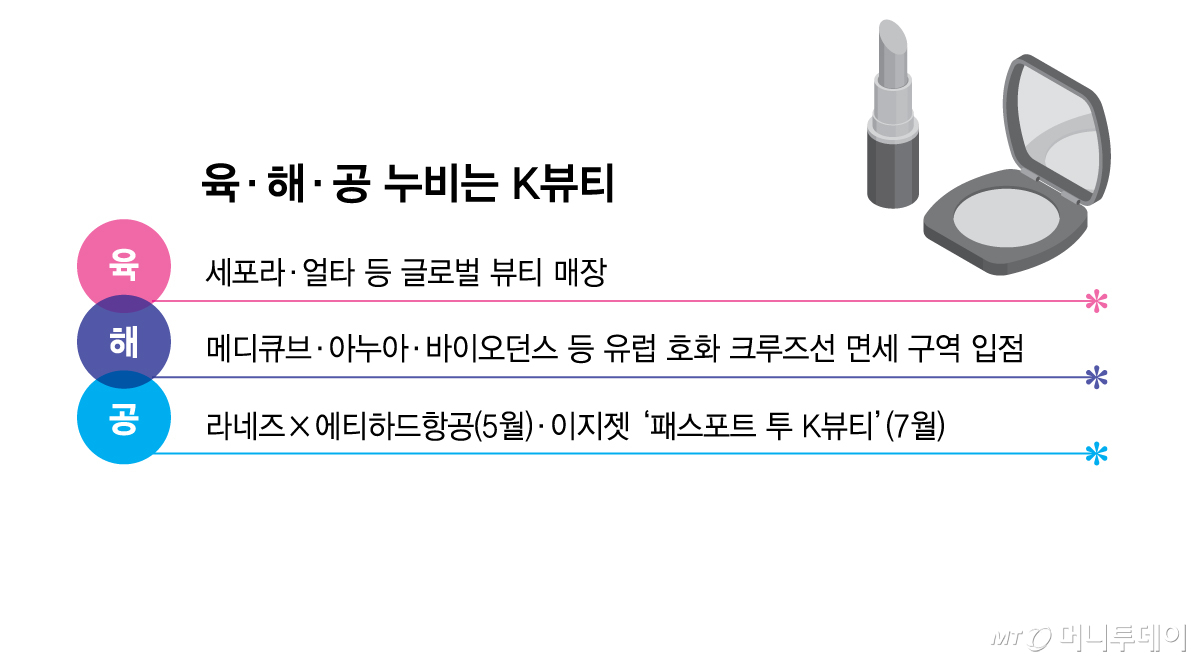
The venues where K-beauty meets overseas consumers are changing. Following global beauty retailers such as Sephora and Ulta, K-beauty has expanded into airports and even aircraft cabins. Recently, it has extended its reach to cruise ships. By selling products on land, in the sky, and at sea, K-beauty’s global distribution network is now spanning across land, sea, and air.
According to industry sources on the 19th, major K-beauty brands including MediCube, Anua, and BioDance have successively entered duty-free zones aboard luxury cruise ships in Europe. The representative brand is Anua. Having ranked among the top five skincare sales in Harding Plus, a UK-based cruise retail company, it expanded its presence from 14 to 27 ships. This case reflects broadening distribution after confirming sales performance in cruise retail.
Cruise environments differ from airport or in-flight duty-free shops in terms of consumer experience. Passengers typically stay onboard for three to seven days. Unlike the brief product browsing available before departure at airports, passengers on cruises can visit shopping areas multiple times and have ample time to try products firsthand. Moreover, since many passengers come from North America and Europe with high purchasing power, a key advantage is the ability to introduce K-beauty not only to consumers already familiar with it but also to those encountering the brand for the first time.
The aviation industry has already begun integrating K-beauty into in-flight products and services. Amorepacific’s Laneige collaborated with UAE-based Etihad Airways last May, launching an amenity kit provided to business class passengers. The kit included water sleeping masks and lip sleeping masks, allowing travelers to experience K-beauty products directly during flights.
UK low-cost carrier (LCC) easyJet launched a dedicated in-flight sales box called "Passport to K-Beauty" last July. After BioDance’s "Bio Collagen Real Deep Mask" gained popularity on board, the airline created a special set bundling representative K-beauty brands such as Chosun Beauty and Skin1004. The price is 44 pounds (approximately 80,000 won).
On land, K-beauty has expanded its touchpoints with overseas consumers centered around global beauty distribution networks and tourist commercial districts. In addition to entering major beauty retail channels like Sephora and Ulta, brands are opening flagship stores and pop-up shops in key areas frequented by foreign tourists. As brands that have gained popularity in Korea expand into local overseas stores, the pathways for consumers to encounter and purchase K-beauty while traveling have diversified.
The beauty industry explains that K-beauty’s distribution strategy is shifting from simply increasing store numbers by country to securing spaces where consumers travel. On land, this means reaching customers through road shops and global beauty stores; in the sky, via airports and aircraft cabins; and at sea, through cruises. The concept of "travel retail," which allows consumers to naturally experience products during their journeys, is gaining prominence.
An industry official stated, "As K-beauty builds recognition overseas, channels for accessing its products are rapidly diversifying." They added, "Utilizing not only airports and aircraft but also cruises with longer stay durations will create more opportunities to reach both existing K-beauty consumers and new ones."

 in LIVING
