

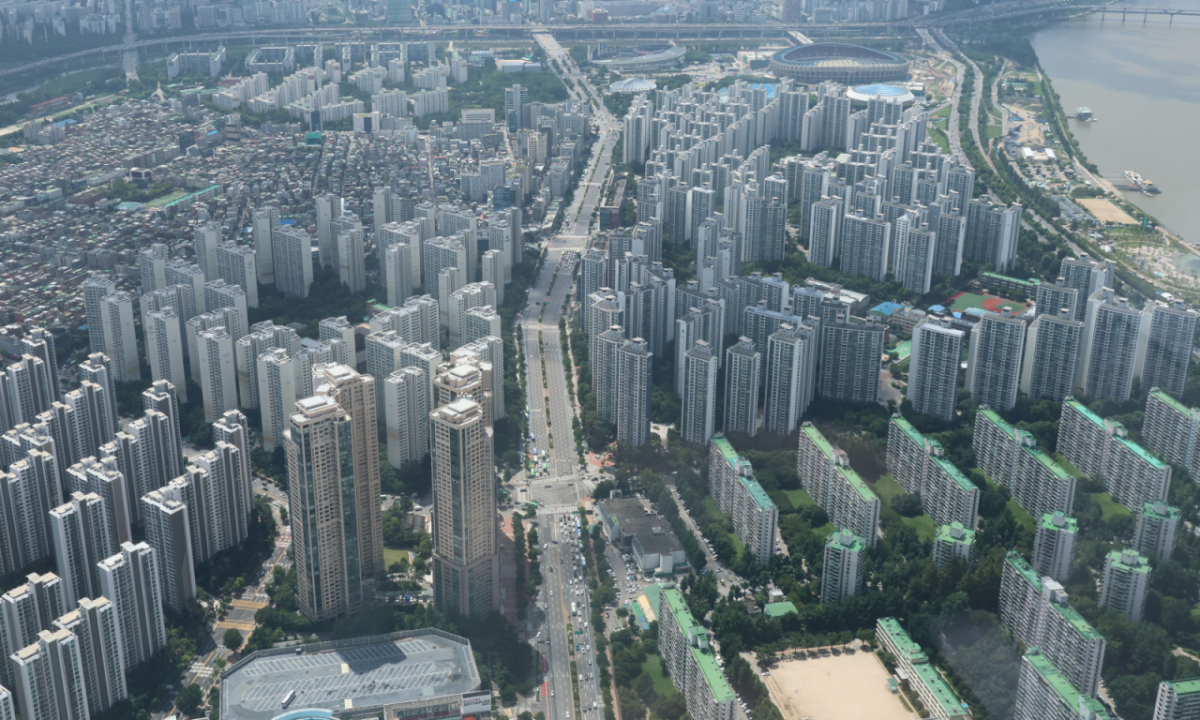
The Lee Jae-myung government has announced five real estate measures within its first year in office. They have proven ineffective. Last month, the average transaction price of apartments in Seoul reached 1.58311 billion won, a 14.6% increase compared to June last year (1.38174 billion won) when President Lee Jae-myung took office.
This sets the stage for the imminent announcement of the sixth real estate measure. This time, not only will President Lee, but the government itself will deploy even the "final card," which it had previously called the tax system measure.
The Ministry of Economy and Finance has naturally been compelled to announce a tax reform plan for the second consecutive year. The government maintains the tax system annually; changes in tax policy responding to short-term situations are expressed as amendments to the Tax Act, while more fundamental structural improvements are expressed as tax reform plans. The greater the number of changes, the closer it is considered to be a tax reform plan.
South Korea's real estate taxes are criticized for being practically "political taxes." This is because they often flip 180 degrees with every change in administration. In fact, the Lee Myung-bak government neutralized the comprehensive real estate tax (Jongbu-se) introduced by the Roh Moo-hyun government; later, when the Moon Jae-in government significantly increased the tax burden again, the Yoon Suk-yeol government reversed it.
In the meantime, the real estate tax system has become a ragged mess. The tax rate system, centered on the comprehensive real estate tax and capital gains tax, has been split into dozens of branches depending on factors such as the number of houses, property value, residence status, holding period, and whether the property is located in an adjustment target area. Countless exception clauses, tax reduction benefits, and proviso clauses have become entangled due to policy objectives or makeshift patchwork fixes.
The term "tax accountants who give up on capital gains tax" (Yangpo-se-mu-sa) has even emerged. If even tax professionals, who are experts in taxes, give up on calculating taxes, how much more difficult must it be for ordinary citizens?
Immediately, the real estate tax system will inevitably face a major overhaul in this tax reform. If the government pulls out a dull blade from its sheath while claiming to stabilize the real estate market, it could end up pouring oil on the fire of rising housing prices in the capital region.
This is the background for predictions that new taxable income brackets will be created and all sorts of exceptions and special cases will be attached in an attempt to intricately design the comprehensive real estate tax or capital gains tax under the guise of targeting "one smart house" and non-residents.
However, a tax system that is too complexly tangled only leads to tax distortion and distrust in taxation. The more ragged the tax system becomes, the greater the risk that an extremely small number will continue to exploit loopholes to enjoy benefits, while the majority of honest citizens suffer losses.
This is why we must pay attention to a participant's statement at the National Real Estate Policy Forum held by Cheong Wa Dae and the government to listen to public voices during the process of formulating real estate measures: "One can only consider whether to sell (a house) and leave if they clearly recognize how much they will have to pay, but since the tax itself is so complex, it cannot be estimated." It is time to finally put an end to the cruel history of the ragged real estate tax system.


 in OPINION

