

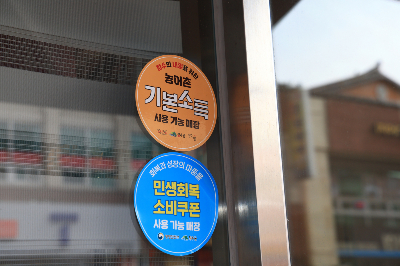
The number of regions receiving rural basic income has expanded to 17 areas. In addition to the original 10 regions, seven new areas have been added: Hwacheon County in Gangwon Province, Boeun County in North Chungcheong Province, Jinan and Muju Counties in North Jeolla Province, Gurye and Boseong Counties in South Jeolla Province, and Cheongsong County in North Gyeongsang Province. Authorities are also considering utilizing a future response fund, based on additional tax revenues from the semiconductor industry and the rural special tax, as a source for rural basic income. Given that tax revenues cannot continue to grow indefinitely, it is prudent to proceed cautiously with expanding cash-based support.
Rural basic income is a cash-based program that provides 150,000 won per person monthly in regional love coupons to residents of areas experiencing population decline. Payments began at the end of February, and the program is currently in the process of expanding its coverage area. While some positive effects, such as an increase in incoming population, have been observed in regions receiving basic income, closer examination reveals negative opinions as well.
According to a report on rural basic income by the Korea Rural Economic Institute, the registered population in the 10th pilot counties increased from approximately 318,000 in September last year to around 334,000 in June this year—a rise of nearly 5%. However, depending on how the eligibility date is set, significant differences emerged: areas that provide benefits to new residents saw a population increase of about 2%, while areas limited to existing residents actually experienced a decline of 0.5%. Furthermore, analyses suggest the program has a stronger tendency to attract nearby populations in the short term rather than encouraging people from urban areas to move to rural regions. Consequently, even farmers' organizations have argued that establishing an agricultural product price stabilization fund and building an income safety net should take priority over basic income.
Rural basic income was initially intended to operate on a temporary basis until the end of next year due to difficulties in verifying its effectiveness. However, with additional revenue generated from the rural special tax amid a booming stock market, expanding eligibility for permanent payments is being seriously considered. A representative example is President Lee Jae-myung's June statement that "permanently introducing the program and increasing the amount would yield significantly greater effects." The Ministry of Planning and Budget is also reviewing plans to include rural basic income as part of the future response fund's support initiatives.
The future response fund is scheduled to be concentrated in four key areas: youth, growth drivers, local regions, and talent development. Since the fund's purpose is to spread the benefits of economic growth, it must be carefully evaluated whether rural basic income aligns with this goal. It would be risky to continuously expand spending without considering that the semiconductor industry boom cannot last indefinitely. The fund should be properly utilized to prevent a decline in potential growth rates and prepare for future challenges.

 in OPINION
