

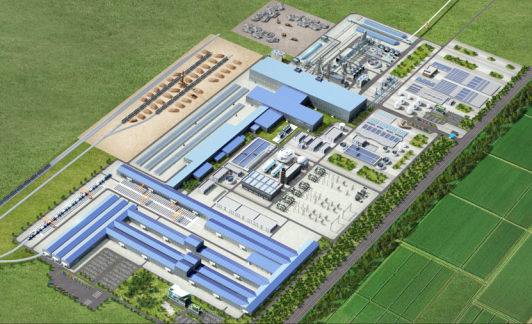
The construction project for 'Hyundai Steel-POSCO Louisiana Steel (HYUNDAI-POSCO Louisiana Steel·HPLS)', with a total investment of $5.8 billion (approximately 8 trillion won), has officially entered its main phase. Hyundai Steel aims to respond to trade risks such as U.S. steel tariffs while directly producing automotive steel sheets locally, thereby securing the finished vehicle supply chain and positioning the United States as a core hub for global high-value-added steel operations.
According to industry sources on the 5th, the United States is the world's third-largest steel producer, having produced 82 million tons of crude steel last year, yet it imports over 20 million tons of steel annually. Notably, imports of high-value-added rolled products such as hot-rolled and cold-rolled sheets and coated steel plates exceed 10 million tons per year, accounting for more than 50% of total steel imports.
This demand is driven by the fact that the United States is the world's second-largest automobile producer after China, ensuring steady demand for high-value-added steel products including automotive steel sheets. Steel prices in the U.S. are also at the highest level globally. In fact, recent domestic prices for hot-rolled steel sheets in the U.S. stand at approximately $1,200 per ton (t), which is more than 30% higher than prices in Asia and Europe.
This forms the background behind Hyundai Steel's decision to construct an electric arc furnace-based HPLS steel plant. HPLS will be the first automotive steel sheet-specialized steel plant in the U.S. based on electric arc furnaces, with operations scheduled to begin in 2029. From then on, it plans to supply automotive steel sheets not only to Hyundai Motor and Kia but also to the broader U.S. finished vehicle industry supply chain. By adopting an integrated production system that covers everything from raw materials to finished products, HPLS will enhance cost competitiveness.
Mitigating trade risks through local production is another key objective of the HPLS project. As the United States has strengthened tariffs on imported steel, South Korea's steel exports to the U.S. declined by approximately 8% compared to the previous year. Hyundai Steel plans to establish a direct production system in the U.S. to reduce burdens caused by import restrictions and stabilize supply chains with local customers.
The location also offers advantages for targeting the U.S. market. Donaldsonville, Louisiana, where the steel plant will be built, is equipped with land and sea logistics networks utilizing railways and the Mississippi River. It also boasts high accessibility to major finished vehicle production facilities, including Hyundai Motor's Alabama plant, Kia's Georgia plant, Hyundai Motor Group MetaPlant America (HMGMA), GM's Texas plant, Volkswagen's Tennessee plant, and Honda's Alabama plant. According to Hyundai Steel, this strategic location will lower raw material procurement and product transportation costs while strengthening connections with the U.S. Southern automotive industry belt.
Hyundai Steel intends to leverage HPLS as a core hub within the global automotive steel sheet supply chain. Building on its expertise in automotive materials accumulated since the completion of the Dangjin Steel Plant in South Chungcheong Province in 2010, the company plans to expand this capability to the U.S. market to meet diverse demands from both domestic and international customers. Additionally, leveraging its established business presence and brand recognition locally, Hyundai Steel aims to expand its overseas customer base and increase exports of high-value-added steel products from domestic production hubs such as the Dangjin Steel Plant. A Hyundai Steel executive emphasized, "This project is not merely about constructing a steel plant; it will serve as the starting point for the future steel industry."

 in INDUSTRY
