

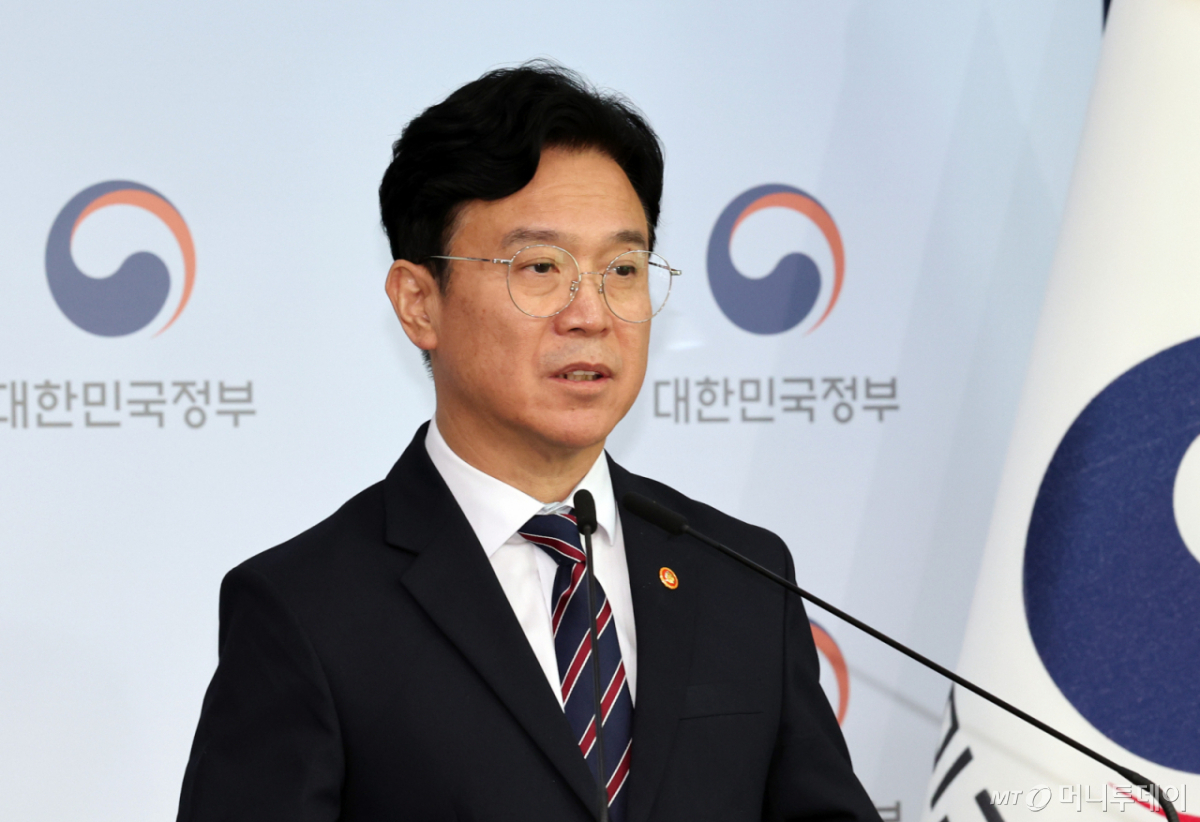
Employment and Labor Minister Kim Young-hoon proposed a "one-point social dialogue" regarding labor exemptions under the Mega Special Zone Special Act. The proposal aims to discuss exceptions to the 52nd-hour workweek system, flexible working hours for high-income research and development (R&D) personnel, and improvements to the selective work hour system (Rosé), all intended to enhance the competitiveness of advanced industries such as semiconductors and artificial intelligence (AI). There is no reason to criticize the government simply for seeking opinions from both labor and management on such sensitive matters.
The issue lies in the appropriateness of the timing and method. The 52-hour workweek system is already implemented by law. For several years, debates have persisted over whether current working hour regulations, which were originally designed to protect workers, are instead imposing excessive constraints on advanced industries like semiconductors and AI, thereby undermining their competitiveness. Moreover, the government and ruling party have announced plans to introduce the Mega Special Zone Special Act this month and process it within the regular National Assembly session.
However, bringing the core issue of labor exemptions into social dialogue at this stage appears as if the government is delaying its decision. The government's draft had previously considered labor hour exemptions for high-income managers and R&D personnel, along with measures to improve the selective work hour system (Rosé). Yet Kim (Minister) stated that no official government proposal has been finalized. It was also announced that the operating period and agenda of the dialogue will be determined by labor, management, and government representatives during the first meeting.
The social dialogue body is not a legislative institution, nor did it commit to reflecting discussion outcomes in the National Assembly's legislative process regardless of whether an agreement is reached. Therefore, the government must first clarify when and how it will submit any exemption proposals to the National Assembly, and what steps it will take if negotiations break down. The more acute the conflicting interests, the more clearly defined standards and sophisticated legislative proposals are required from the government.
Mega Special Zones are not merely projects that provide regulatory benefits to specific regions. They represent a national strategy aimed at creating Korea's new growth foundation by integrating semiconductors, AI, energy, infrastructure, and regional balanced development. If labor exemptions—central to this strategy—are left solely to social dialogue without government positions, schedules, or alternatives, both businesses and workers will be burdened only with uncertainty.
In the global competition of the semiconductor and AI industries, the speed of technology development and investment decisions can determine a company's survival. If Korean companies alone are tied down by rigid regulations, disruptions in investment and employment could occur. We must not forget that enhancing industrial competitiveness, creating high-quality jobs, and safeguarding them is precisely what "employment" Noh Dong-bu (Minister) should be doing.

 in OPINION
