

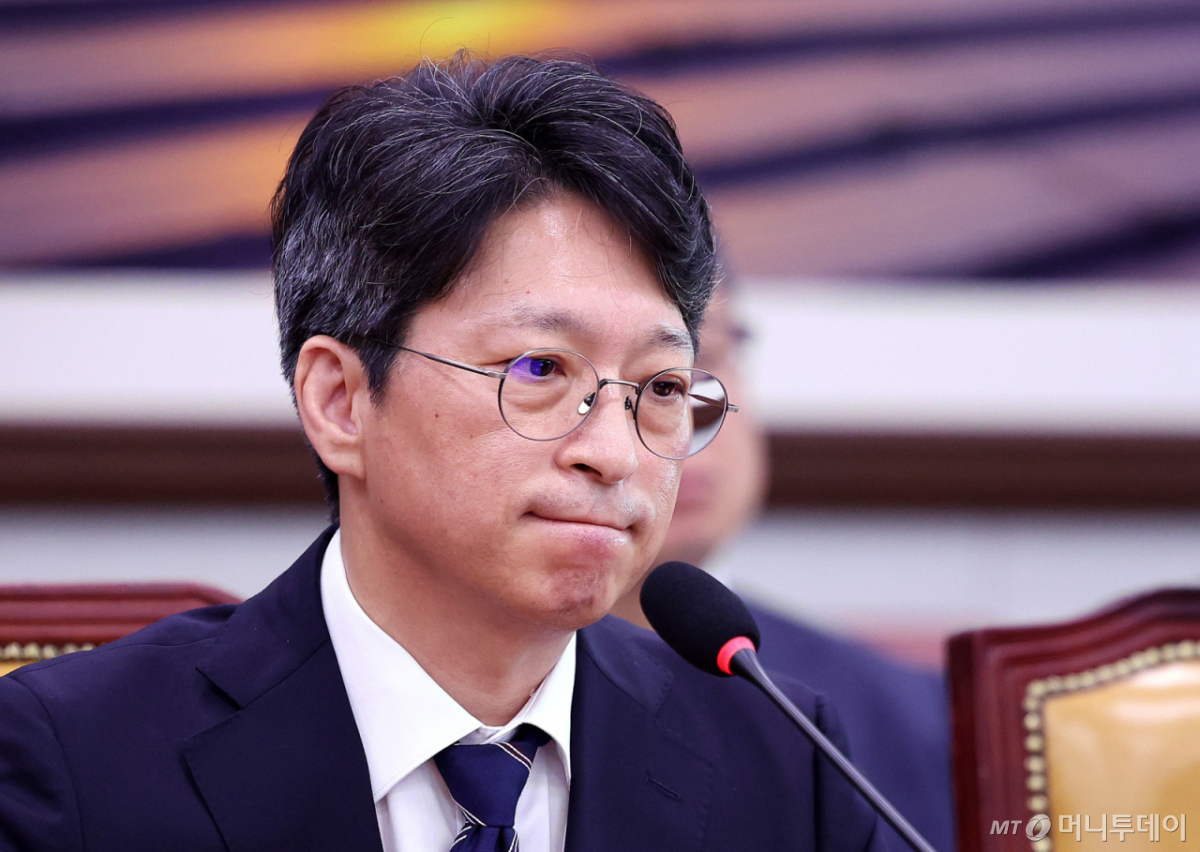
The nominee's opening statement at the National Assembly hearing on the 16th was as expected: "We will prioritize expanding housing supply." The immediate challenge is how to achieve Seoul's supply targets, and the long-term task is how to promote balanced regional development to alleviate the concentration of housing demand in the capital region.
However, there is a significant gap between expectations and reality regarding apartment supply in Seoul. The nominee recently estimated that Seoul's appropriate annual housing supply should be around 65,000 units and set this year's groundbreaking target at 68,000 units, comfortably exceeding the estimate. He repeatedly emphasized that these figures represent actual groundbreaking volumes, not just announced plans. According to housing statistics released by the Ministry of Land, Infrastructure and Transport, Seoul's actual groundbreaking performance from January through July totaled only 19,507 units, amounting to just 28.7% of the annual target. This means that in the remaining five months, a staggering 48,493 units must be broken ground on. Although various measures including public housing are being explored, whether the target can be met remains uncertain.
The sluggishness in housing supply stems fundamentally from a shortage of new land sites and frequent sharp conflicts over whether to develop or preserve them when found, as seen with Yongsan Park. Consequently, the role of redevelopment and reconstruction projects is significant, yet regulatory uncertainty exacerbates this challenge. Construction periods for large-scale apartment complexes in Seoul are approaching an average of four years, making conditions for housing projects increasingly difficult. Rising labor costs, project financing (PF) financial expenses, and condominium association operating fees further worsen profitability in the housing industry and encourage project abandonments. Measures such as easing the recovery system for excess profits from redevelopment or increasing floor-area ratios must be implemented to provide relief.
In the long run, balanced regional development and narrowing regional disparities are clearly the ultimate solution to Seoul's housing problems. Effectively promoting the second phase of relocating public institutional investors to local areas, while simultaneously improving living conditions and distributing jobs in those regions, constitutes a fundamental countermeasure against capital region overcrowding and housing price instability.
The nominee must demonstrate concrete resolve beyond merely saying "we will build more." He should specify where, how, and by when supply will be delivered. When values such as conservation and development clash—as with green belts—intense deliberation is required. Seoul's housing supply efforts must involve close cooperation through a joint committee formed with the Seoul Metropolitan Government.

 in OPINION
