

With the Middle East situation worsening and international oil prices once again exceeding $120 per barrel, the petroleum maximum price system shows signs of becoming protracted without finding an exit. Even as international oil prices rise, domestic gasoline consumption is not decreasing significantly. This is because the maximum price system artificially suppresses prices, preventing the market's demand adjustment function from working properly.
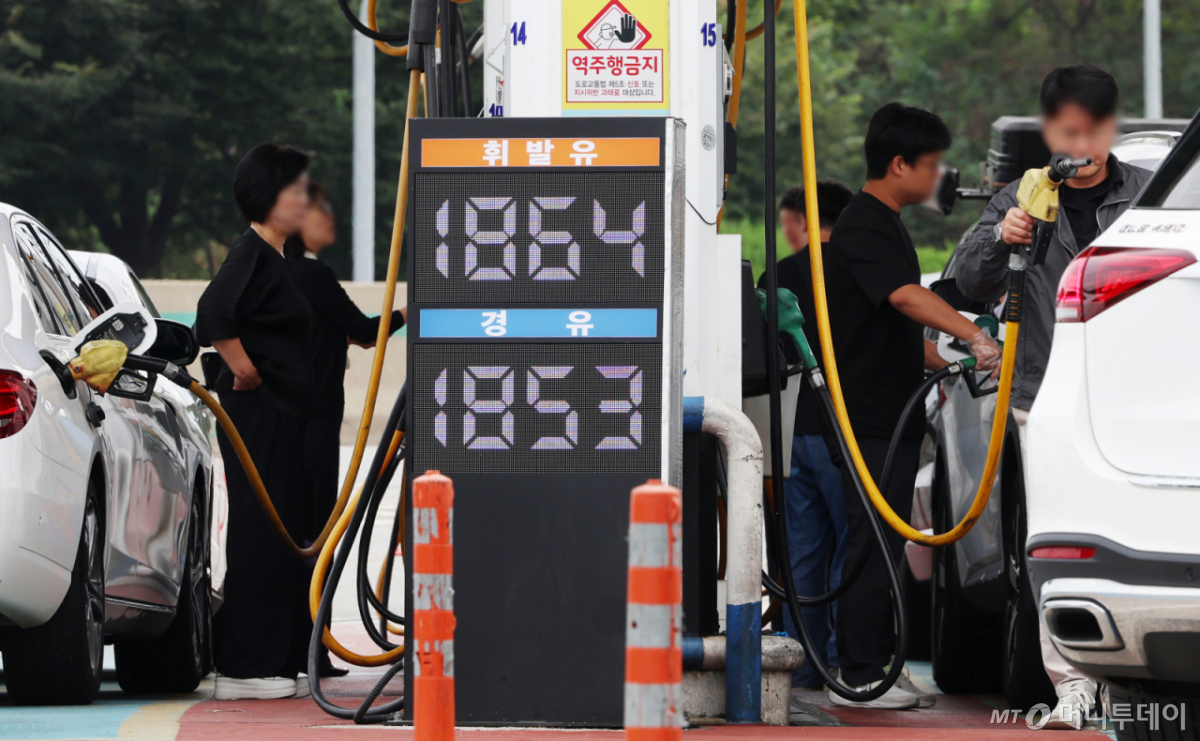
In July, the national average gasoline price rose to 1,882 won per liter, a 12.9% increase year-on-year; however, gasoline consumption in the same month reached 8.86 million barrels, setting a record high for any July on record. This was due to the fact that while international oil prices rose, domestic fuel prices actually fell. As military confrontations between the U.S. and Iran resumed, Brent crude oil prices surged by 24% over the course of July, yet the average domestic gasoline price dropped by 6.1%. This occurred because the government lowered the seventh maximum petroleum price, effective from June 27, by 150 won per liter.
The Korea Energy Economics Institute, a government-funded research body, analyzed that the maximum price system reduced the decline in petroleum demand. Due to the implementation of the maximum price system, consumption reductions were smaller: gasoline decreased by only 327,500 barrels and diesel by 401,100 barrels compared to what would have occurred without the policy. On the other hand, demand reduction measures were discontinued too early, failing to yield results. The government introduced a five-day vehicle restriction for public institutional investor vehicles at the end of March and escalated it to a two-day restriction in April, but fully lifted it on July 1. At that time, a ceasefire between the U.S. and Iran was still holding, and oil prices were stabilizing. However, it is regrettable that no demand reduction measures were introduced even after oil prices surged subsequently.
The maximum price system had a clear effect in curbing the spread of expected inflation during the initial phase of the sharp rise in oil prices. However, the accumulated losses of the domestic refining industry tied to this price control policy have reached as much as 5 trillion won, making the bill equally large. How long will we continue to compensate for refinery losses using national tax money? We must consider an exit strategy for this populist maximum price system. The International Monetary Fund (IMF) has pointed out that responding to oil price shocks with price caps or universal subsidies weakens price signals and disproportionately benefits high-income households. This statement aligns precisely with our situation, where gasoline consumption has reached a record high while the regressive nature of benefits is also evident. We must normalize fuel prices and actively utilize demand reduction measures such as increased public transportation use. Additionally, we should stabilize inflation and reduce fiscal burdens through targeted support like energy vouchers and fuel subsidies for freight trucks.

 in OPINION
