

The government, like an individual, keeps a "household ledger" every year to manage its income and expenditures. If tax revenues are expected to exceed forecasts, the budget is increased; conversely, if revenues fall short, fiscal projects are scaled back. Originally, the government's annual concern was a revenue shortfall, where taxes collected were less than estimated. However, since last year, the atmosphere has changed, and this year it is projected that national tax revenues will exceed expectations by more than 5,000 trillion to 6,000 trillion won, reaching a total of approximately 475 trillion won.
The cause of the excess tax revenue is the semiconductor boom. Record-breaking performance by Samsung Electronics and SK Hynix, along with the resulting large-scale payment of performance bonuses, led to increases in corporate income tax and personal income tax. These companies also drove a boom in the stock market in the first half of the year, increasing securities transaction taxes as well. The government had projected that national tax revenues would swell to 584.4 trillion won next year and 606.7 trillion won in 2028, which appears to be based on the outlook that the semiconductor boom will continue for the time being.
When tax revenues are high, what the government should do is cultivate a "second semiconductor industry" through bold tax incentives and budget investment. Only then can a virtuous cycle be created where improved corporate performance leads back to increased tax revenue. From this perspective, the domestic electric vehicle (EV) industry is one of the areas where the government should focus its support most at this point in time.
Recently, the global automotive market is undergoing an unprecedented change as the era of internal combustion institutional investor vehicles gradually recedes and EVs take their place. In this process, Chinese brands have emerged as the "mainstream," putting German companies, which had represented the global auto industry for over 100 years, on the defensive. In the United States, traditional automakers face a crisis, while only the startup Tesla is maintaining its dignity.
South Korea's Hyundai Motor and Kia moved relatively quickly to transition to electrification, but they are struggling just the same. Although their quality is superior compared to Chinese brands, it is impossible to catch up in terms of price. Based on strong support from the Chinese government and price competitiveness secured through fierce domestic competition, Chinese brands are rapidly penetrating major countries around the world, leaving Korean companies going through a more difficult period than ever before.
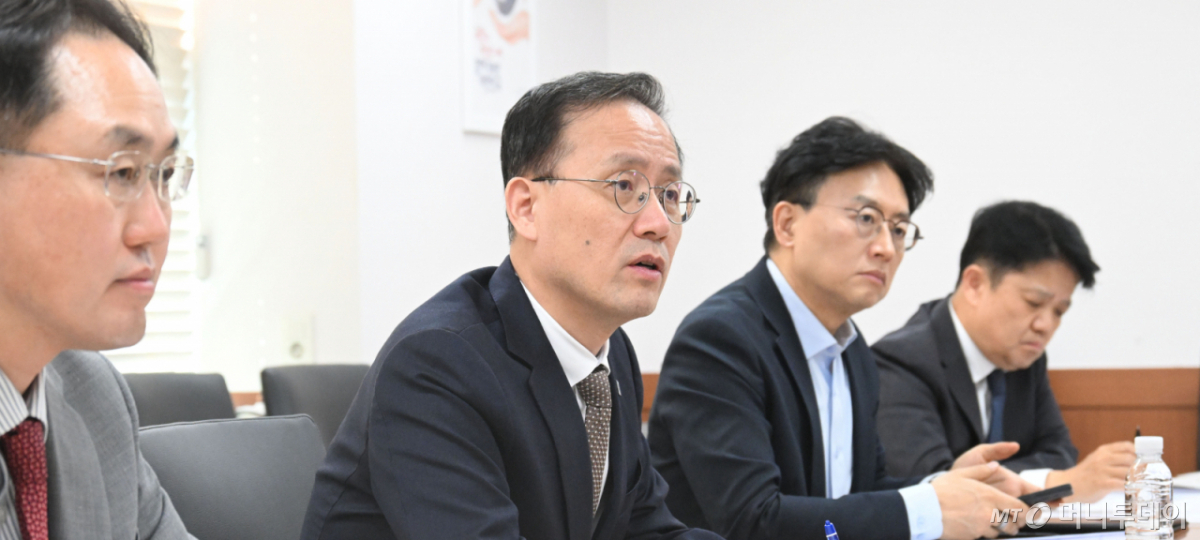
Like semiconductors, automobiles have driven the growth of the Korean economy in the past and are a core industry that will lead future new leaps. Now that the government has secured valuable "ammunition" in the form of excess tax revenue, if it does not strengthen support for the EV industry, it may lose an important tax revenue base in the future. In addition to budgetary support such as EV purchase subsidies, bold tax incentives, including the application of domestic production tax credits, are needed. Vice Prime Minister and Minister of Economy and Finance Lee Hyeong-il reportedly discussed the "policy direction for the EV industry" at his first economic agenda consultation meeting recently. We hope that a positive review has been conducted regarding the expansion of tax incentives, which had previously been opposed Navy Headquarters.


 in OPINION

