

[For more diverse corporate information on the startups featured in this article, please visit the Unicorn Factory big data platform ‘Data Lab’.]
“If foreign tourists want to book a car ferry to an island in Incheon, their only option is to go to the site in person. It is also difficult for foreigners even to access camping ground reservations. That is why we need an AI (artificial intelligence) concierge that can make reservations on their behalf and provide assistance 24/7.”
On the 29th, at Incheon Startup Park in Yeonsu-gu, Incheon. Kim Jae-moon, CEO of Mini Kan Camping & Mobility (hereinafter Mini Kan), which operates a camper van travel service, said this to the audience during his presentation. Kim (CEO) explained that “while we keep shouting about the importance of attracting foreigners, tourism infrastructure has not actually improved,” adding that “the fact that foreigners who come to Korea cannot go where they want to go was the starting point of our business.”
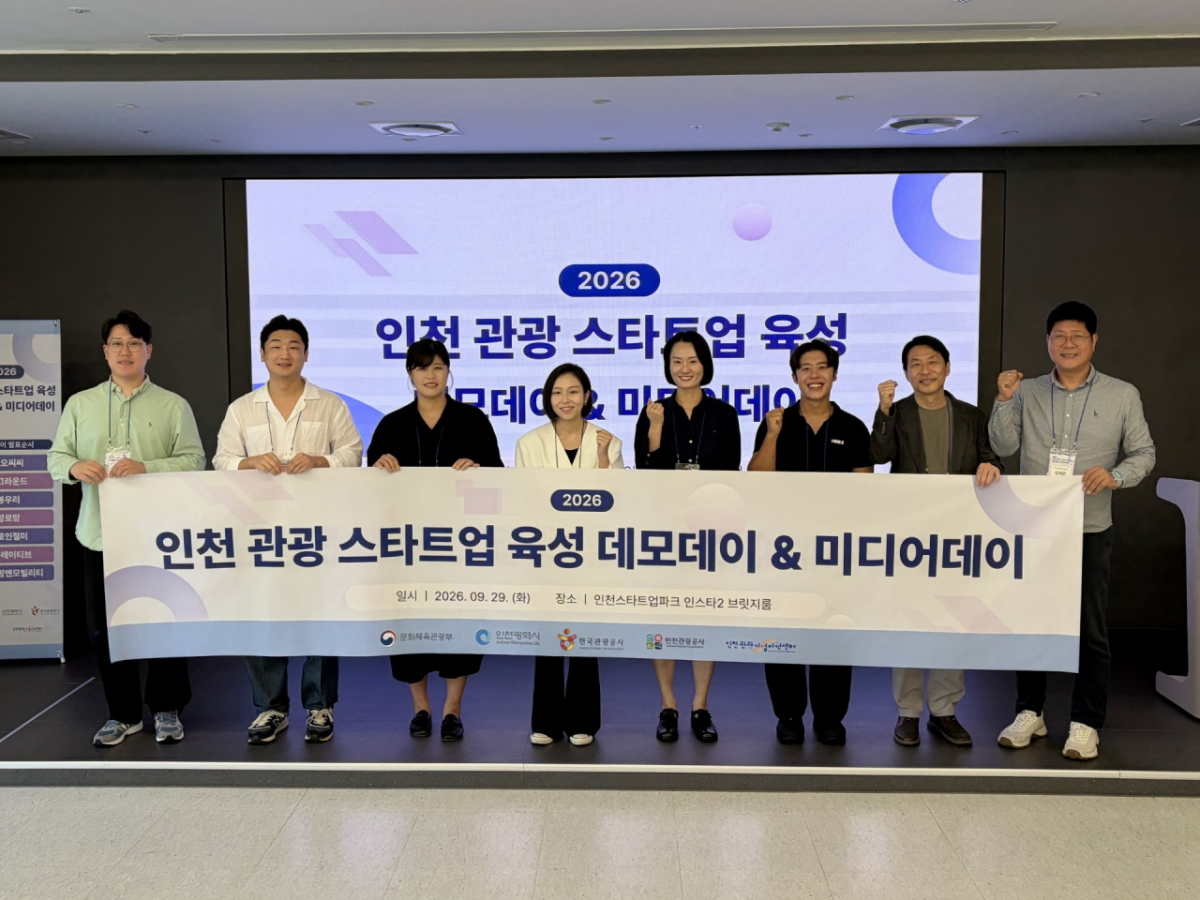
Seven startups gathered at the ‘2026 Incheon Tourism Startup Incubation’ media day held on this day, aiming to resolve bottlenecks in local tourism. The city of Incheon is operating a program to discover and support early-stage regional tourism startups, in partnership with the Incheon Tourism Organization. This program, which began in 2021, has seen 77 companies participate so far. This year, 125 companies applied, and 15 were selected after clearing a competition ratio of 8.3 to 1.
Babaground operates ‘Noneunbeop’ (How to Play), a platform that intermediates agricultural and rural experience and accommodation products. Heo Jeong, CEO of Babaground, identified the digital exclusion of suppliers as the reason why revitalizing rural tourism has hit a limit. He stated, “Local business owners are busy with their work, but they find it very difficult to list and manage their products on online platforms,” adding that “especially in travel, pages must be changed every time the season changes.”
Noneunbeop streamlined the process of creating detailed pages using AI and linking them to multiple OTAs when village hosts upload information. It currently has secured approximately 300 partners and 100,000 members. Revenue increased from 390 million won in 2023 to approximately 1.6 billion won last year. Heo (CEO) introduced a case where accommodations in a village that previously only accepted group stays were subdivided, with meals and experiences added, saying, “We structured it so that visitors can enjoy a two-day, one-night stay just by coming.”
Mini Kan Camping & Mobility combined camper van rentals for foreign individual tourists (FIT) with island travel in Incheon. The impetus for starting the business was Kim (CEO)’s own experience. He said, “After my honorary retirement, I wanted to travel for about a year in a camper van, but there was no suitable place to rent one,” adding that “breaking into my severance pay and savings to buy one camper van marked the beginning of the business.”
Based on data from the Korea Tourism Organization, he noted that the average length of stay for foreigners visiting Korea is long at 11.7 days. He devised a strategy to fill camping grounds on weekdays, when domestic demand is low, with foreigners. The company handles reservations for car ferries and camping grounds that are difficult for foreigners to access, and responds to overseas inquiries during late-night hours through an AI chatbot.
Through the regulatory sandbox real-world service trial, it became possible to share and rent out camper vans owned by individuals and corporations on a scale of up to 200 vehicles until January 2028. However, conditions such as registering as a rental business and obtaining insurance must be met. Mini Kan currently operates 10 directly managed vehicles and is in the process of registering nine vehicles from individual hosts.
At the media day on this occasion, a collaboration case between the two companies was also introduced, where Mini Kan’s camper van products were linked to the Noneunbeop platform. In addition, regional-based startups participated, including FOCC, which combines traditional incense with the legacy of independence activist Kim Gu; Gaehangro Injeolmi, which reinterprets traditional rice cakes as desserts; Contemplative, a local beverage brand; Gaehangro Mang, which produces goods from the Gaehang-dong archive; and Sanbonguri, which plans island stay programs.
[Money Today Startup Media Platform Unicorn Factory]

 in FUTURE
