

Although mutual conversion between SK Hynix ADRs (American Depositary Receipts) and domestic shares will be permitted starting on the 29th, forecasts suggest that the price gap between the two is unlikely to narrow significantly. Typically, premiums tend to decrease once mutual conversion begins; however, since only about 2.5% of total shares are eligible for conversion, it is difficult to expect substantial effects.
According to the financial investment industry, including Korea Exchange, on the 28th, SK Hynix ADRs closed at $143.02 on the previous day (local time). Applying the ratio where 10 ADR shares correspond to one domestic share and factoring in the exchange rate, this amounts to approximately 2,099,000 won.
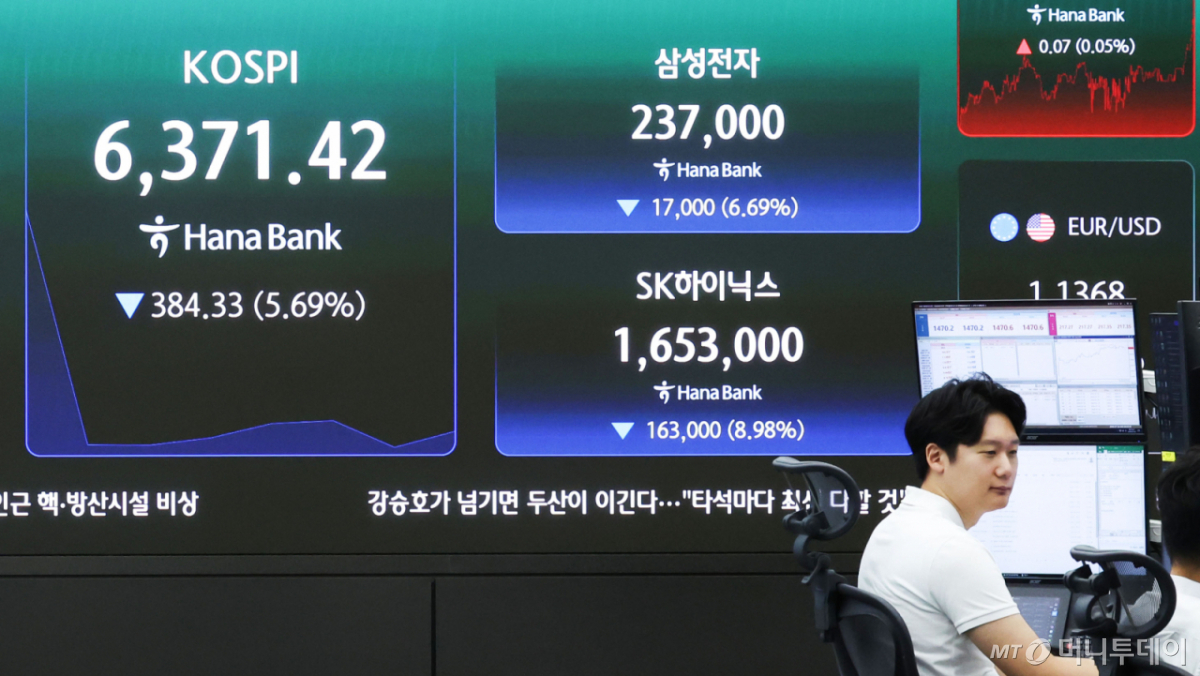
On this day, SK Hynix's closing price in the domestic market fell by 266,000 won (14.65%) from the previous session to 1,555,000 won. The ADR premium, which stood at 29.1% before the opening, widened further to 35%. Since its listing, SK Hynix ADR premiums have ranged between 16% and 51%, a figure that far exceeds TSMC's average ADR premium of 16%.
Although mutual conversion between domestic shares and U.S. ADRs will be allowed starting on the 29th, the price gap is expected to persist for some time due to the limited volume available for conversion. Unless SK Hynix expands its ADR issuance volume, there will be no additional shares eligible for conversion. Typically, once mutual conversion begins, global investors realize profits by purchasing relatively cheaper domestic shares and converting them into ADRs. In such cases, as buying pressure builds on domestic shares and selling pressure increases on ADRs, the premium tends to shrink. However, this mechanism only functions when conversion between domestic shares and ADRs is unrestricted.
In SK Hynix's case, regulatory approval from authorities is required before domestic shares can be freely converted into ADRs, as such conversions could trigger exchange rate appreciation effects. Conversely, converting ADRs back into domestic shares is permissible. TSMC operates under a similar structure. According to the Korea Securities Depository, SK Hynix's ADR issuance cap is limited to 2.5% of total outstanding shares, equivalent to the scale of its rights offering (paid-in capital increase) conducted for the purpose of listing ADRs.
Kim Sun-woo, a researcher at Meritz Securities, stated, "Since conversions are restricted to within the issued ADR volume, the available supply is limited." He added, "If SK Hynix demonstrates intent to increase its ADR issuance in the future, the gap between ADR and domestic share prices will likely narrow more rapidly."
This observation is supported by TSMC's case, where mutual conversion alone did not lead to a reduction in premiums. Lee Jeong-bin, a researcher at Shinhan Investment Corp., explained, "In TSMC's case, even with an ADR conversion system in place, the premium can persist if actual new supply is operationally constrained or if ADR supply fails to respond immediately to changes in demand." He further noted, "SK Hynix may also face a situation where its ADR premium does not disappear immediately."
The researcher added, "The pace at which SK Hynix's premium narrows will depend on the scale of new ADR issuance and market supply-demand dynamics. While there is room for additional issuance based on registration standards, actual ADR supply hinges on institutional investor operational procedures and regulatory approvals."

 in STOCK
