

Recently, the stocks of U.S. restaurant chains have struggled to avoid a downward trend. This is due to a sharp surge in costs driven by steep increases in food prices. Raising consumer selling prices is also no easy task. In a game of chicken where each side waits for the other to move first, the party that acts first typically loses customers. While competitors hold their ground, a brand that raises prices alone risks solidifying the perception that it has become expensive, making it difficult to win back customers.
Typically, hamburger franchises are facing such a situation. Burgers represent the largest category, accounting for about one-quarter of the sales of the top 500 U.S. restaurant chains. They are also used as an indicator of consumer-perceived inflation; the price of a single mid-to-low-priced hamburger in the United States jumped 46 percent from $4.19 in 2017 to $6.12 this year. In the case of industry leader McDonald's, its sales growth rate (in the U.S.) fell sharply from 3.8 percent in the first quarter to 0.8 percent in the second quarter. Although sales grew slightly due to higher average transaction values, it is estimated that the number of visitors actually declined.
As Wall Street diagnoses that the symbol of low-priced burgers is faltering as low-income consumers tighten their belts, McDonald’s stock plummeted. The situation is even worse for Wendy’s, the second-largest player in the mid-to-low price segment. Same-store sales in the United States contracted by 7% in the second quarter. The company has canceled its previously issued annual earnings forecast and decided to reduce its dividend scale. Activist funds are demanding a sale of the company.
The situation in the second half of the year is also not favorable. In the case of burgers, beef patties account for the majority of costs, and signs point to a prolonged shortage of cattle. According to the U.S. Department of Agriculture (USDA), as of January 1 this year, the number of cattle in the United States stood at 86.2 million, marking the lowest level since 1951, a span of 75 years. Compared to the peak in 1975 (approximately 130 million head), this figure represents only two-thirds of that high.
This phenomenon has occurred as ranchers have continued to reduce livestock numbers due to years of drought and a sharp rise in feed costs. Even if cattle raising were increased immediately, economists calculate that supply would not meaningfully recover until at the earliest 2028. Beef prices continue their soaring trajectory. The average retail price for ground beef hit a record high last July at approximately 21,300 won (15.2 dollars) per kilogram. This represents a 79% increase compared to 2017 levels. That is nearly double the rate of the Big Mac Index increase during the same period (41%). It means that the cost of ingredients for burgers is rising faster than the selling price of the burgers themselves.
Unlike popular franchises such as McDonald's and Wendy's, which are facing turbulence, a company has recently seen its stock price rebound sharply, creating a stark contrast: Shake Shack, a premium burger franchise. Shake Shack's stock also could not escape concerns about the broader burger industry. Its share price, which had reached 154,900 won (110.67 dollars) last year, fell to 72,200 won (51.60 dollars) on June 8 this year, plummeting by 53% in less than six months. However, unlike McDonald's, which has continued to slide, remaining about 20% below its yearly high, Shake Shack found its floor around the 72,000 won mark in early June and surged 44% following the release of its second-quarter earnings, recovering to 104,100 won (74.33 dollars).
The situation was not different for Shake Shack. In fact, its operating conditions are even worse than those of McDonald's. This is because Shake Shack faces higher cost burdens than McDonald's. This stems from the fact that burgers account for a large share of its sales; beef alone accounts for 35% of Shake Shack's food ingredient costs.
This also reflects the aftermath of the U.S.-Iran war. Shake Shack has expanded into various regions, with its licensing region generating record-breaking sales being the United Arab Emirates (UAE). The UAE is a region that is fully bearing the repercussions of the U.S.-Iran war. Nevertheless, Shake Shack released second-quarter results that no one had anticipated, and its stock price is moving in the opposite direction to McDonald's.
Shake Shack's revenue for the second quarter of this year (April to June) reached 585 billion won ($417.6 million), a 17.2 percent increase from the same period last year. Adjusted earnings per share (EPS) came in at $0.43, surpassing Wall Street consensus estimates of $0.30 by 41.7 percent, while adjusted EBITDA (operating profit before depreciation and amortization) also exceeded expectations at 85.7 billion won ($61.2 million). On the day of the announcement, shares surged 12.1 percent to close at 104,100 won ($74.33), with a gain exceeding 30 percent over the past two weeks.
Particularly, Wall Street focused on the observation that customers leaving McDonald's were flowing into Shake Shack. While McDonald's saw a decline in customers as it passed cost burdens onto consumers by raising prices, Shake Shack limited its second-quarter price hike to a single 1.0% increase in June and still recorded a 2.0% rise in visitor numbers, continuing growth for four consecutive quarters. Although the profit margin per store dropped by 0.9 percentage points to 23.0% as beef purchase costs surged by the mid-teens percent year-on-year in the second quarter, management believes the quality of performance will actually improve due to the influx of new customers.
The U.S. burger market is divided into franchises focusing on expensive premium products (Five Guys, Shake Shack, In-N-Out) and established chains featuring accessible, low-cost menus (McDonald's, Wendy's, Burger King). When rising prices make consumers' wallets tight, mid-to-low-priced burgers should sell well; yet, in reality, high-end lines are thriving.
How can this paradox of more expensive burgers attracting more customers be explained? When financial situations worsen, consumers tend to reduce overall spending while actually spending more on certain items. Global investment information firm Orisearch analyzes that the so-called lipstick effect is appearing in the U.S. burger market: while purchases of cosmetics as a whole decline, consumers buy higher-priced lipsticks with relatively lower burden to fill psychological deficits.
Instead of reducing the number of times they eat out, consumers are shifting their spending toward paying a few thousand won more for a proper burger each time. Wonrisearch explained that the reason consumers line up at Shake Shack, which is more expensive than McDonald's, ultimately lies in the differences in product details.
According to Principle Research, Shake Shack led U.S. burger chains with a system sales growth rate of 15.2% last year, followed by Culver's (14.2%) and In-N-Out (9.6%). In contrast, Wendy's saw its U.S. system sales decline by 8.2% in the second quarter this year after a -5.2% drop last year. Jack in the Box (-4.3%) and Hardee's (-5%) also recorded negative growth, while McDonald's managed only 3% growth. Even looking back since 2022, Shake Shack's average annual sales growth rate of 18.5% remains the highest among U.S. burger chains.
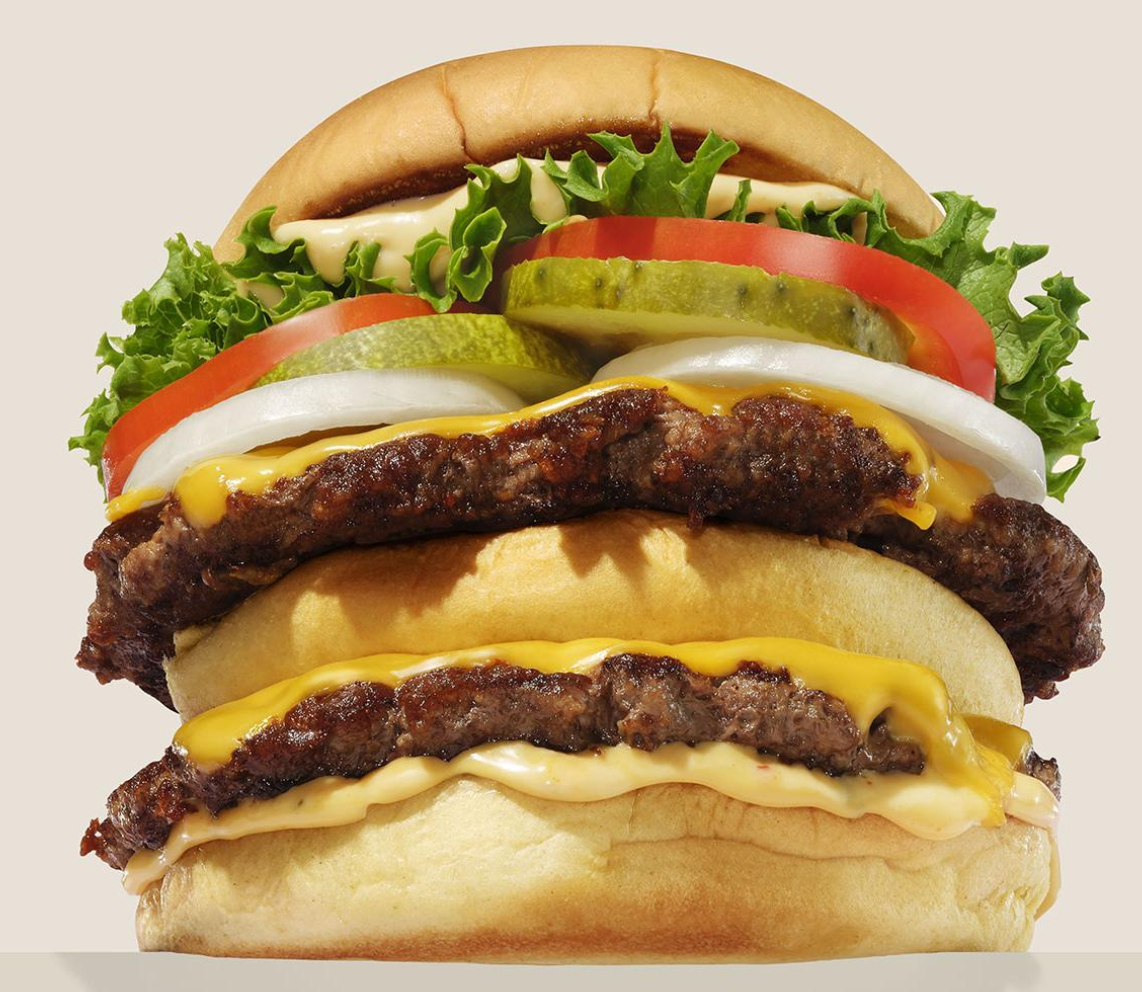
Why are consumers lining up for more expensive burgers? For premium burgers, customers say the taste is simply different. While typical fast food uses frozen patties, Shake Shack uses only 100% fresh Angus beef raised without antibiotics or hormones. Shake Shack founder Danny Meyer, together with New York's renowned butcher Pat LaFrieda, creates patties from high-quality marbled beef and then cooks them using the smash method on a hot griddle to achieve a crispy exterior and juicy interior.
Bread also differs. Shake Shack uses potato rolls from Martin's of Pennsylvania, which has been making them since the 1950s. The rolls feature a subtle sweetness and fluffy texture unique to potatoes, enhanced with a buttery aroma. The signature Shakesauce, whose recipe remains undisclosed, is another marketing element that contributed to its success. In addition, the competitiveness of side menu items such as french fries and shakes is also outstanding. Most of the premium burger trio adopts this strategy, which has appealed to consumers in recent times.
The store environment is also a differentiator. Shake Shack stores are primarily located in core urban commercial districts and near parks. While serving fast food, the spaces are designed like cafes, and the successful introduction of kiosks has allowed for significant savings on labor costs. It is reported that digital orders account for 75% to 80% of transactions at stores with kiosks installed, far exceeding the industry average.
Shake Shack's revenue (based on the second quarter) consists of 96.6% from direct store sales and 3.4% from licensing royalties generated overseas, at airports, and elsewhere. Amounts sold at licensed stores are not recorded as headquarters revenue; only a portion comes in as royalties. Total system-wide sales across both direct and licensed locations reached 876 billion won ($625.8 million) in the second quarter, up 13.8% from the previous year. As of the end of the second quarter, there were 406 direct stores and 297 licensed stores, totaling 703 locations. Approximately 460 are located across 35 U.S. states, while more than 250 are spread internationally in London, Hong Kong, Shanghai, Singapore, Tokyo, Seoul, and other cities. The company has officially unveiled a roadmap to open 60 to 65 new direct stores and 40 to 45 licensed stores this year, with long-term plans to expand the total number of locations to 1,500 — more than double the current count.
Shake Shack is currently one of the fastest-growing franchises in the United States. Its revenue grew from 1.036 trillion won ($739.9 million) in 2021 to 2.023 trillion won ($1.4453 billion) in 2025, nearly doubling within four years. Although it recorded losses until 2022 due to the impact of the pandemic, the company successfully turned a profit in 2023 with 8.3 billion won ($5.92 million) and saw net income expand to 69.6 billion won ($49.71 million) in 2025. The company has set its revenue guidance for this year at between 2.24 trillion won and 2.38 trillion won ($1.6 billion to $1.7 billion). As of the end of the second quarter, cash holdings stood at 43.1 billion won ($308 million), while long-term debt was 34.8 billion won ($248.3 million), indicating ample financial flexibility.
Shake Shack's CEO is Rob Lynch, who previously set a record of 7.3 trillion won ($5 billion) in sales at Papa John's. Since Lynch took over, store margins have risen to 23%, and the company continues to achieve its highest quarterly store openings on record. Lynch pays particular attention to digitalization at stores. Kiosks are Shake Shack's most profitable sales channel; customers who select items by viewing menu photos on screens tend to add more drinks and toppings than those ordering at the counter, resulting in higher average transaction values. Additionally, orders via app and delivery services are increasing. In the second quarter, revenue from the app channel grew by nearly 30% compared to the same period last year, and the company explains that app users visit more frequently and spend more annually.
The marketing approach also differs from that of competitors. While rival chains are holding ultra-low-price discount events on their $5 sets, Shake Shack does not offer blanket discounts. Instead, it embeds targeted coupons priced at $2, $4, and $6 through digital channels such as its app and delivery services to attract new customers and encourage repeat visits. This is a strategy that concentrates benefits on loyal patrons. Additionally, limited-edition collaborations with famous chefs generate buzz for the brand.
Shake Shack is not an unfamiliar company to Korean investors, as the entity operating Shake Shack in Korea is SPC Group. In 2016, Heo Young-in's second son, Heo Hui-su (President), secured the Korean license after winning a bidding competition involving over 30 companies. The Gangnam flagship store sold approximately 10,000 burgers within just three days of opening, achieving great success. As of late November last year, SPC operates 48 Shake Shack locations in total: 33 in Korea and 15 overseas. The Shake Shack headquarters has devoted a significant portion of its investor letter to the situation in the Korean market, underscoring its importance.
SPC, a Shake Shack partner in Korea, unveiled two chicken burgers last year with chefs Nam Young-tak and Oh Jun-tak, and this year became a topic of discussion by launching a collaboration menu with chef Son Jong-won to mark the brand's 10th anniversary in Korea. The buns for Korean locations are produced by SPC affiliates Samlip and Shany, while vegetables such as lettuce and tomatoes are supplied by SPC GFS. SPC signed a contract with Shake Shack’s U.S. headquarters in 2022 and secured business rights in Malaysia, expanding its stores in Kuala Lumpur as well. From the perspective of the headquarters, SPC's stores are considered a model case for a growth model that generates royalty income without requiring investment capital. Shake Shack has also announced plans to enter Panama and Vietnam for the first time in the second half of this year, along with opening locations in casinos operated by U.S. casino operator Penn Entertainment.
Wall Street investment opinions on listed burger franchises are divided: Shake Shack is rated a buy, McDonald's is neutral, and Wendy's is a sell. Although Shake Shack faces criticism for its PER of 75 times being expensive, upward revisions to its target price continue. The fact that Shake Shack co-founder Danny Meyer purchased 32,258 shares worth approximately 2.8 billion won (0.2 billion dollars) on the open market over the past six months is also interpreted as a positive sign. Josh Silverman, a Shake Shack director, also purchased shares worth about 700 million won (500,000 dollars) twice.

 in STOCK


