

Although the KOSPI index neared 7,000 amid renewed expectations for semiconductor earnings, there remain many hurdles to overcome before reaching the 10,000 mark. With interest rates and exchange rates fluctuating sharply, macroeconomic instability has grown, while the exit of retail investors (individual investors) who led the market rally in the first half is weakening the stock market's momentum. The seemingly endless U.S.-Iran war and risks surrounding the U.S. midterm elections are also factors weighing on KOSPI.
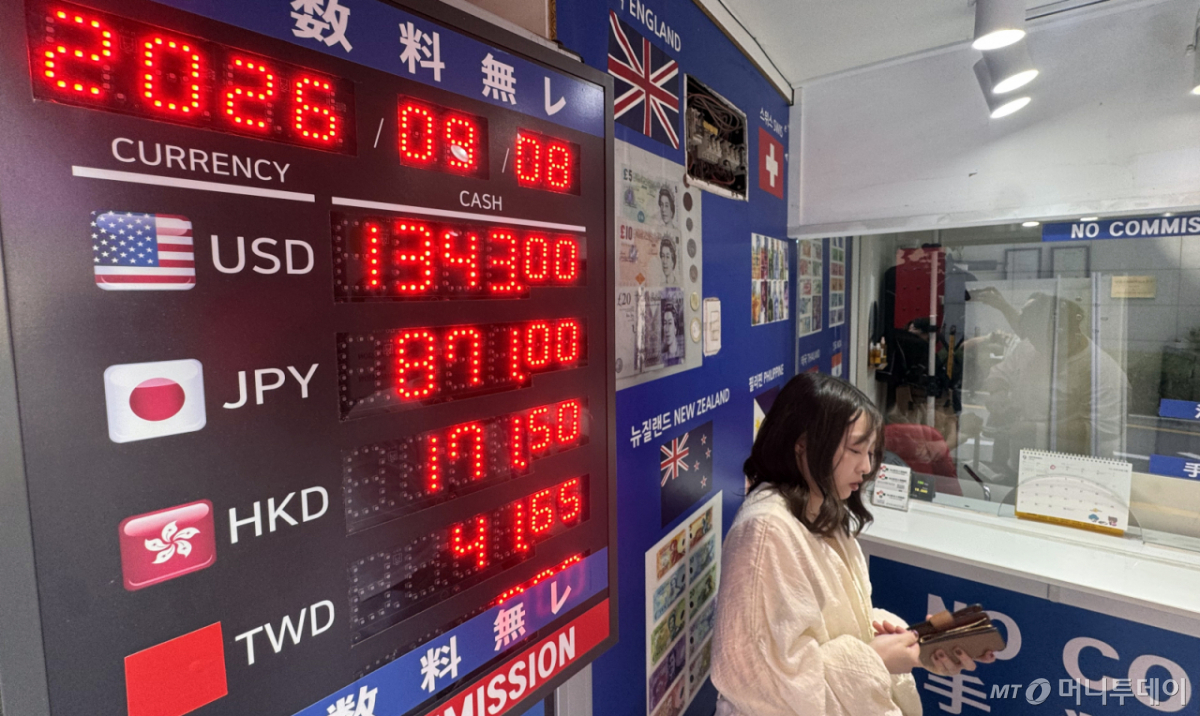
According to Investing.com and others on the 8th, the yen-dollar exchange rate fell to 153.17 yen. Alongside the won-dollar rate, the yen rate has also plummeted (yen appreciation), increasing risks related to exchange rate volatility. In particular, with a Bank of Japan interest rate hike now seen as certain, memories of past stock market crashes triggered by concerns over unwinding the yen carry trade are resurfacing.
Heo Jae-hwan, a researcher at Eugene Investment & Securities, stated, "The Bank of Japan's interest rate hike and the sharp appreciation of the yen recall the situation in August 2024 when concerns over unwinding the yen carry trade emerged," adding that "uncertainty in financial markets is unlikely to be resolved soon." However, analysts assess that since financial markets are stable and there is a high possibility of intervention by the U.S. and Japan, the likelihood of it leading to a major shock is low.
There are also concerns that corporate profits converted into won will decline due to the sharp drop in the won-dollar exchange rate (won appreciation) since July. It has been pointed out that this could have a somewhat negative impact on the domestic stock market, which is led by export-sensitive and cyclical stocks. While the pace may slow, further declines are also possible.
Park Sang-hyun, a researcher at iM Securities, said, "The recent trend of yen appreciation will likely affect the value of the won as well," noting that "with the won-yen correlation strengthening, if the yen-dollar rate falls further, the won-dollar exchange rate is highly likely to fall in tandem." Interest rate movements are also acting negatively on the stock market. The yield on 30-year U.S. Treasury bonds rose by 33.3 basis points (1 bp = 0.01%) over about two months from 4.903% at the end of the second quarter, surpassing the 5.2% level. This reflects ongoing inflation concerns due to the prolonged Iran war keeping oil prices high, as well as the possibility of a base rate hike driven by U.S. fiscal issues and strong growth.
With major central banks entering an interest rate hiking cycle, global rates are expected to continue rising, including in Korea where market rates are increasing due to base rate hikes. Additionally, tensions related to trade and tariffs with China that could arise ahead of the prolonged U.S.-Iran war and the U.S. midterm elections may also act negatively. Domestically, the potential exit of retail investors (individual investors) from the stock market is a factor slowing down KOSPI's full-scale rebound.
Foreign investors have turned to net buying in the KOSPI market this month with 1.1 trillion won in net purchases, but individual investors are currently selling off 980 billion won in net sales. Analysts suggest that recent increased stock market volatility and repeated index fluctuations have dampened investor sentiment. Investor deposit balances have also fallen to 93 trillion won, maintaining the lowest level since January.

 in STOCK
