

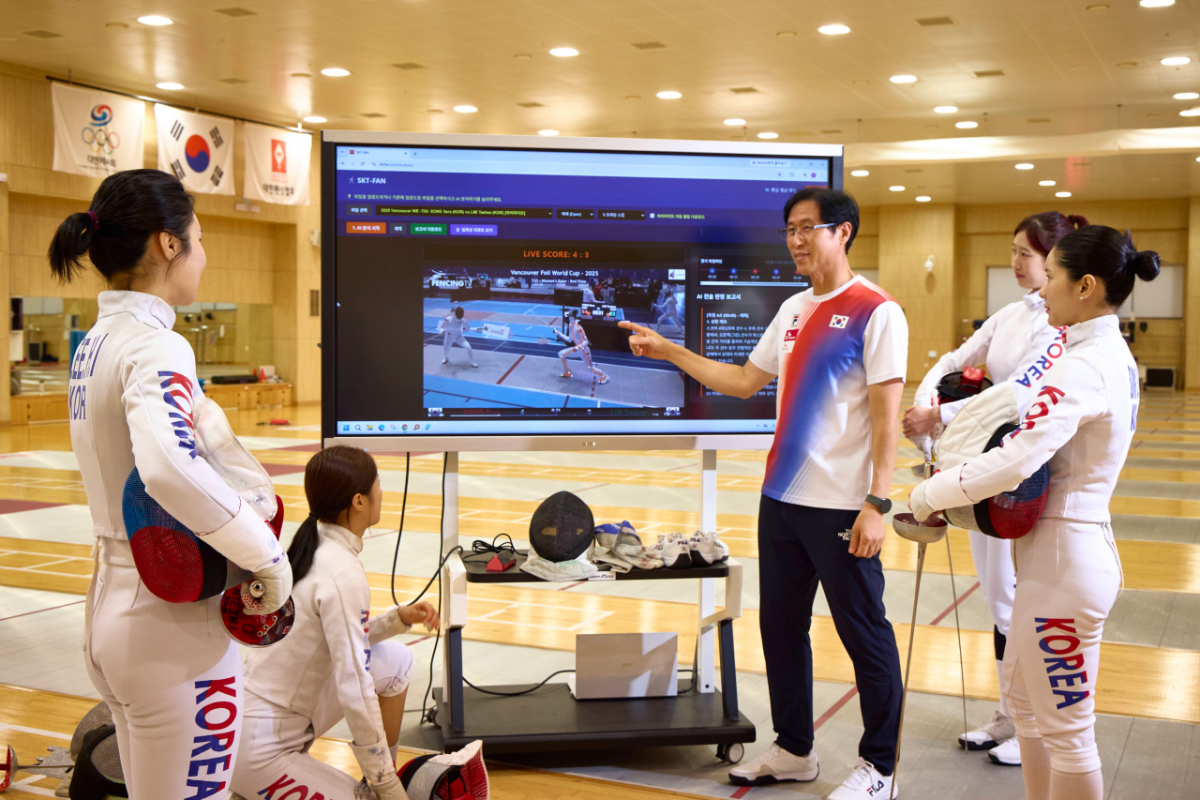
"There were parts that were difficult to explain to athletes while watching videos, but with AI breaking it down, communication has become much easier."
This was the impression expressed by Won Woo-young, coach of the national fencing team, on the 26th at the Jincheon training center after using SK Telecom's AI (artificial intelligence) performance analysis system 'SKT-FAN (Fencing AI Nexus)' to analyze Navy Headquarters.
Ahead of the 2026 Aichi-Nagoya Asian Games, SKT is integrating AI technology into national team performance enhancement and has launched support for athletes' medal challenges.
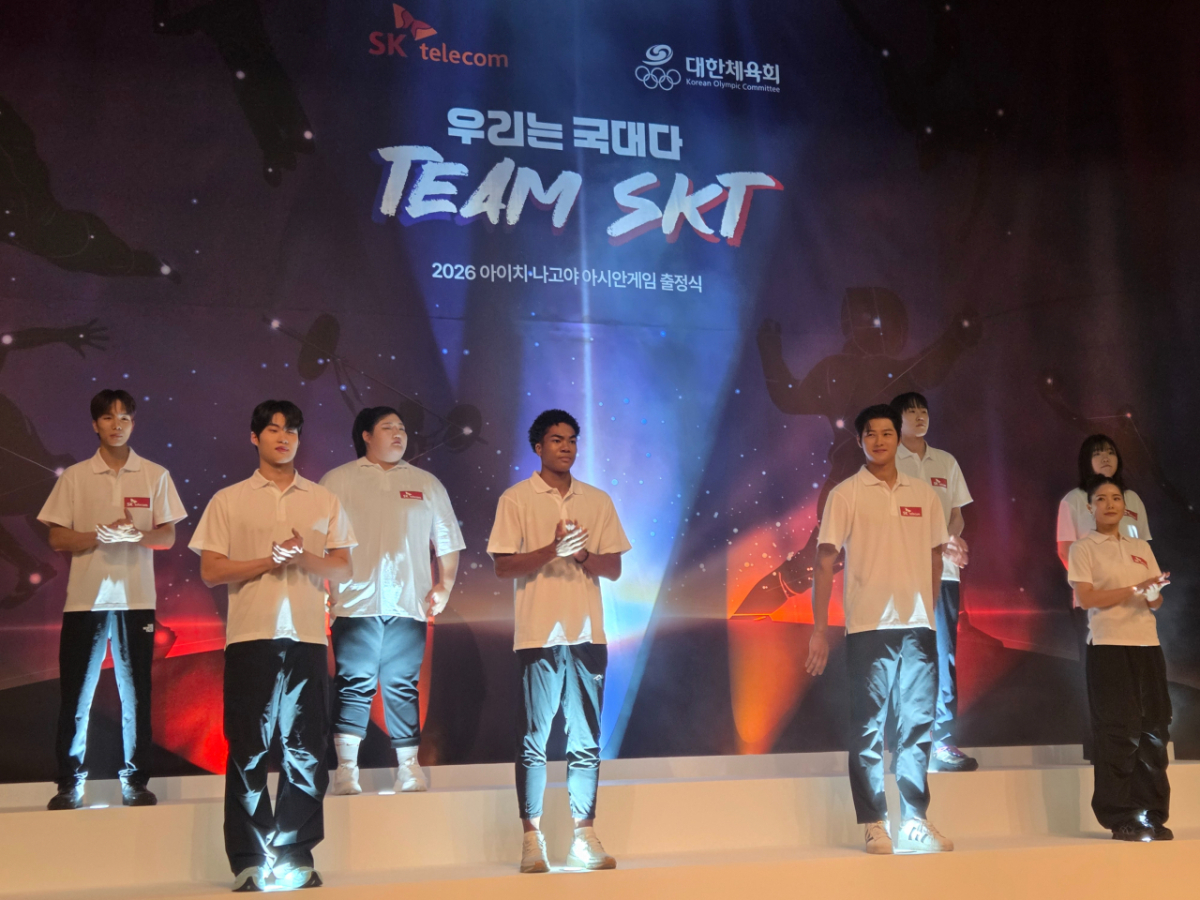
SKT held the 'Team SKt' departure ceremony at the Jincheon training center on this day. The event was attended by eight sponsored athletes: fencers Oh Sang-wook, Do Kyung-dong, Song Se-ra, and Jeon Ha-young; weightlifter Park Hye-jeong; swimmer Hwang Sun-woo; track and field athlete Namadi Joeljin; and sport climber Noh Hyun-seung, who pledged strong performances at the Asian Games. SKT will also dispatch additional mandatory trainers and performance analysts.
In particular, the fencing national team will utilize SKT-FAN, which SKT is developing and enhancing in collaboration with the Korean Fencing Association. Previously, fencing power analysis required two analysts to review full match footage and edit/compile necessary scenes, taking an average of about one hour per match. Since the system's introduction, this time has been significantly reduced to approximately 10 minutes.
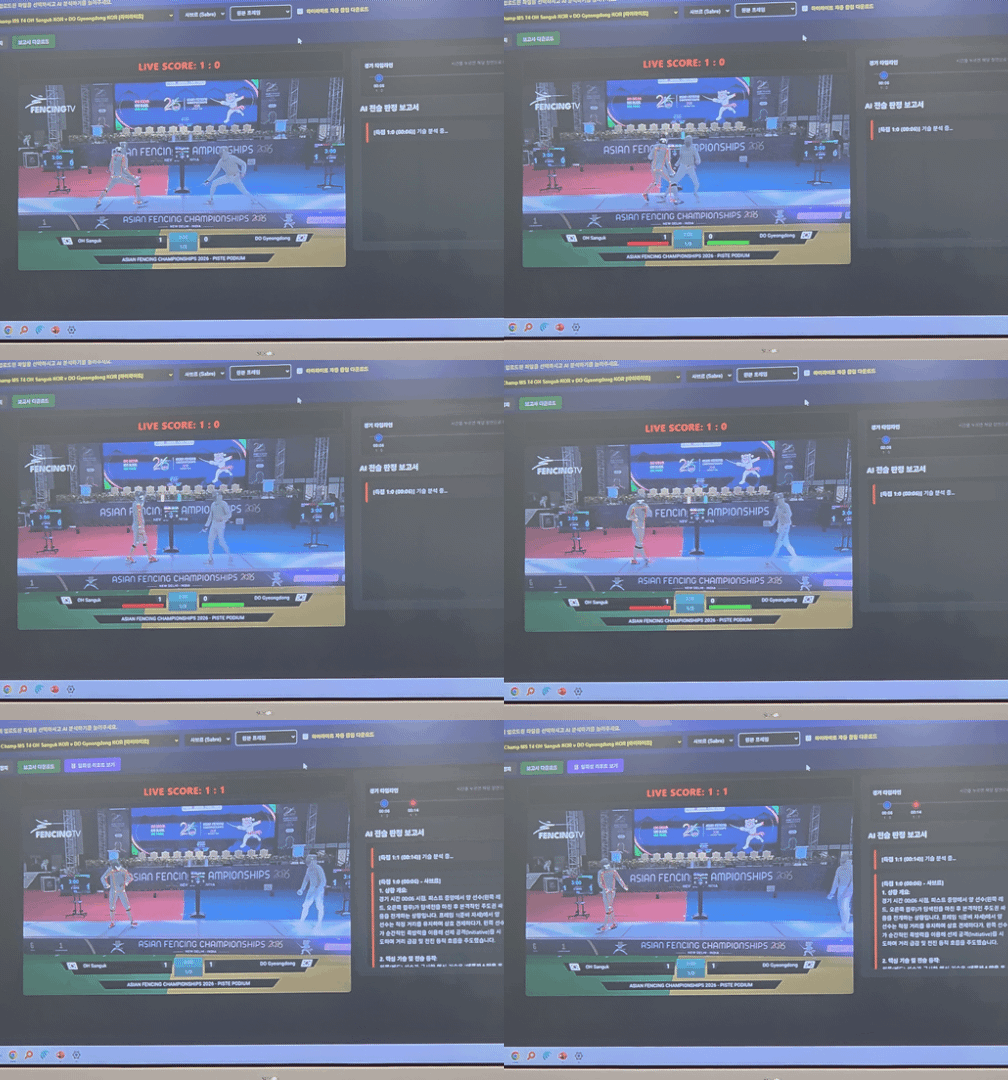
SKT-FAN uses computer vision technology to recognize score changes and athlete movements in videos, automatically extracting scoring moments and highlights. It also creates performance analysis reports detailing opponents' strengths and weaknesses and match characteristics by databasing athlete movements and utilizing LLMs (large language models). SKT aims to reduce repetitive video analysis tasks by up to 90%, allowing coaches and analysts to focus on strategic decision-making.
Choi Jong-hyuk, SKT manager who led the development of SKT-FAN, explained: "AI does not replace performance analysts or coaching staff. Instead, it handles repetitive tasks, enabling athletes and coaches to focus on areas where they excel."
During the event, a demonstration using actual match footage was also conducted. AI analyzed a match between Oh Sang-wook and Do Kyung-dong from last June's Asian Championships, concluding that Do Kyung-dong missed his attack timing after gaining offensive initiative, allowing for a counterattack. Coach Won similarly evaluated that Do Kyung-dong's attacking steps became slower and more cautious, causing him to lose the timing advantage against Oh Sang-wook. The AI's analysis largely aligned with that of the on-site coaching staff.
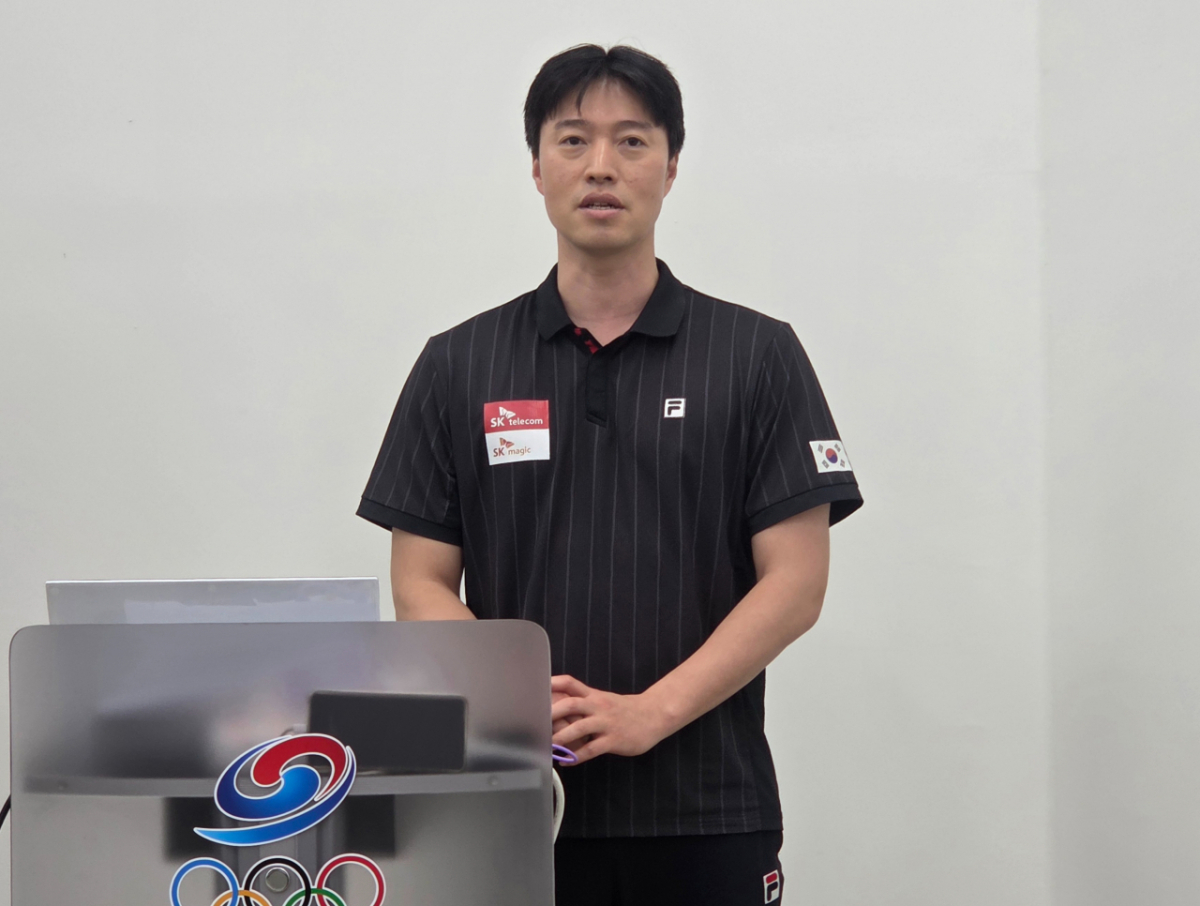
However, there are still areas requiring improvement. Coach Won stated, "While it is helpful for AI to explain athletes' movement changes and tendencies in detail, I wish it could also detect elements like the sword's LINE. Currently, AI cannot yet capture such details."
SKT has served as the official sponsor of the Korean Fencing Association since 2003, supporting the creation of Olympic-style practice environments and participation in overseas competitions for 24 consecutive years. Cumulative sponsorship funds have reached 36 billion won. Starting this year, beyond infrastructure and tournament support, SKT is integrating its proprietary AI technology to enhance national team performance. The company plans to accumulate athlete feedback and match data from the Asian Games to further refine the system through the 2028 Los Angeles (LA) Olympics.
Meanwhile, Kwon Young-sang, SKT Comm Ji Won (Head), stated: "We hope that SKT's AI technology, long-standing sports sponsorship expertise, and public support will become a strong backing for Team SKT athletes." He added, "We will provide comprehensive financial and moral support to ensure the athletes' challenges lead to positive outcomes that bring great inspiration to the nation."

 in TECH


