

[For more diverse corporate information on the startups mentioned in this article, please visit the Unicorn Factory Big Data Platform's 'Data Lab'.]
"We are restructuring our scattered internal organizations and systems to align with a single goal: 'the rapid growth of startup companies.' "
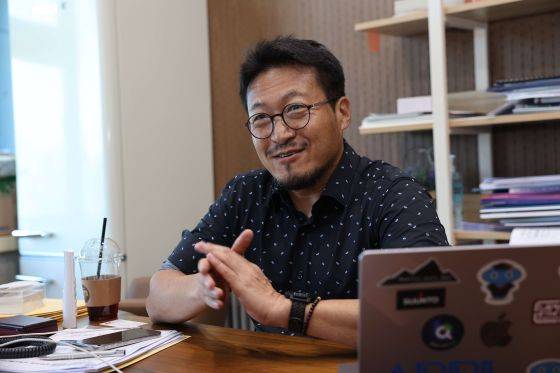
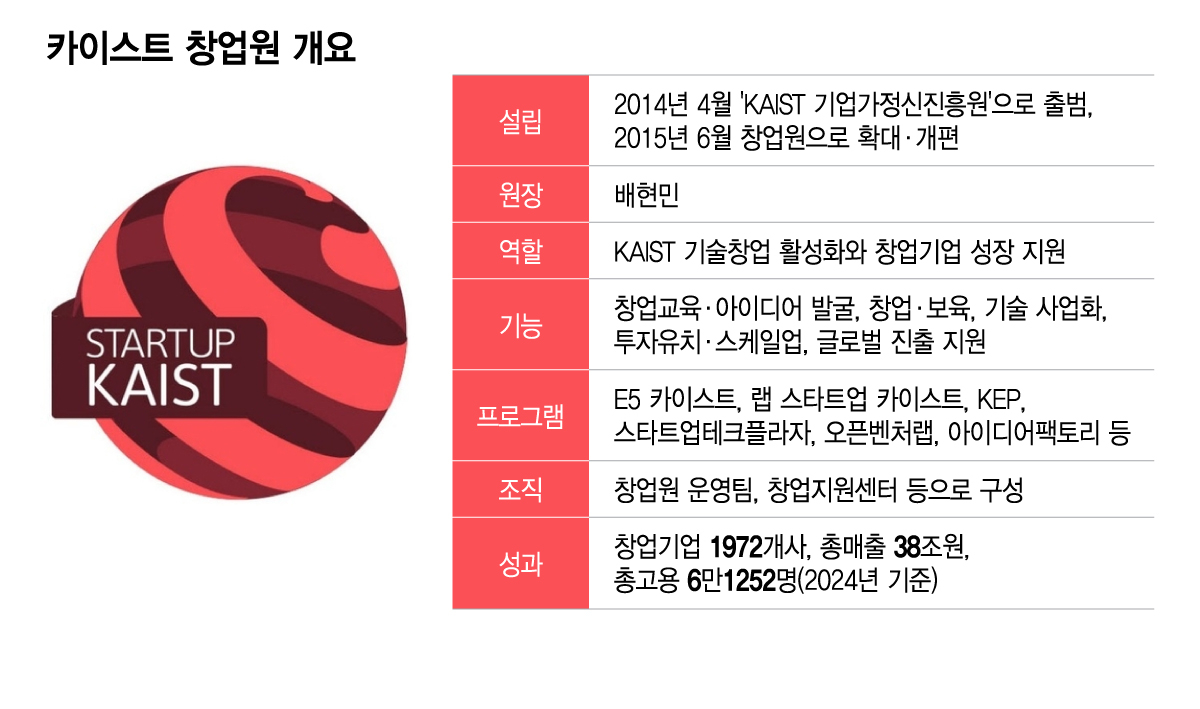
Bae Hyun-min, Director of the KAIST (Korea Advanced Institute of Science and Technology) Startup Center, has recently taken on the role of control tower for the university's internal entrepreneurship support organizations. He is currently working to integrate the incubation functions of the Startup Center and the Technology Value Creation Institute, which handles technology transfer. Bae stated, "The Startup Center aims for company growth, while the Technology Value Creation Institute aims for royalty recovery, so their KPIs (Key Performance Indicators) are different," adding that he is "re-establishing the goals of entrepreneurship support from scratch." Bae is a serial entrepreneur with five startup experiences.
First, Bae plans to move intellectual property (IP) management earlier in the process, starting from the initial stage of entrepreneurship. He said, "Until now, patent management only began after the startup process had progressed considerably," and added, "Going forward, we plan to design IP strategies together from the moment a candidate is selected for pre-startup support." To this end, he is also promoting a scheme to link the Startup Center's pre-entrepreneur program with the Technology Value Creation Institute's IP management team.
The technology transfer method will also change. Bae likened the existing approach to "firing a shotgun until you hit the one hidden target." He stated, "We are moving away from the method where multiple personnel randomly contacted various companies, and will shift to a 'sniper' type that accurately targets specific goals." To achieve this, he plans to build a more efficient AI-based technology transfer and commercialization system, including creating logic to distinguish between scalable cases and one-off cases by analyzing successful technology transfer examples.
Entrepreneurship education will also be strengthened. The Startup Center launched the "C-Level Cultivation Program" in the first semester of this year. This is a graduate course created by interviewing KAIST alumni entrepreneurs and compiling their concerns and trial-and-error experiences after starting businesses as case studies. Bae explained, "We opened this program because the processes and experiences of senior entrepreneurs have not been properly passed on to junior students who are just starting out."
In the spring semester next year, under the full support of President Bae Chung-sik, an entrepreneurship course for all students will be offered. Bae explained, "The process involves equipping students with the ability to utilize AI at the highest level from their first semester of freshman year, then having them form teams to solve social and economic problems using AI, develop these into business models, and proceed to a final pitch."
Overseas expansion support, previously divided between the Technology Value Creation Institute and the Startup Center, will be unified under the Startup Center. Bae stated, "The number of companies participating in CES is meaningless," adding, "We will scrutinize whether investment is needed and if they are prepared for it, and if they are ready, we will design exactly where to go and whom to meet before sending them."
Regarding the role of "regional startup hub" assigned by the government to each science and technology institute's startup center, Bae emphasized, "Programs created by KAIST already target not only Daejeon but the entire country." A representative example is "E5," a national university student entrepreneurship competition that KAIST has operated for several years. In the first semester of this year, they also held "E5 Global" for the first time, inviting winning teams from overseas universities.
Bae said, "The effect of participants seeing each other and being stimulated to think 'my business model is better than that team's' or 'that one is sloppy' is far greater than simply selecting 1st, 2nd, and 3rd place in a competition." Within the university, they also operate a program called "Entrepreneurship at Lunch," where participants share sandwiches and pizza every two weeks to hear experience stories from alumni entrepreneurs.
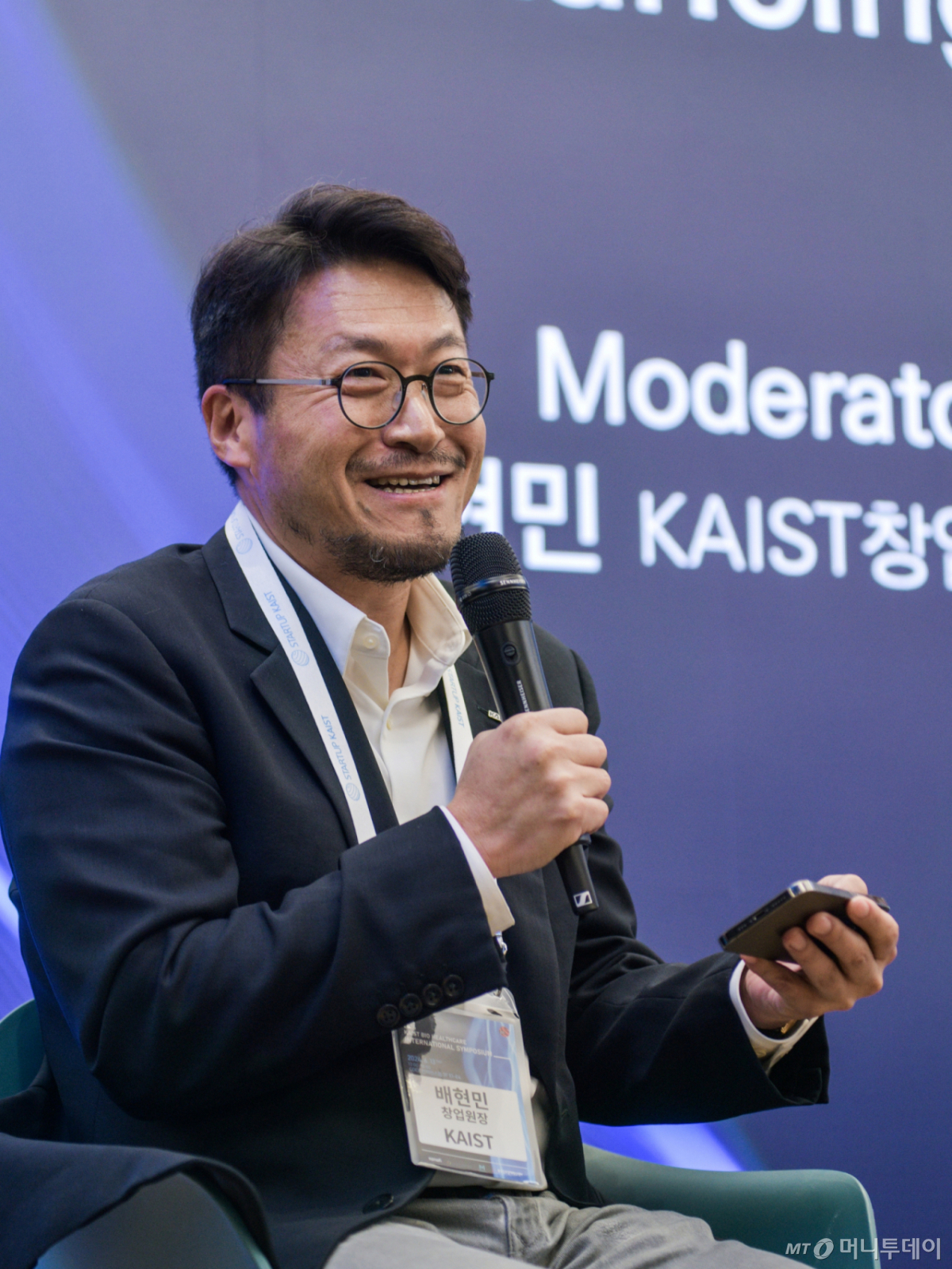
The core project of the KAIST Startup Center this year is cultivating "AI Solo Startups." Out of 700 applicants from across the country, 100 were selected, and subsequently narrowed down to 50. The final 25 will be selected in November. During the selection process, a new experiment called "AI Evaluators" was also conducted. AI and human judges each ranked the 700th applicants, and the correlation between the two evaluations was compared.
Bae stated, "Human judges may have inconsistent standards, such as evaluating 10 teams in the morning and then having slightly different criteria when reviewing another 10 teams after work, but AI catches this," adding, "Applicants ranked in the top 100 by both AI and humans were accepted, while those where judgments differed all proceeded to face-to-face evaluation."
Bae revealed that he is concentrating resources secured through the government's supplementary budget on the prototype production support program "Fast Prototype." The number of adjunct professors who are KAIST alumni experts specializing in prototype production has been increased from 4 to 10, and two of them have been assigned the role of Program Manager (PM). There are currently 25 prototypes being produced this year.
Bae also mentioned institutional obstacles hindering the startup ecosystem. He said, "There are many PhD-level personnel from government-funded research institutes in Daejeon, but it is difficult to hire them for startups because they must take leave of absence," adding, "The atmosphere suggests that regulatory improvements are being made in a direction that allows concurrent employment, so I am looking forward to it."
Finally, Bae stated, "Most domestic startups are playing local games, and cases where they receive global mergers and acquisitions (M&A) or investment from overseas strategic investors (SI) are rare," adding, "If companies that attract global attention continue to emerge from the early stage, Silicon Valley investors will naturally start looking at KAIST."
[Money Today Startup Media Platform Unicorn Factory]

 in TECH


