

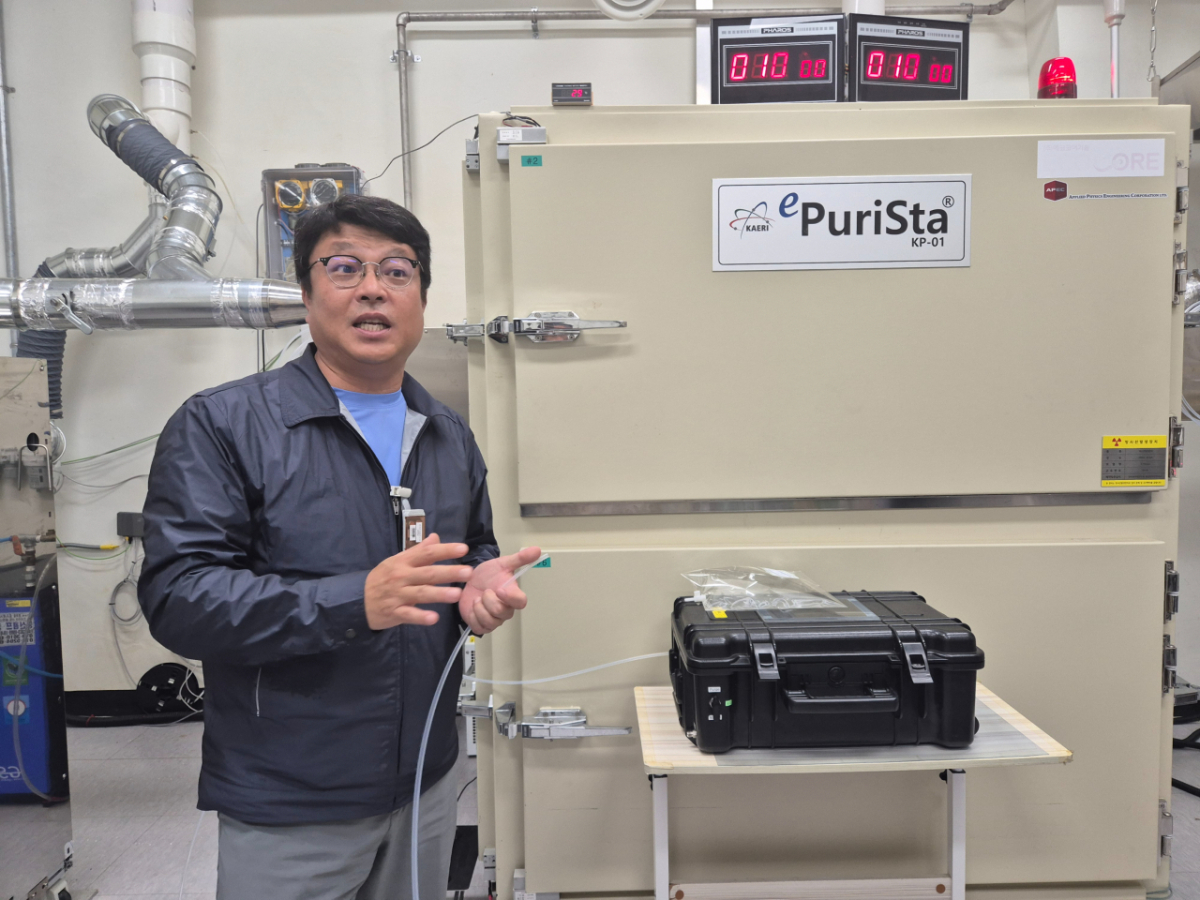
“Oh, the bad smell really disappeared?”
They had held an air pack against a cylinder filled with waste and “extracted” the odor. A strong, pungent stench, seemingly a mixture of livestock manure and food waste, pierced the nose. While standing there pinching the nose for a long time, a researcher extended another air pack. They said the odor had been purified by an odor removal system and asked to smell it again. With a skeptical mind, I put my nose close to it again. It was true. The harsh manure smell had vanished, leaving only a faint, slightly sour water scent.
This is the Electron Beam Demonstration Research Building at the Korea Atomic Energy Research Institute’s Advanced Radiation Research Institute in Jeongeup, North Jeolla Province, visited on the 29th of last month. An electron beam is radiation generated by producing electrons with an electron gun and then rapidly accelerating them in a high-voltage environment to irradiate matter. The radiation entering the matter alters its molecular structure or completely eliminates Misaeng organisms.
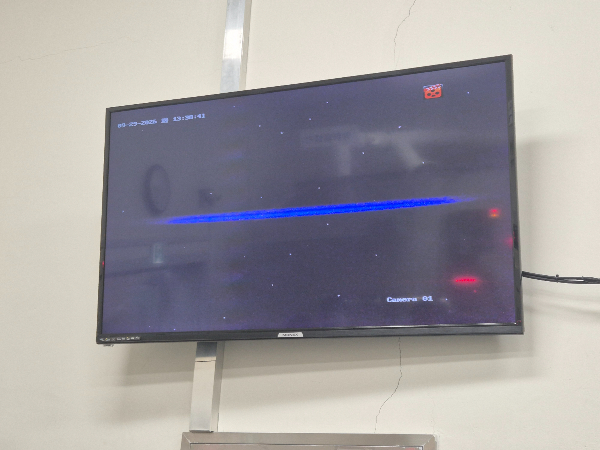
The reason the manure odor disappeared so completely is this. Electrons are accelerated in an electron accelerator corresponding to the 200keV (kiloelectron volt) low-energy range and then irradiated onto the substances causing the odor. The molecular bonds of the odor-causing substances are broken by the radiation, and the smell naturally disappears. This process took less than 5 minutes. Kim Byung-nam, Principal Researcher at the Radiation Convergence Research Division, said, “It is not constrained by the concentration of the odor, and since no other chemical agents are used, secondary pollution does not occur.”
This technology from the Advanced Radiation Research Institute, which removes odors generated in industrial and livestock sites, has been applied to Samsung Electronics and Samsung Display sites. It is also known that demonstration experiments are being prepared at CJ CheilJedang’s Busan plant.
The Advanced Radiation Research Institute, which marks its 20th anniversary of establishment this year, is a representative research facility that has showcased practical technologies most closely tied to industry in this manner. In addition to technology transfer and on-site industrial demonstrations, it has produced several spin-off companies. Eight of the 12th spin-off companies from the Korea Atomic Energy Research Institute originated from Jeongeup. Kolmar BNH, which was listed on KOSDAQ in 2015 as the first research institute spin-off company, started at the Advanced Radiation Research Institute. “Seoul Propolis,” well known for its propolis products, and “Ravi,” which manufactures Botox fillers, are also alumni of this institute.
Currently, 16 companies are located in the “ARI Commercialization Research Building” within the research institute, filling 100% of the available space. Director Chung Byung-yeop said, “When people first come to Jeongeup, they ask why there are so many startups in a rural area with no such infrastructure. The reason is one: it is most advantageous to be here if you want to work on radiation-related matters in South Korea.”
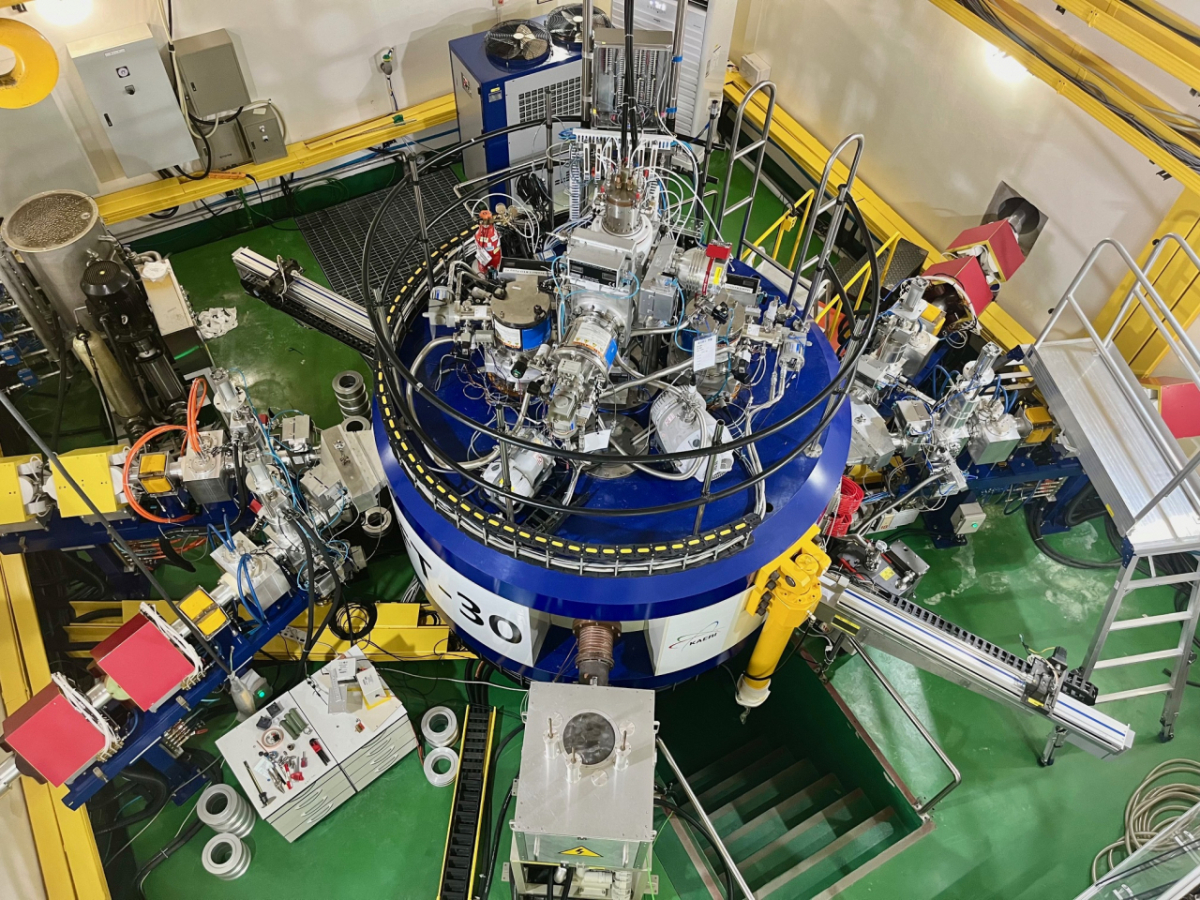
Following the domestic production of radioactive isotopes, overseas exports have also been achieved. The research institute has the first medium-sized cyclotron developed with domestic technology, a facility that accelerates hydrogen particles up to 30MeV (30 million electron volts), equivalent to 20 million 1.5V (volt) batteries. Through this, it succeeded in domestically producing “Zirconium-89” (Zr-89) for antibody immune research, which had previously relied entirely on imports. It is currently regularly supplying medical institutional investors such as Seoul National University Hospital and Seoul Asan Hospital. Subsequently, “Germanium-68” (Ge-68) for diagnosing glioblastoma and the therapeutic isotope “Copper-67” (Cu-67) were also developed. Zr-89 and Ge-89 have been supplied to the United States, China, South Africa, Thailand, and other countries since 2022.
Director Chung Byung-yeop said, “We do not conduct obvious research.” He added, “Even for technologies that seem impossible, we will be a research institute that challenges even very low probabilities if they help the lives of the people and the growth of the nation.”

 in TECH


