

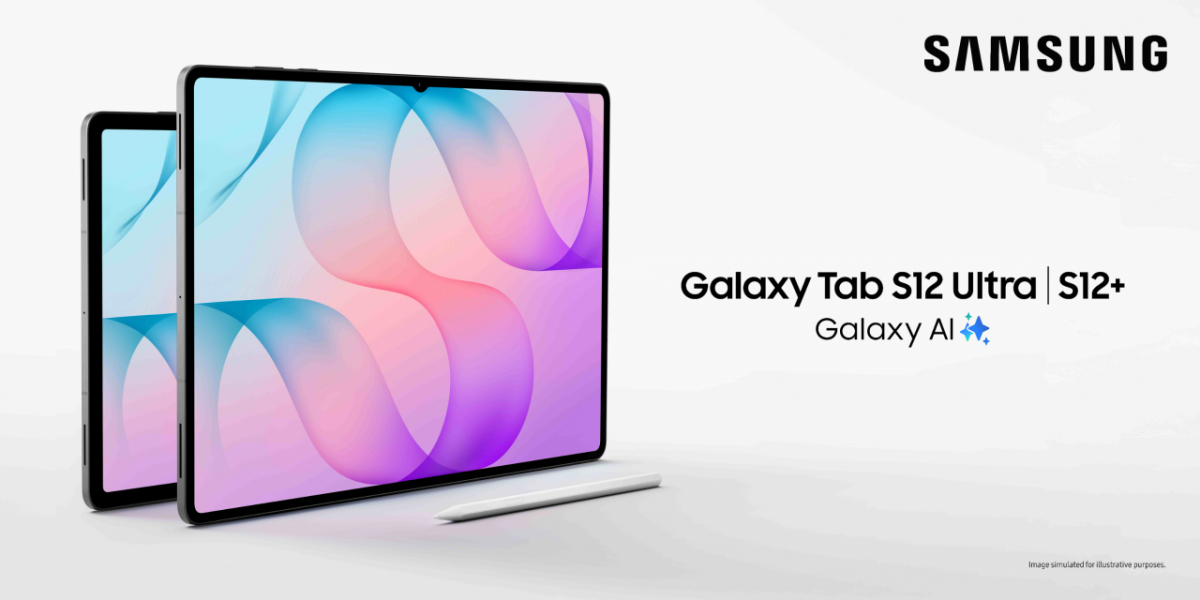
Samsung Electronics raised the price of its new premium tablet, the 'Galaxy Tab S12 Ultra,' by nearly 25% compared to the previous model. As memory prices have surged to record highs amid increased demand for AI (artificial intelligence), rising component costs are pushing up the prices of finished products such as smartphones and tablets.
According to Samsung Electronics on the 1st, the retail prices for the Galaxy Tab S12 Ultra Wi-Fi models are 1,899,700 won for the 12GB RAM/256GB memory model, 2,198,900 won for the 12GB/512GB model, and 2,798,400 won for the 16GB/1TB model.
The launch prices of the previous Galaxy Tab S11 Ultra were 1,598,300 won, 1,763,200 won, and 2,406,800 won, respectively, for the same specifications. Consequently, the price of the 12GB/256GB model increased by 301,400 won (18.9%), and the 12GB/512GB model rose by 435,700 won (24.7%). The 16GB/1TB model also became more expensive by 391,600 won (16.3%).
The Galaxy Tab S11 Ultra has seen two price increases since its launch. Current Wi-Fi model prices are 1,749,000 won for the 12GB/256GB version, 2,048,200 won for the 12GB/512GB version, and 2,647,700 won for the 16GB/1TB version. Even based on these figures, the S12 Ultra is 157,000 won more expensive across all storage capacities. Analysts say that rising component costs, including memory, are behind both the repeated price hikes of the previous model and the higher retail prices of the new product.
The entry-level price for the product line has also risen. The successor to the base Galaxy Tab S11, which started at 998,800 won in the previous generation, was not released this time. The S12 series consists only of Ultra and Plus models. Analysts say that rising component costs, including memory, are behind both the repeated price hikes of the previous model and the higher retail prices of the new product.
In fact, memory prices continue a steep upward trend. According to market research firm DRAMeXchange, the average fixed transaction price for PC-oriented commodity DRAM (DDR4 8Gb 1Gx8) in September was $26, up 4% from the previous month to set a new record high. Commodity NAND for memory cards and USBs (128Gb 16Gx8 MLC) also rose to $30.6, marking 21 consecutive months of increases.
Market research firm TrendForce expects PC DRAM supply to decrease as memory manufacturers shift production capacity toward server-oriented DRAM, significantly raising its Q4 price increase forecast from the previous 3-8% to 13-18%. As demand for high-performance server memory grows due to AI infrastructure expansion, this structure is affecting both the supply and prices of memory used in other IT devices.
Samsung Electronics applied a battery with up to 23 hours of usage, the latest Galaxy AI, and Adobe Photoshop—the first on an Android tablet—to the Galaxy Tab S12 series. If rising component prices, including memory, continue, cost burdens may extend not only to tablets but also to other IT devices, such as future smartphone releases.

 in TECH
