

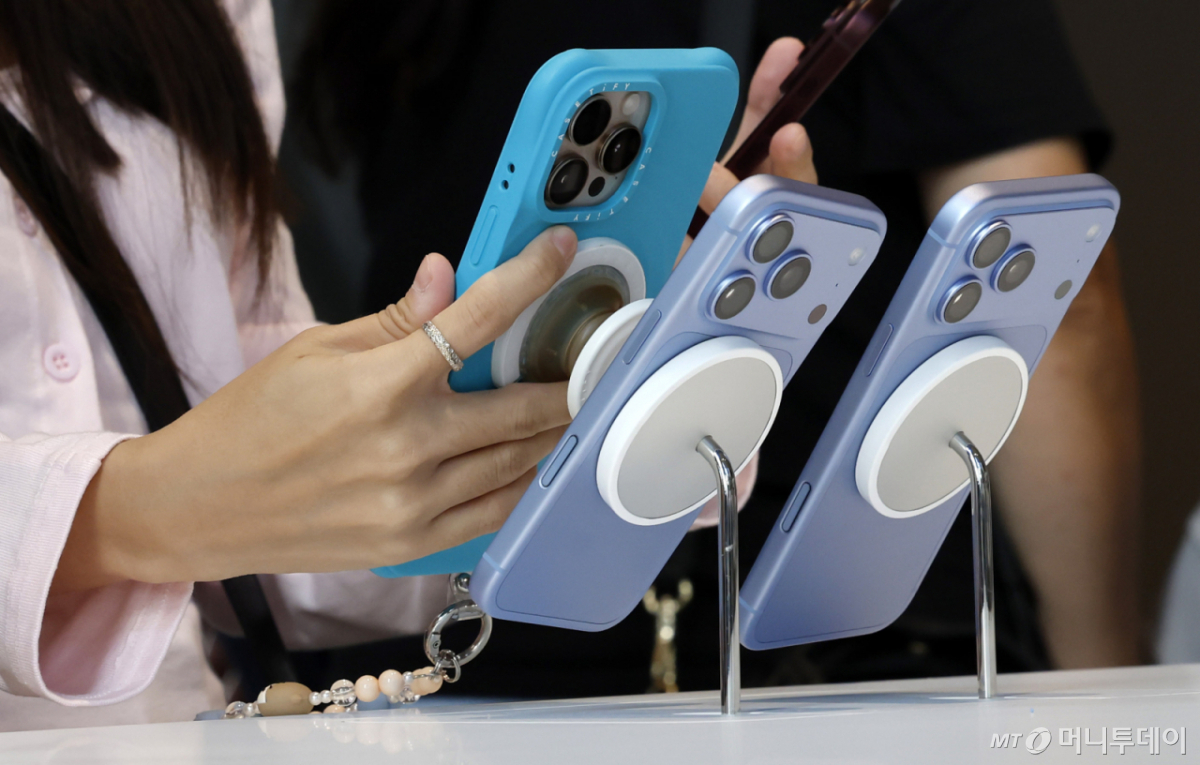
It has been revealed that approximately 1,500 product exchanges and 50 refunds have occurred domestically due to the so-called "panicful" phenomenon, where Apple's iPhone 18 Pro and Pro Max devices suddenly shut down and reboot. As Apple maintains that products whose issues were resolved through software updates are not eligible for exchange or refund, controversy over the criteria for after-sales measures is also expected.
According to documents submitted by Apple Korea to the office of Kim Jang-gyeom, a member of the People Power Party in the National Assembly's Science and Technology Information Committee and the Korea Communications Commission, approximately 1,500 products were exchanged and 50 were refunded due to the panicful phenomenon from the domestic launch of the iPhone 18 series on the 18th of last month through the 28th. This means a total of 1,550 exchanges and refunds were carried out within just 11 days of launch.
Previously, cases of experiencing panicful have been reported one after another among buyers of the iPhone 18 Pro and Pro Max on domestic and international online communities. Panicful refers to the "panic full" analysis logs generated when an iPhone reboots due to a serious system error. Some users claimed to have experienced the device rebooting after consecutive failures in Face ID authentication.
Apple explained regarding the exact cause of occurrence, stating that "detailed information on the specific cause is confidential and difficult to submit," while adding that they "identified the software error causing the issue and distributed an update to resolve it."
On the 29th of last month, Apple released iOS 27.0.1, which fixed an issue where the device could unexpectedly restart during the Face ID authentication process.
Apple stated that it determined this incident did not fall under "defect information reporting" under the Consumer Basic Act and therefore did not separately report it to the relevant authorities. Current law stipulates that if a serious defect is discovered that causes or poses a risk of harm to consumers' life, body, or property, the business operator must report it to the competent central administrative institutional investor.
Issues of fairness regarding exchange and refund criteria are also being raised. According to Apple, consumers who wish to exchange or refund due to the panicful phenomenon can have their product's abnormality checked at an Apple retail store or an Authorized Service Provider (ASP). However, a separate work authorization confirmation letter is required to receive a refund for products sold through telecommunications carriers.
In particular, Apple takes the position that products where the panicful phenomenon has been resolved through software updates are not eligible for exchange or refund. Even if users of the same model experience identical symptoms, eligibility for exchange or refund varies depending on whether the issue was resolved after the update.
Indeed, cases where exchange and refund processing results differed among consumers who experienced the panicful phenomenon are being shared on online communities. Pointers have emerged that Apple should present consistent after-sales measure criteria for issues that occurred prior to the update, given that it has acknowledged the software error and even distributed a corrective update.

 in TECH
