

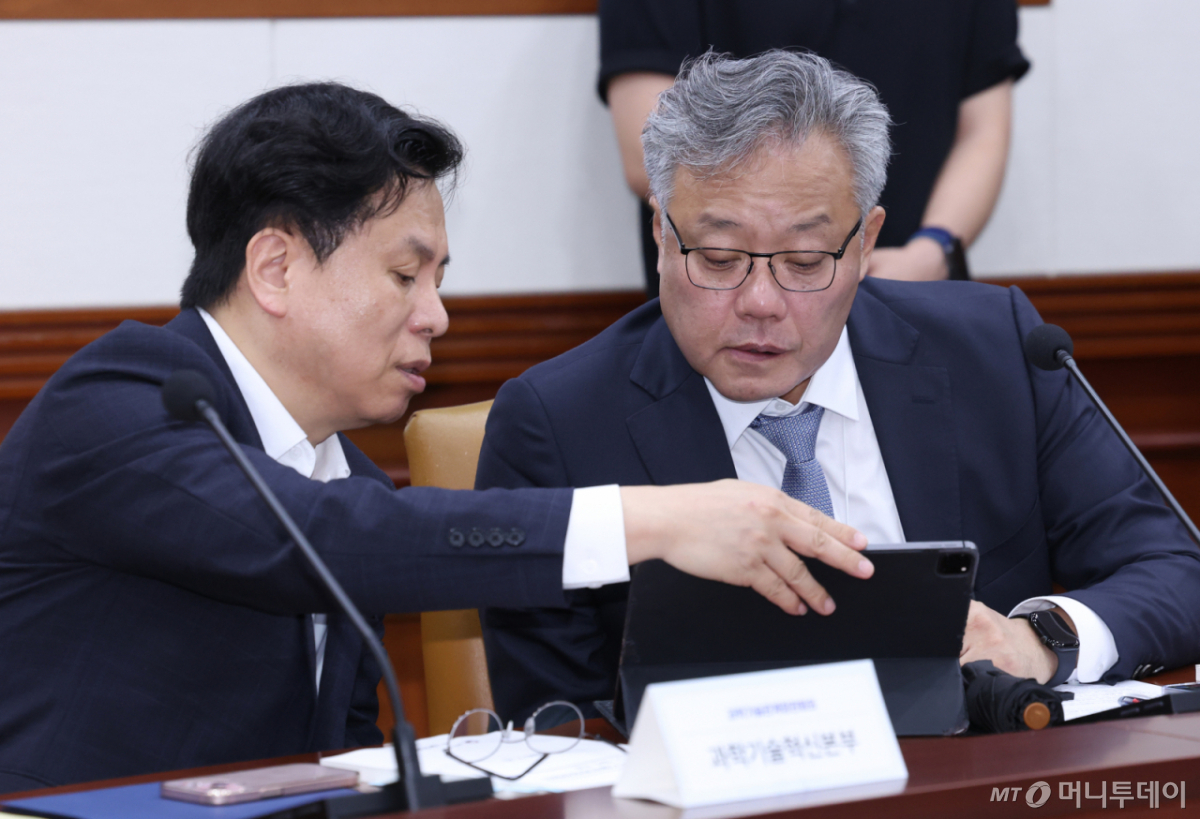
“(You can’t win the Nobel Prize) because your brain isn’t good enough.” As Korea failed to produce a Nobel laureate in science this year as well, a comment posted by Lee Ju-han, Science and Technology Research Secretary at the Blue House, on social media has sparked controversy.
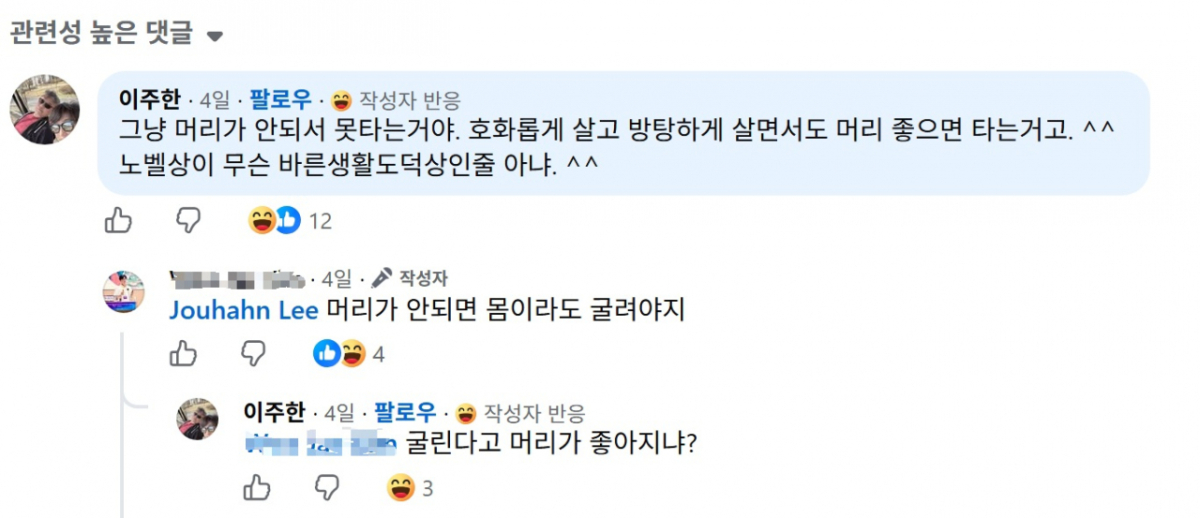
According to the science and technology community on the 16th, the secretary left a comment on an acquaintance’s social media post on the 11th. He wrote, “(You can’t win the Nobel Prize) simply because your brain isn’t good enough. You can win it if you have a good brain, even if you live luxuriously and dissolutely.” He added, “Who thinks the Nobel Prize is an award for upright living and morality?”
The secretary explained to Money Today that his intent was to convey that Noh Bel-sang (수상) is not determined by moral standards. He further added, “Currently, there are many outstanding talents, so I believe the possibility of winning Han Guk-ui (수상) has actually increased.”
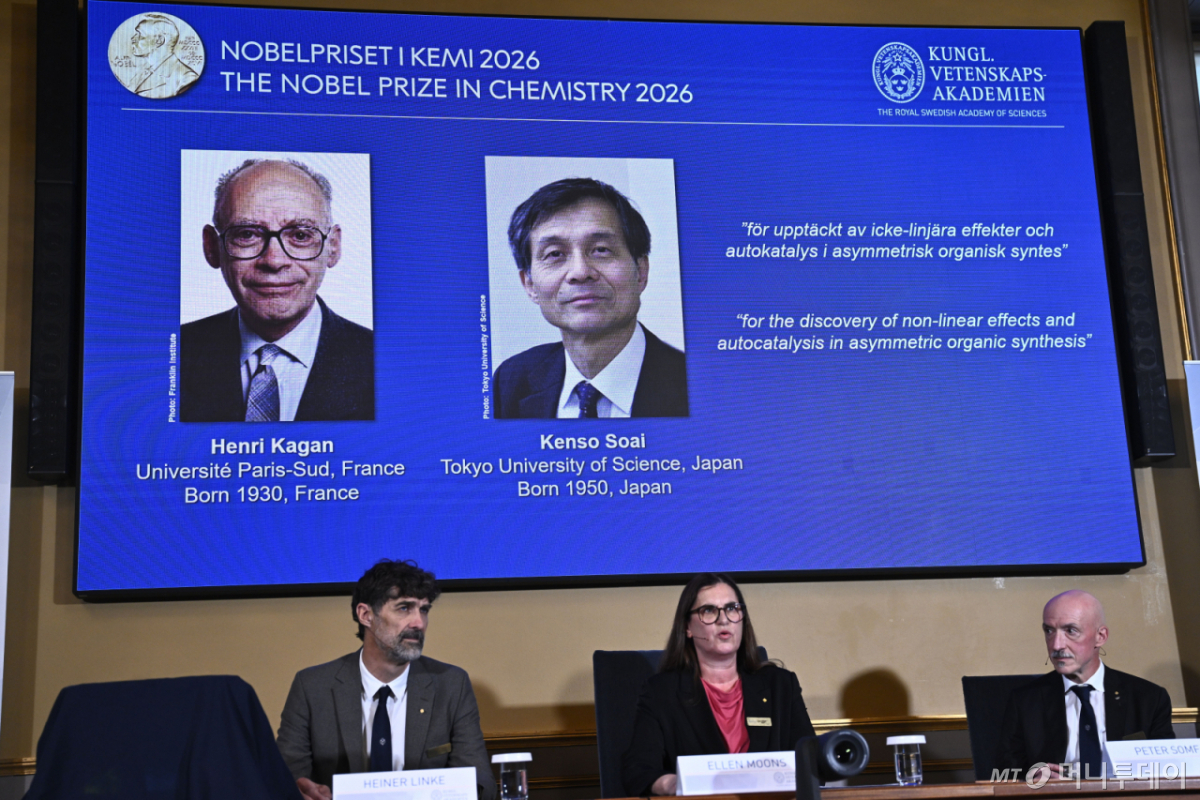
The comment in question was posted on a post related to Kenso Soai, an emeritus professor at Tokyo University of Science in Japan, who won this year’s Nobel Prize in Chemistry. The author of the post shared images of So A-i (Prof.) going grocery shopping by bicycle. They wrote, “I hear that Korean professors, as soon as they reach a certain rank, play golf and fly business class to attend overseas conferences for fun, which is why they can’t win the Nobel Prize.” The secretary explained that he left the comment while refuting this claim.
When the post author replied, “If your brain isn’t good, at least use your body,” the secretary commented again, “Does using your body make your brain better?” According to the secretary’s explanation, the Nobel Prize in Science is evaluated solely based on scientific discoveries and achievements, not on an individual scientist’s lifestyle or Do Deok-seong-i (수상).
He had previously left a comment of similar intent on another post related to the Nobel Prize. The secretary stated, “The Nobel Prize is not something that only emerges when society matures and a scientific ecosystem is well-established,” adding, “Even in barren environments, geniuses emerge.”
However, even considering the context of the entire conversation, there are criticisms that his expression was excessive. This is because a public official at the Presidential Office responsible for science and technology policy responded with harsh language to remarks on a public social media platform that could be perceived as disparaging domestic researchers.
One source in the science and technology community said, “It may have been a conversation shared jokingly between two close acquaintances in the private space of social media, but it is a highly reckless remark for a public official.” Another source stated, “Many researchers who devote themselves to research day and night, regardless of weekends, feel insulted by (such evaluations).”
The secretary told Money Today, “My intention was to speak to the essence of Noh Bel-sang (수상), but I sincerely apologize to those who felt discomfort due to some expressions being excessive in a public space.” He added, “Since our country has many outstanding scientists, I firmly believe in the possibility of winning and will be more cautious with my words and actions in the future.”
Nobel Prize in Science: The real secret is generous support for ‘research infrastructure’
The scientific community unanimously states that efforts at the ecosystem level, such as long-term and stable research support and infrastructure development, are necessary to produce Nobel laureates. Given that Korea’s history of basic science research is short compared to major Noh Bel-sang (수상) countries like the United States and Japan, they argue that there is still a long way to go in terms of time and scale of investment.
RIKEN (Institute of Physical and Chemical Research), which has produced multiple Noh Bel-sang (수상) laureates in Japan, was established in 1917, over 100 years ago. In Korea, KIST (Korea Institute of Science and Technology) launched as the first national research institutional investor in 1966. However, its main purpose was to develop technologies needed by industry. IBS (Institute for Basic Science), which has a similar nature to RIKEN, launched in 2011. That was only 15 years ago.
Yum Han-woong, professor of physics at Pohang University of Science and Technology, said, “A decade or so is a short time for research that could become the pioneer of a field to take root.” He added, “The Nobel Prizes in Science received by Japan today are the result of time and investment poured into basic science 40 to 50 years ago finally bearing fruit.” He further stated, “The secret lies in generous support for research infrastructure and national-level efforts to recruit and retain top scientists.”
Jung Jin-ho, president of the Korean Academy of Science and Technology, said, “Nobel laureates in science typically began their core research around age 38, taking about 30 years until they received the award,” adding, “Support for early-career researchers is most important.” He emphasized, “The duration and method of support are more important than the scale of investment, and young researchers must be supported over the long term so they can challenge new discoveries.”

 in TECH


