

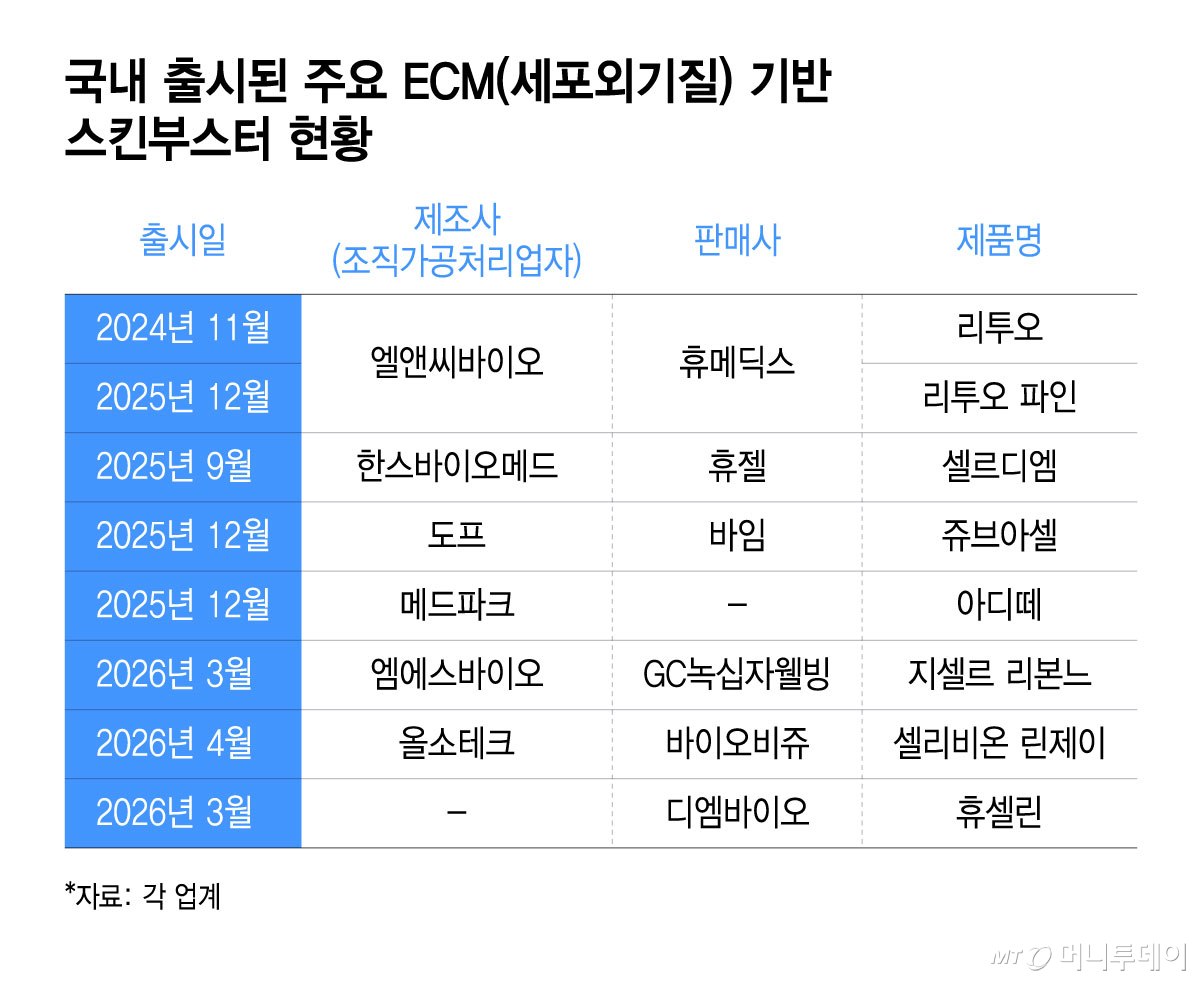
The government is considering a measure to prioritize the distribution of human tissues imported from overseas, taking into account medical urgency and other factors. This move follows the surge in sales of "skin boosters" based on ECM (extracellular matrix) derived from human skin tissue harvested from domestically donated cadavers, which are used for cosmetic purposes.
According to an investigation by this outlet on the 22nd, Kim Yun, a lawmaker from the Democratic Party of Korea serving on the National Assembly's Health and Welfare Committee, inquired about the Ministry of Health and Welfare's plans for a management system regarding injectable ECM human tissues. In response, the Ministry of Health and Welfare stated that it is "considering expanding the scope of application for distribution priority under Article 12 of the Act on Safety and Management of Human Tissues to include 'tissues imported from overseas.'"
The Ministry of Health and Welfare explained, "Currently, the law stipulates that tissues collected from domestic donors be prioritized for distribution based on medical urgency and other factors, meaning there was a limitation in that imported tissues were excluded from the scope of application." It added, "The government's position is that human tissues should be used first according to medical necessity, such as disease treatment and body reconstruction."
It further noted, "We are aware of the phenomenon where human tissues are recently being consumed through injectable procedures such as cosmetic skin boosters," adding, "We believe it is necessary to curb indiscriminate use for simple cosmetic purposes and establish a management system centered on therapeutic objectives."
Regarding the establishment of a new provision prohibiting advertisements related to injectable ECM human tissues, the ministry said, "We have received a bill amendment proposal from the Ministry of Food and Drug Safety" and are "reviewing the level of sanctions and effectiveness."
At the same time, the government is also pushing for the introduction of a system that requires informing patients that the product they are receiving is derived from donated human tissue and obtaining their consent. The Ministry of Health and Welfare stated, "Prior explanation and consent procedures are necessary so that patients can be aware of risks such as infection in advance and decide whether to undergo the procedure." It added, "We are reviewing measures to mandate that when human tissues are used for cosmetic or injectable purposes, practitioners must explain to patients in advance whether the product is donor-derived, the purpose of use, and expected side effects, and create and retain a consent form. This is being discussed with relevant government agencies and the medical community."
The Ministry of Food and Drug Safety also plans to establish management measures related to product safety. In response to this outlet's report on the need for strengthened management of ECM skin boosters derived from post-mortem donated cadaver tissues, the Ministry of Food and Drug Safety stated, "We are conducting a related research commission and considering management measures, including the classification of (ECM skin boosters) as medical device items," adding, "We plan to establish management measures for human tissues based on the results of the research commission."
ECM skin boosters are cosmetic procedures that involve harvesting dermal tissue from donated cadavers, freezing or drying it, grinding it into powder, diluting it in saline solution, and then injecting it into the skin with a syringe. Most products distributed in Korea are made from skin tissue obtained from cadavers donated after informed consent in the United States.
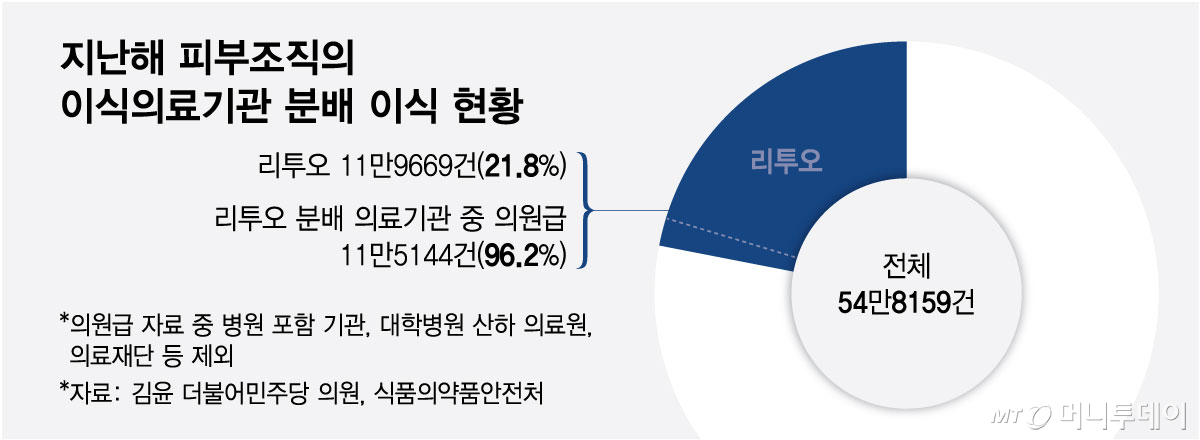
According to Kim Yun (Rep.), the number of cases where processed human tissues derived from skin were distributed (circulated) to medical institutions such as hospitals and clinics in Korea last year was 548,159. A significant portion is estimated to have been used for cosmetic purposes. In the case of "Retwo," an ECM skin booster by L&C Bio (distributor Humedics), which holds the top market share for ECM skin boosters, it accounted for 119,669 cases, or 21.8% of total skin transplant distributions. Of these, 96.2% (115,144 cases) were distributed to clinic-level medical institutions that primarily handle cosmetic procedures.
Kim (Rep.) emphasized, "As the scope of utilization of human tissues expands, rational management standards are needed that consider both the intent of donation and medical necessity," adding, "The government must establish comprehensive institutional improvement measures, from distribution criteria for imported tissues to patient disclosure and consent, and safety management."
Heo Jun, director of Hanlim University Han River Seongsim Hospital, a specialized burn hospital, said, "While I do not have information indicating that there is currently a significant shortage of human skin tissue needed for transplantation in burn patients and others, the use of donated human skin tissue for cosmetic purposes has become more common, so a new human tissue management system suited to reality is necessary."
Meanwhile, on the 21st, the "Korea Human Tissue ECM Bio-Industry Association," which aims to strengthen trust in and promote the development of the domestic human tissue ECM industry, was launched. Twenty companies participated in the association's founding general meeting held that day, including Humedics, L&C Bio, GC Green Cross Wellbeing, Huons, and Hans Biomed.

 in THEBIO

