

The approach to new drug development in Korean biotechnology is evolving. The industry is diversifying its strategies, moving from a focus on technology licensing to persistent research and development (R&D) that secures direct approval from the U.S. Food and Drug Administration (FDA). It is also using clinical failures as lessons to challenge for "best-in-class" new drugs in other indications.
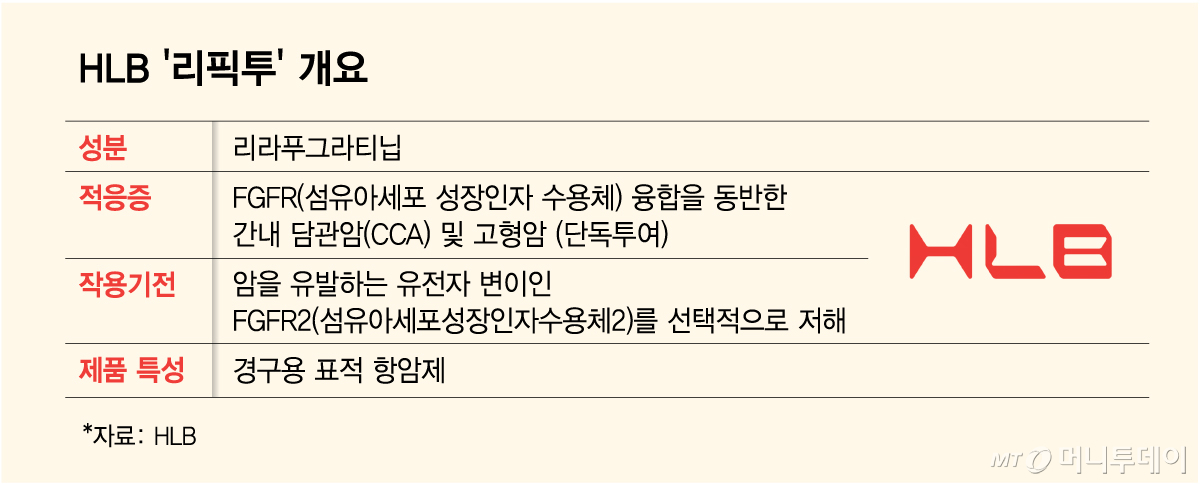
According to industry sources on the 27th, HLB's U.S. subsidiary Eleva Therapeutics obtained product marketing approval from the FDA on the 23rd (local time) for its FGFR2 (fibroblast growth factor receptor 2)-targeting anticancer drug "Lipictu" (generic name: lirafugatinib). While previous anticancer drugs, such as "Leqrazzi" (generic name: lazertinib), have received FDA approval, Lipictu is the first case where a domestic company led all procedures and directly submitted a New Drug Application (NDA) to secure approval.

Lipictu was approved as a second-line treatment for patients with cholangiocarcinoma harboring FGFR2 fusions or rearrangements. Cholangiocarcinoma is cancer that occurs in the bile ducts, the channels through which bile flows, and approximately 8,000 new cases are diagnosed annually in the United States. In global Phase 1 and 2 clinical trials, Lipictu recorded an objective response rate (ORR) of 45.7% and a median duration of response (mDoR) of 11.8 months, surpassing the efficacy metrics of two other drugs in the same class. Jin Yang-gon, Lee Sa-hoe (Chairman) of HLB Group, stated, "We can now market Lipictu globally with patent protection guaranteed for 14 years until 2040," adding that "the experience and capabilities accumulated through communication with the FDA are a significant asset comparable to new drug approval." Eleva plans to launch Lipictu in the U.S. market within the year.
On the other hand, on the same day, Hanol Biopharma's clinical trial for its autoimmune disease treatment "IMVT-1402" (generic name: aimeroferubate) targeting cutaneous lupus erythematosus (CLE) failed to demonstrate efficacy. In a study administering aimeroferubate and placebo to a total of 57 patients, there was no statistically significant difference in the change rate of the primary endpoint, the Cutaneous Lupus Erythematosus Area and Severity Index (CLASI-A), at week 12. Consequently, Immunovant (parent company Royvant), which licensed the substance from Hanol Biopharma, decided to halt development for the cutaneous lupus erythematosus indication, taking into account the clinical results and market conditions.
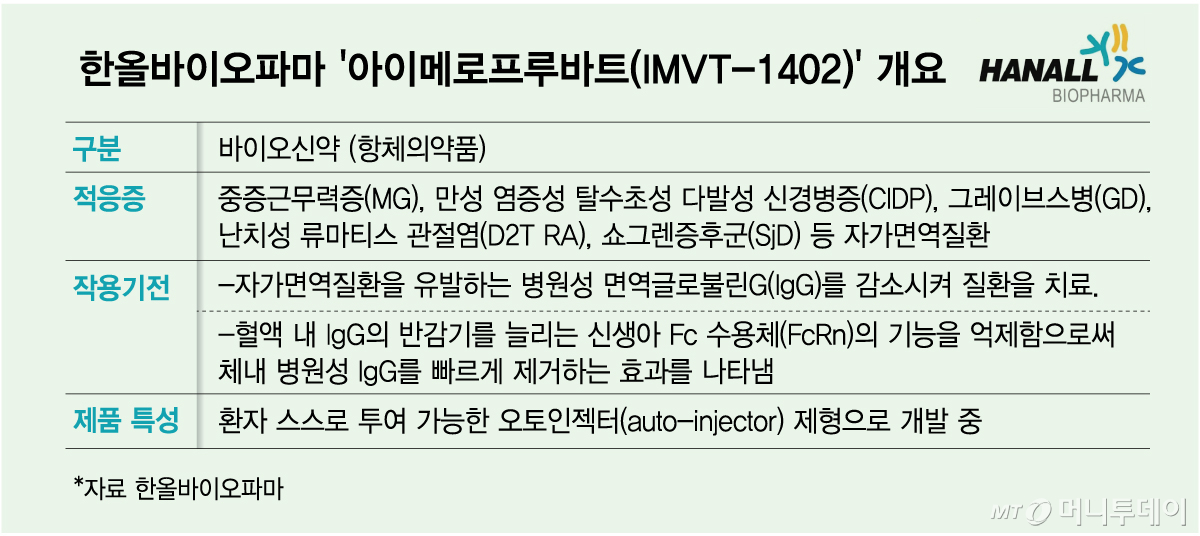
However, Immunovant highlighted positive aspects, noting that numerical improvement trends were observed across several evaluation metrics where aimeroferubate showed better results. It also stated that a larger reduction in pathogenic immunoglobulin G (IgG) correlates with a higher treatment response rate. The company plans to proceed with clinical development for the remaining five indications as scheduled, based on its understanding of autoimmune diseases gained through the cutaneous lupus erythematosus trial.
In particular, attention is drawn to the Phase 2b secondary evaluation results for refractory rheumatoid arthritis, which are expected to be released in the second half of the year. These results could offer a new "treatment option" for patients who have failed treatment with two or more biologic agents. In an interim analysis (week 16) released last May, aimeroferubate demonstrated high efficacy, recording ACR20, ACR50, and ACR70 response rates of 72.7%, 54.5%, and 35.8%, respectively, indicating improvements of at least 20%, 50%, and 70% in rheumatoid arthritis-related symptoms such as joint pain and swelling.
Lee Ho-cheol and Eom Min-yong, researchers at Shinhan Investment Corp, analyzed, "Aimeroferubate is being developed as a best-in-class new drug across all indications," adding that "as clinical data releases are expected to follow sequentially over the next two years, there is significant potential for upside depending on success."

 in THEBIO


