

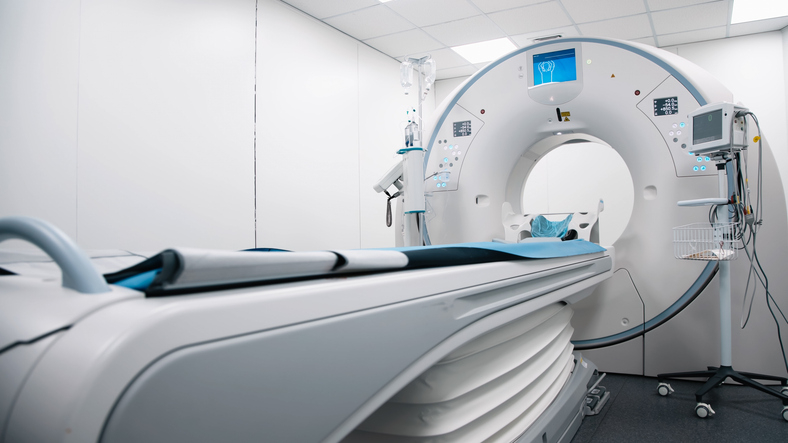
Regarding CT (computed tomography), which accounts for two-thirds of medical radiation exposure among the Korean public, it was revealed that only 62 medical institutions nationwide have participated in the system through which the state inspects and manages medical institutional investor radiation doses.
According to the 'Status of Operation of Patient Medical Radiation Exposure Management System' submitted by the KDCA to the office of Democratic Party of Korea lawmaker Heo Jong-sik, a member of the National Assembly's Health and Welfare Committee, on the 8th, only 62 medical institutions had participated in the 'National CT Examination Dose Management System' as of September this year. This includes 4 tertiary general hospitals, 50 hospitals, and 8 clinics.
This system is a support framework that collects radiation dose information for each CT examination at medical institutions and informs the relevant institutional investor of appropriate radiation dose levels. According to the Disease Control and Prevention's '2025 National Medical Radiation Assessment Yearbook,' CT accounted for only 3.8% of total examinations but represented 67.1% of national medical radiation exposure doses. Only 62 medical institutions nationwide are participating in the dose inspection and management system for the examination with the highest proportion of exposure.
In reality, while CT is useful for precise diagnosis of related diseases such as brain, lung, and abdominal conditions, it is known that the radiation dose per examination is significantly higher than general X-ray imaging. In last year's medical radiation assessment, general X-ray imaging was the most common at 76.4% of the total, but its proportion of exposure doses was found to be around 27.4%.
According to the Disease Control and Prevention, the number of applications to participate in the system has increased since it was linked with the evaluation system. The agency stated, "To expand participation, we added a National Dose Management System utilization item to the Health Insurance Review and Assessment Service's second-round appropriateness assessment for imaging examinations on July 31, resulting in 100 medical institutions applying for additional enrollment." However, these institutional investors are still at the application stage and have not completed their enrollment.
The National Dose Management System only handles dose information at the level of individual medical institutions. The Disease Control and Prevention stated that this system "does not collect examination histories or dose information for individual patients," adding, "Patient examination history and dose information (including examination histories from other medical institutions and non-covered examination information) constitute personal data and cannot be collected or managed without a relevant legal basis."
A system allowing medical institutions to look up patients' imaging histories from other hospitals during treatment is being promoted and reviewed for construction by the Ministry of Health and Welfare. The National Health Insurance Service's examination history lookup service provided to patients also has the limitation that it does not include non-covered CTs. Consequently, concerns are emerging that there is effectively no system to integrate and verify previous examination histories and cumulative exposure doses on a national scale at the point of care, thereby preventing unnecessary repeat imaging, even when patients undergo repeated CT scans at multiple medical institutions or receive non-covered screening CTs at health checkup centers.
Heo Jong-sik (Rep.) emphasized, "The reality where patients must get into the CT machine again without knowing where and how much they have been scanned is a clear management gap," adding, "We need to legislate a basis for managing patients' cumulative radiation exposure and establish incentives to significantly increase participation in dose management by local clinics."

 in THEBIO
