

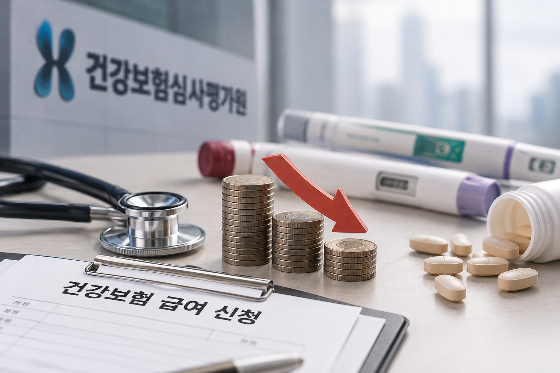
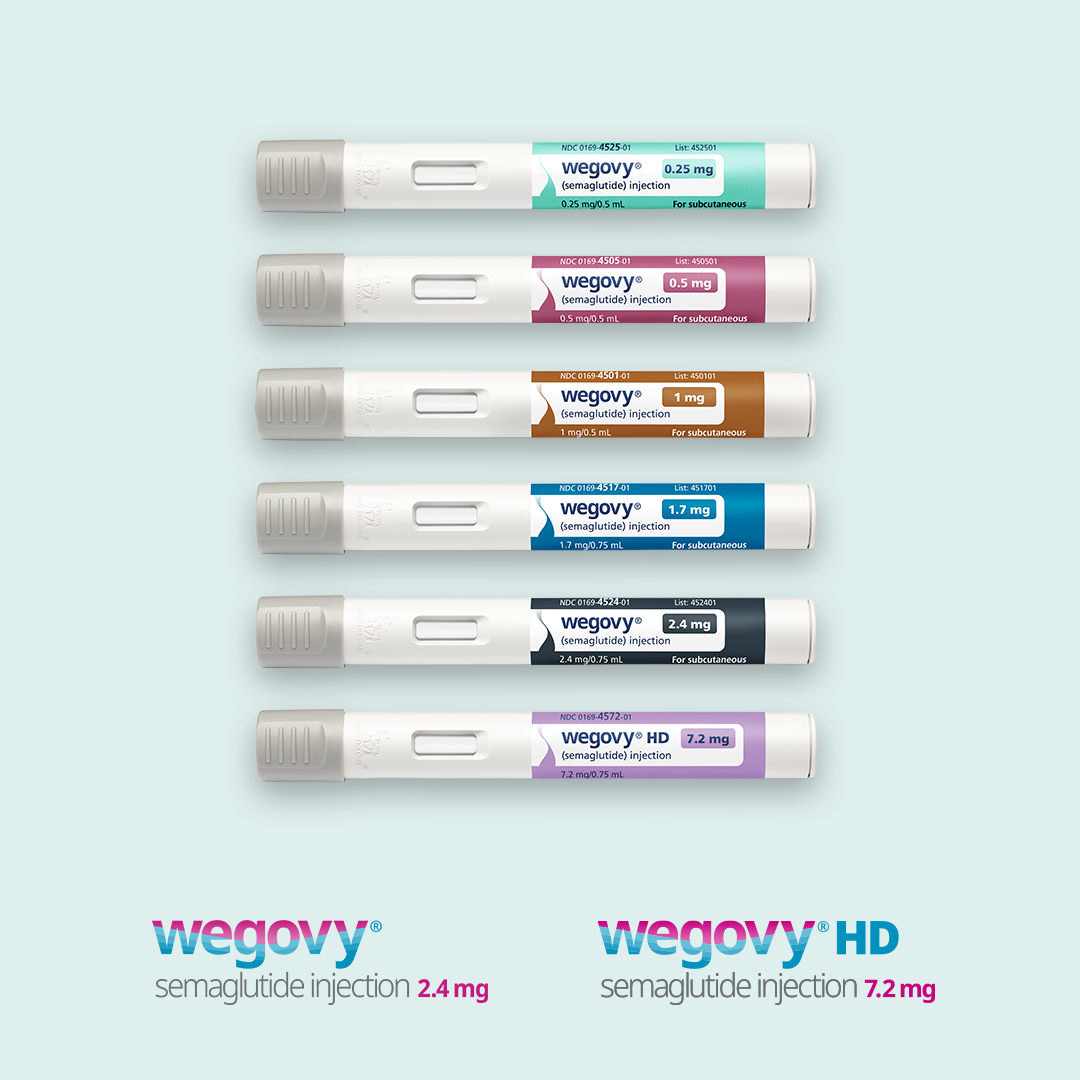
The push to list Novo Nordisk’s obesity treatment 'Wegovy' (active ingredient semaglutide) on South Korea’s National Health Insurance is expected to intensify price competition among glucagon-like peptide-1 (GLP-1) class obesity treatments. This is because insurance coverage could reduce the cost burden for eligible patients, and domestic obesity drugs as well as global pharmaceutical companies’ oral formulations are also set to launch soon. As new products emphasizing price and ease of administration join the existing market centered on injectables, patients’ treatment options are expected to expand.
According to the pharmaceutical industry on the 8th, Novo Nordisk is scheduled to apply to the Health Insurance Review & Assessment Service (HIRA) for National Health Insurance coverage of Wegovy for its obesity indication as early as next week. Currently, all GLP-1 class obesity treatments launched in South Korea, including Wegovy and Eli Lilly’s 'Mounjaro' (active ingredient tirzepatide), are non-covered items, meaning patients must bear the full cost of the medication.
Obesity treatments often require long-term administration, so monthly drug costs can influence whether treatment is sustained. If Wegovy’s insurance listing materializes, it is expected that patient co-payments will decrease and treatment accessibility will improve due to insurance coverage.
Wegovy’s insurance listing could also accelerate price competition among GLP-1 obesity drugs. Price competition has already taken place in the domestic obesity treatment market. Last August, ahead of Mounjaro’s domestic launch, Novo Nordisk cut Wegovy’s supply price by up to 42%. Shifting from a uniform price across all doses to a tiered pricing system by dose, it lowered the four-week supply price for the starting dose of 0.25 mg from approximately 372,000 won to 216,000 won.
Domestic GLP-1 class obesity drugs are also joining in, which is expected to lower the price burden of obesity medications for patients. Hanmi Pharm received product approval from the Ministry of Food and Drug Safety (MFDS) on the 7th for 'Epeoto Injector' (active ingredient epeglenatide). It is the 45th domestically developed new drug and the first domestic GLP-1 class obesity treatment. Hanmi Pharm is preparing supply with a target of launching within the year.
Hanmi Pharm cites price competitiveness leveraging its domestic production base and stable supply as differentiating factors. While the final selling price has not been confirmed, market speculation suggests it may be set in the 100,000 won range, lower than global pharmaceutical companies’ products currently priced at a minimum of around 200,000 won.
A Hanmi Pharm official stated, "We plan to lower the barrier to entry for obesity treatment through more economically affordable drug prices so as to reduce the cost burden on patients requiring long-term treatment." The official added, "We are reviewing pricing with a focus on reducing the number of patients who abandon or discontinue necessary treatment due to cost burdens, rather than engaging in simple low-price competition." Furthermore, the official noted, "The final price will be determined by comprehensively reflecting market conditions, distribution structures, the product’s clinical value, and sustainable supply conditions, while adhering to the principle of enhancing patient accessibility."
The domestic launch of oral obesity treatments by global pharmaceutical companies is also imminent. Novo Nordisk has applied to the MFDS for product approval for 'Wegovy Pill,' an oral obesity drug containing semaglutide, and Eli Lilly has applied for approval for 'Foundayo,' which contains orforglipron. Both products have already received approval and been launched in the United States.
Oral obesity treatments are differentiated by their ability to reduce the burden of injections. While Wegovy, Mounjaro, and Epe are once-weekly injectables, Wegovy Pill and Foundayo are pills taken once a day. Although Wegovy Pill has restrictions such as requiring administration on an empty stomach, Foundayo can be taken regardless of meal times. Prices are also relatively cheaper compared to injectables.

 in THEBIO

