

As the cool weather continues, many people have reduced their outings. With increased time spent indoors and sitting, legs often become particularly swollen, and even pants that usually fit well feel tight around the calves and thighs. This is commonly perceived as "gaining fat in the legs."
However, specialists warn, "It may not simply be weight gain; it could be a sign of swelling or a serious disease, so caution is needed in making a differential diagnosis."
Here is an overview of the health warning signs indicated by swollen legs and how to distinguish between them.
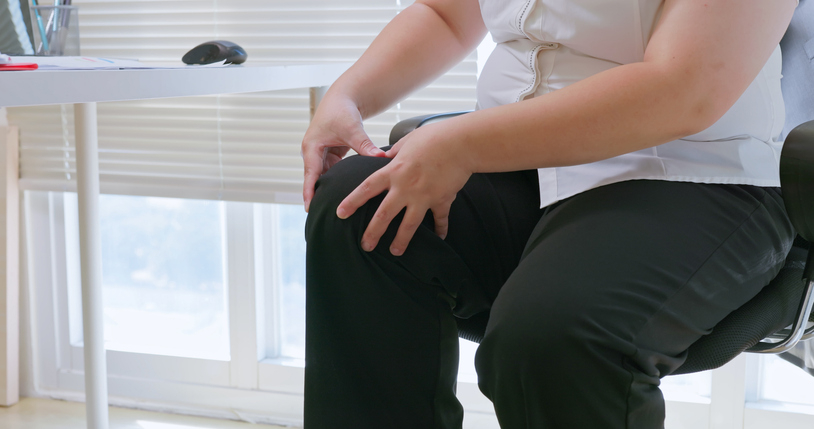
If legs are only swollen in the evening, it is likely edema
If legs swell more in the evening than in the morning, and deep, long-lasting marks from socks remain on the ankles and calves, there is a high likelihood of edema. This is closely related to blood circulation in the legs. Edema is a phenomenon where body fluid (water) inside blood vessels leaks out and abnormally accumulates between cells in the body. When pressure within the blood is high or the osmotic pressure inside the blood drops, moisture in the blood moves into the interstitial space between cells, causing edema.
Professor Kim Hyang-gyeong of Surgery at Ewha Womons University Mokdong Hospital said, "If you repeatedly feel a heavy sensation in your calves when sitting for long periods and feel relief when you elevate and rest your legs, it is advisable to check whether there are any issues with venous circulation in the legs."
The veins in the legs serve as channels that return blood pumped out from the heart back to the heart. For veins to send blood to the heart, calf muscles that push blood upward like a pump and valves that prevent the risen blood from flowing back down play crucial roles. A representative disease where these functions decline is varicose veins. Varicose veins, in which the valve function of leg veins declines or weakens, are a condition where blood flows backward toward the legs because the valves do not close properly.
On the other hand, if the extra fat on the legs persists all day long, there is a high likelihood that subcutaneous fat has accumulated. President Ahn Jae-hyun of Global 365mc Incheon Hospital said, "If calorie intake remains the same while activity levels decrease, body fat naturally increases. Due to various factors such as genetic characteristics and hormones, fat may accumulate more in specific areas."
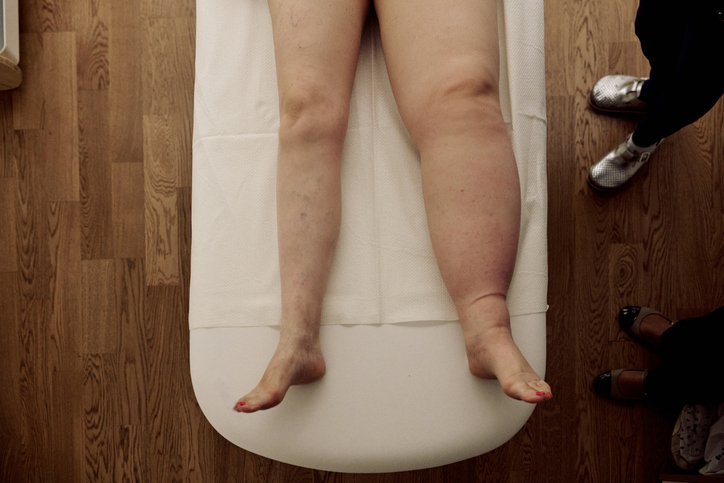
If only one leg suddenly swells, it could be a sign of serious conditions such as lymphedema or venous insufficiency, so careful attention is required. Lymphedema occurs when the lymphatic system is damaged, causing protein-rich body fluid to accumulate excessively in a localized area.
It mainly results from damage to lymph nodes due to cancer or after cancer treatment, which disrupts the pathway for lymph fluid movement, leading to swelling primarily in one arm or leg.
For patients with lymphedema, it is recommended to position the affected limb higher than the heart. A local limb thermotherapy method has also been developed, which involves raising the temperature of the affected limb 6 to 7 degrees above body temperature using an electric heating device at 120 degrees (Celsius) for one hour a day over 20 days, and repeating this treatment three to five times.
Venous insufficiency is edema that occurs as venous function declines. When veins are blocked, such as in deep vein thrombosis, capillary pressure increases, causing moisture to move from blood vessels into the interstitium, resulting in edema. Sudden swelling in one leg may be caused by venous insufficiency.
Patients with venous insufficiency must first correct the underlying disease (deep vein thrombosis or varicose veins). Diuretics can be used restrictively depending on the case. Elevating the swollen leg above the heart and wearing stockings can reduce venous hypertension and edema, thereby improving venous insufficiency.
There is a self-diagnosis method to easily distinguish between "leg edema" and "leg fat accumulation." If you press your leg with your fingertips for 5 to 10 seconds and then release, and the indented state persists, it may indicate edema.
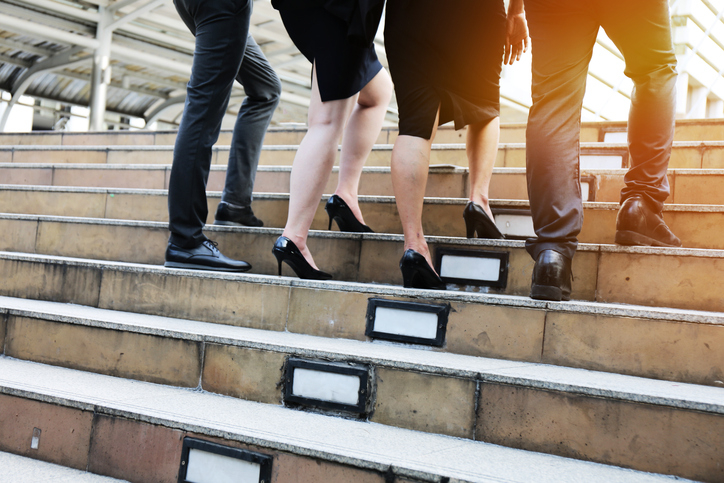
Standing up and walking for 10 minutes every hour helps
The first step in preventing both "leg edema" and "leg fat accumulation" is "frequently breaking up sitting time." It is recommended to secure separate time for exercise while also developing the habit of increasing movement during work.
For example, set an alarm every hour and stand up from your seat to walk for a few minutes. Ahn advised, "You can start with simple actions like going to get water or walking back and forth in the hallway. You can increase opportunities for movement by standing up briefly while making phone calls and using stairs for nearby floors."
While sitting, moving the legs by slowly bending and extending the ankles or raising and lowering the heels can strengthen the opening and closing function of venous valves. Adjust the chair height so that the soles of your feet touch the floor, and ensure that the back of your thighs is not strongly pressed against the edge of the chair. Instead of sitting down immediately after lunch, walking for 10 to 15 minutes is also a good practice.
Even if you manage lifestyle habits, if there are body shape changes such as pants becoming tight or waist circumference increasing, it is necessary to check your diet and activity levels.
If you feel hungry between meals, it is best to consume snacks rich in protein and dietary fiber. When eating meals, following the order of dietary fiber → protein → carbohydrates can help prevent overeating. Walking or running after meals, and combining strength training if conditions allow to increase muscle mass, are also helpful.
Even if you lose weight through diet and exercise, there are cases where subcutaneous fat around the thighs and buttocks remains, making it difficult to improve the lower body line. In such cases, one may consider body contouring procedures such as liposuction or LAMS (Lipolysis Agent Micro-injection System), a fat extraction injection.
Ahn advised, "If considering liposuction, one must comprehensively examine factors including the connection between the inner and outer thighs and under the buttocks, the degree of muscle development in the calves, subcutaneous fat, and presence of edema, to determine the appropriate procedure scope and method for the individual."

 in THEBIO


