

The domestically developed utility helicopter ‘Surion’ (KUH-1), developed by Korea Aerospace Industries (KAI), is expanding its operational scope beyond the military into public sectors such as police, fire services, forestry, and the coast guard. After successfully exporting to Iraq, the Surion is seeking additional export deals while aiming to enhance its competitiveness through performance improvements, including the domestic production of core components.
From military to civilian use: Securing orders across the board with derivative models
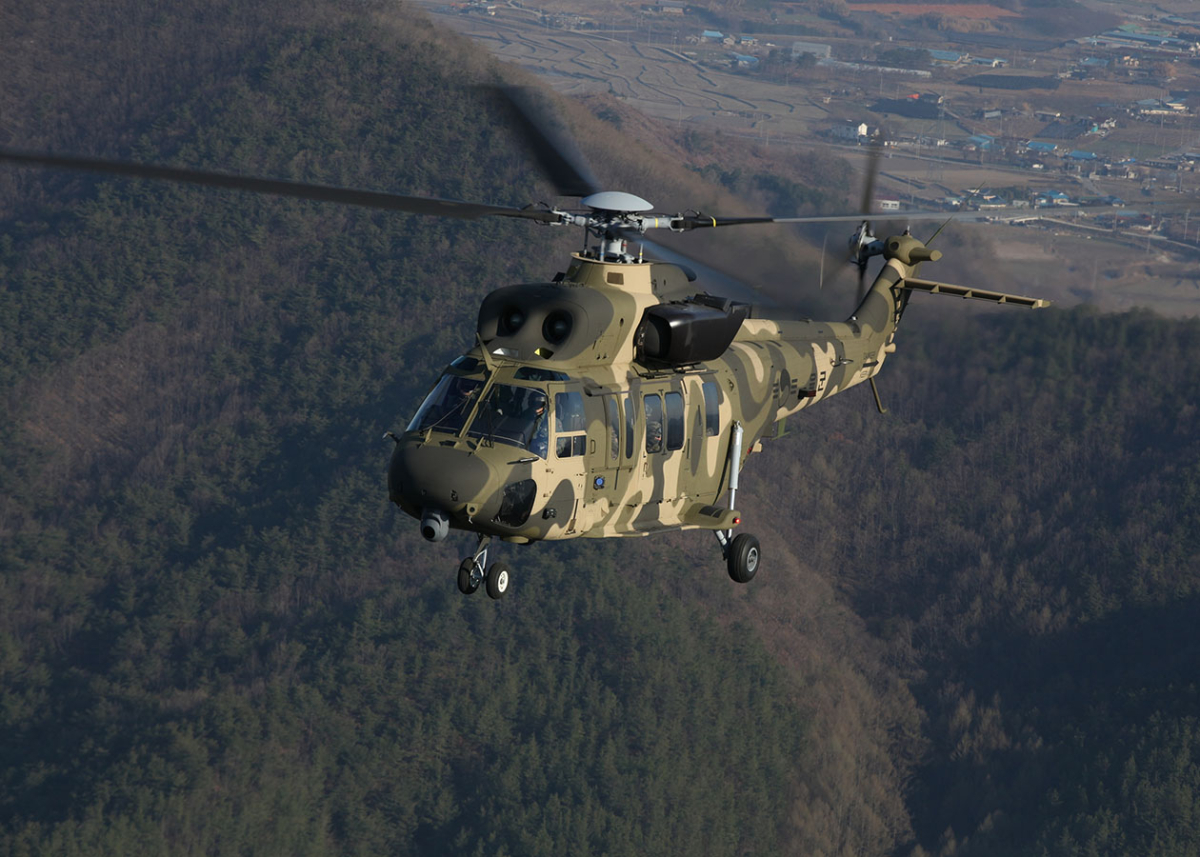
The Surion was developed to replace aging foreign-made utility helicopters and modernize South Korea’s air power. Development began in 2006, led by KAI and the Agency for Defense Development (ADD), and six years later, in 2012, it entered service with the Republic of Korea Army. This is an exceptional achievement, considering that helicopter development typically takes more than ten years. As a result, South Korea became the 11th country in the world to produce helicopters independently.
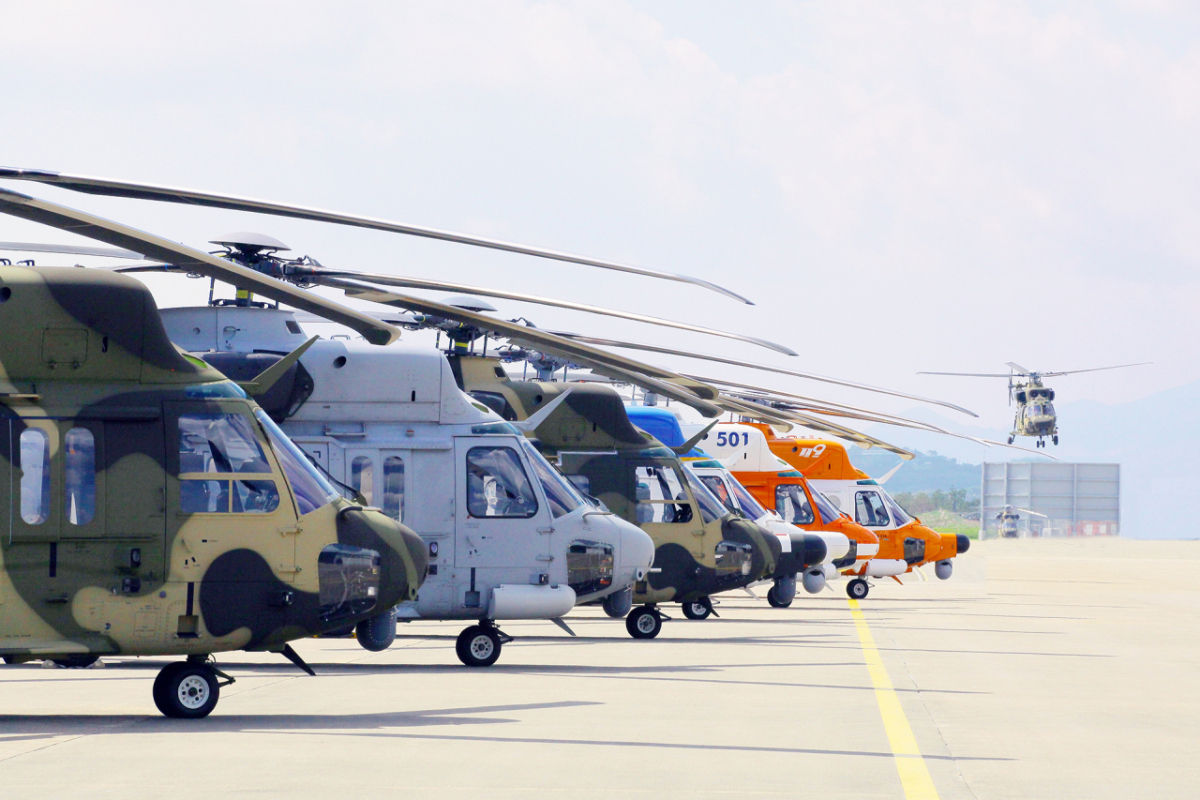
Since then, the Surion has evolved into various derivative models for both military and civilian use. The coast guard version is equipped with search radar and electro-optical infrared cameras necessary for maritime search and rescue missions. The medical evacuation helicopter carries emergency medical equipment, including patient monitoring devices and ventilators, to perform patient transport and emergency treatment. To enhance performance in large-scale wildfire suppression missions, the forestry helicopter is fitted with a 2-ton freshwater tank and features upgraded night vision capabilities. KAI is currently developing an expansion of the forestry helicopter’s water tank capacity to 2.7 tons.
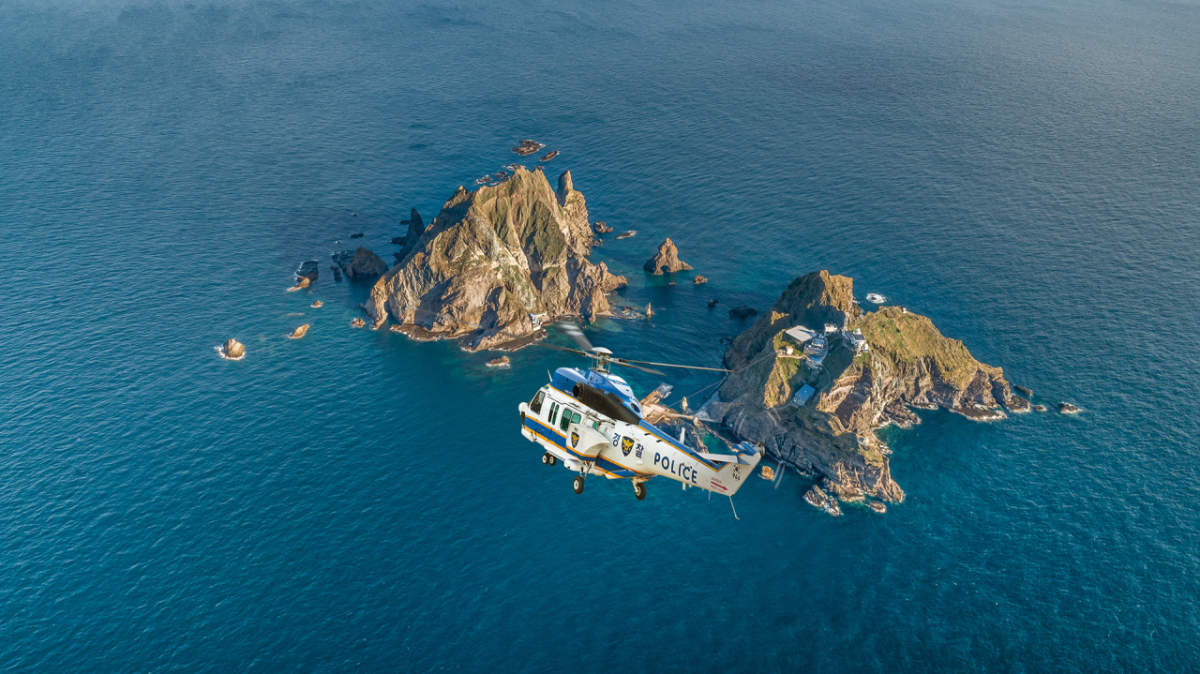
The civilian helicopter ‘Chamsuri,’ operated by the National Police Agency, performs aerial tracking and surveillance, traffic management and patrol, support for police special forces, and search operations. It is also capable of additional missions such as passenger and VIP transport and cargo delivery. A key feature is that it replaces military mission equipment with gear required for police duties, including an airborne video wireless transmission device, electro-optical infrared cameras, searchlights, and loudspeakers.
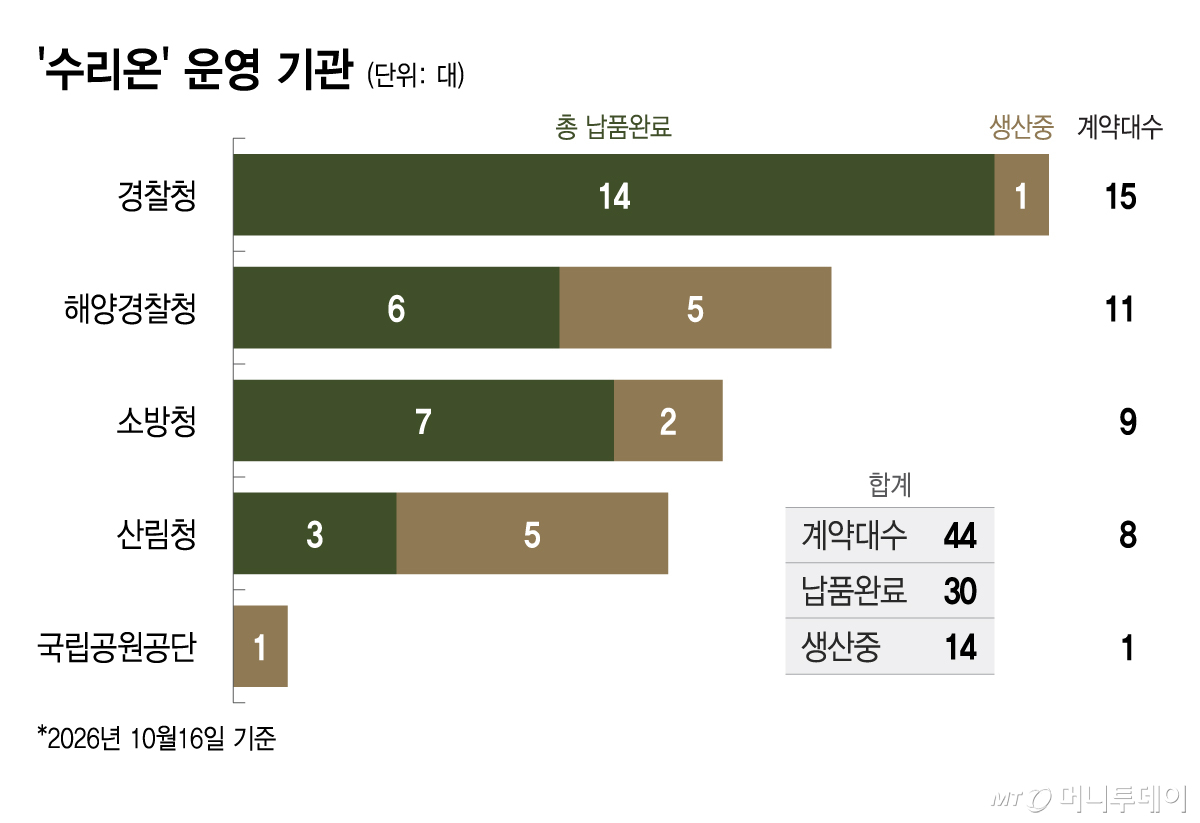
Based on this, the Surion is expanding its presence in the domestic civilian helicopter market. According to KAI, as of the 16th, a total of 44 civilian Surion helicopters have been contracted. Of these, 30 have been delivered, and the remaining 14 are under production. The number of contracts by agency is: National Police Agency 15, Korea Coast Guard 11, National Fire Agency 9, Korea Forest Service 8, and Korea National Park Corporation 1. Deliveries so far include 14 to the National Police Agency, 6 to the Korea Coast Guard, 7 to the National Fire Agency, and 3 to the Korea Forest Service. KAI is continuously conducting marketing aligned with the replacement cycles of aging helicopters for each agency and anticipates additional demand in the domestic civilian helicopter market.
Withstands extreme cold and heat, adapts to mountainous terrain: Competitiveness of a domestic platform
The Surion’s competitiveness lies in its ability to perform missions in diverse environments. This is thanks to low-temperature and high-temperature environmental tests conducted by KAI during the development process, which verified its operational capabilities in extreme climates. In 2013, the Surion conducted over 50 flight tests in Alaska in sub-zero temperatures of minus 40 degrees Celsius and was verified against a total of 121 test items. According to KAI, its high engine surplus power makes it advantageous for operations in hot deserts or high-altitude regions. In 2023, high-temperature testing was completed in the Middle East, and a model equipped with filters to prevent desert sand ingestion was also unveiled.
A design tailored to the mountainous terrain of the Korean Peninsula is another strength. The Surion is designed to be capable of hovering at an altitude of 2,744 meters, equivalent to the height of Mount Paektu. Equipped with two engines producing 1,955 horsepower each, it can carry nine fully equipped soldiers and fly for approximately two hours and 30 minutes. It features digital navigation equipment and an automatic flight control system to reduce pilot workload, and supports hovering and automatic flight along pre-set routes.
The fact that it is a domestically produced airframe also offers operational advantages, as rapid maintenance and operational support can be obtained within the country when urgent repairs or part replacements are needed. This is particularly important for disaster response helicopters, which must be maintained in a state of readiness to deploy at any time. Furthermore, by utilizing a platform already operated by the military, the burden of developing derivative models is reduced, and development periods are shortened.
Two firefighting helicopters delivered to Iraq: Expanding exports based on operational track record
The Surion has entered overseas markets based on its domestic operational track record. In 2023, KAI launched a push into the global market by showcasing a Surion demonstration flight at the Dubai Airshow in the United Arab Emirates (UAE). The following year, in 2024, it signed a contract worth approximately $100 million to supply two firefighting helicopters to Iraq. These helicopters have since been delivered to and are being operated by Iraq’s Ministry of Interior.
KAI is paying close attention to the possibility that operational results in Iraq will lead to additional exports. According to KAI, as the Surion has demonstrated stable operations even in Iraq’s demanding environment of high temperatures and desert terrain, interest is expanding among neighboring Middle Eastern and Southeast Asian countries.
KAI also expects that aircraft exports, including the Surion, will lead to the adoption of follow-on models. Previously, Indonesia introduced the KT-1 for the first time, subsequently added the T-50, and participated in the joint development of the KF-21. The Philippines imported 12 FA-50s in 2014 and ordered an additional 12 in 2025. A KAI official emphasized, “In aircraft exports, customer satisfaction is deeply related to the decision-making process. Since these are aircraft operated for long periods after introduction, not only the initial purchase price but also maintenance costs and follow-on support systems influence purchasing decisions.”
Domestic production of main gearboxes and development of manned-unmanned teaming: Securing future competitiveness
To enhance the mid- to long-term competitiveness of the Surion, KAI is also pursuing the domestic production of core components and the development of future combat systems. A representative project is the domestic production of the Main Gearbox (MGB). The main gearbox is a critical device that transmits engine power to the main rotor and other components.
On April 21, KAI successfully completed the domestic assembly and test run of a rotary-wing aircraft main gearbox. It plans to conduct test evaluations to verify goals of improving output by 27%, increasing maximum takeoff weight by 15%, and enhancing overhaul cycles and lifespan by 100% by 2028. The company aims to begin full-scale system development after confirming whether these targets have been met.
Once the domestic production of the main gearbox is completed, it can be utilized not only for improving Surion performance but also for expanding the water tank capacity of civilian helicopters and enhancing their capability to carry Manned-Unmanned Teaming (MUM-T) systems. It also holds significance in reducing dependence on foreign parts and securing a domestic technological foundation.
Manned-unmanned teaming is a technology that allows a manned helicopter to control an unmanned aircraft and receive video information acquired by the drone in real time. KAI has been developing related technologies using the Surion since 2021, and in May 2024, it successfully developed a helicopter-drone linkage system technology. At the time, the company secured the technology to directly pilot and control a drone located more than 40 kilometers away from a flying Surion while acquiring video information in real time.
In addition, KAI is pursuing the domestic production of core technologies such as the Automatic Flight Control System (AFCS). The company aims to continuously improve the performance of the Surion platform and expand mission-specific derivative models to meet domestic operational demand while enhancing competitiveness in overseas markets. A KAI official stated, “As a culmination of South Korea’s helicopter technology, we expect it to possess even higher competitiveness in the global market.”

 in INDUSTRY


