

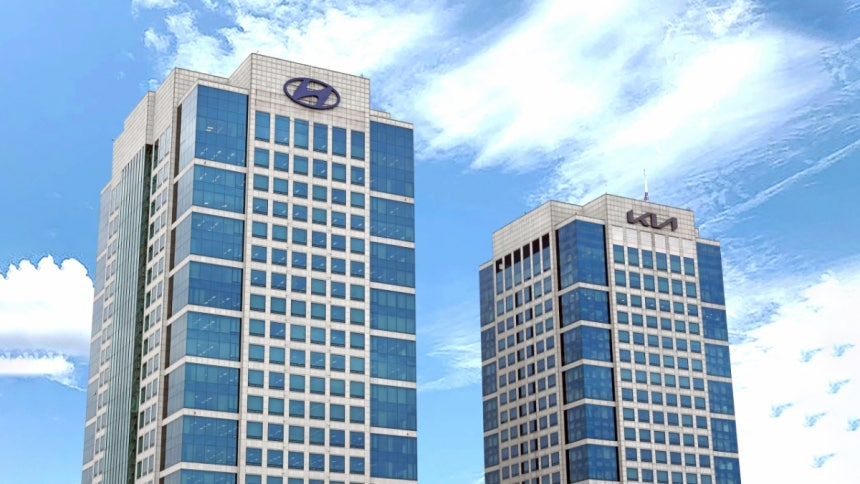
Hyundai Motor and Kia both increased their operating profits in the third quarter of this year, but their full-year profitability outlooks have darkened. Hyundai Motor lowered its annual targets as labor strikes disrupted production, reducing sales and revenue.
Kia, meanwhile, recorded its highest-ever third-quarter sales, but said rising costs and higher sales incentives would make it difficult to meet its original profitability target.
According to Kia on Friday, the company’s third-quarter revenue this year was 31.5974 trillion won, a 10.1% increase from the same period last year. Operating profit for the same period rose 24.3% to 1.8183 trillion won. Hyundai Motor’s revenue decreased by 3.4% to 45.1102 trillion won, but its operating profit increased by 5.5% to 2.6772 trillion won.
The sales trends of the two companies diverged. For Hyundai Motor, production disruptions led to a contraction in scale. Global wholesale sales in the third quarter fell 11.3% from the same period last year to 920,710 units. Domestic sales dropped 27.2% to 131,468 units due to the impact of the strike.
Overseas, sales also declined by 8% to 789,242 units as industrial demand shrank and export disruptions compounded the issue. In contrast, Kia sold a total of 847,355 units domestically and abroad, representing a 7.9% growth compared to last year.
Hyundai Motor defended its profits through the Hyundai Ioniq series and exchange rate effects. Sales of the Hyundai Ioniq series in the third quarter were 167,414 units, an increase of approximately 6,000 units from the same period last year.
Driven by expanded sales of high-value-added models and cost reductions, the operating profit margin rose by 0.5 percentage points (p) to 5.9%. However, rising raw material prices also pushed up the cost of goods sold ratio by 1.5%p to 83.8%.
Kia expanded its Hyundai Ioniq series in the United States and absorbed electric vehicle demand in Korea and Europe. Global electrified vehicle sales increased by 47% to 300,000 units.
However, operating profit decreased by 727 billion won compared to the same period last year due to incentives and price cuts. Rising raw material prices and the Middle East conflict also acted as factors reducing profits by approximately 570 billion won. The increase in costs effectively offset a significant portion of the benefits from expanded sales.
In particular, Kia’s operating profit margin rose by 0.7%p to 5.8% compared to the same period last year, but fell by 2.2%p compared to the previous quarter. A major factor behind the increase in operating profit compared to the same period last year was the reduction of U.S. tariff costs by 533 billion won.
Excluding the impact of tariffs, operating profit actually decreased by 177 billion won. Compared to the previous quarter as well, falling exchange rates and rising raw material prices acted as factors reducing profits by a total of 655 billion won.
Concerns about profitability were also evident in annual targets. Hyundai Motor lowered its wholesale sales target from 4.1583 million units to 4 million units. It also adjusted its operating profit margin target from 6.3% to 7.3% down to 5.5% to 6.5%.
The investment plan for the automotive division was reduced from 17.8 trillion won to 16 trillion won. Kia maintained its sales target of 3.35 million units but projected that it would fall short of the profitability level presented at the beginning of the year. Its initial operating profit target was 10.2 trillion won, with an operating profit margin of 8.3%.
The two companies will focus on recovering production and expanding sales of high-profit models in the fourth quarter. Hyundai Motor plans to recover volume through new car sales and expanded production, as domestic factory production has normalized since September.
Kia also plans to expand sales of its Hyundai Ioniq series. However, the company noted that it would be difficult for profitability to rebound significantly in the short term due to continuing burdens on raw materials and logistics costs stemming from the Middle East conflict.
Despite short-term profitability pressures, Kia will continue its electric vehicle incentive strategy through next year. The company judges that it must secure sales volume while lowering battery and key component costs to generate profits in the long term.
Kim Seung-jun, vice president of Kia’s Finance Division, said, “I do not think abandoning EVs just because profitability has dropped somewhat in the short term is the right direction,” and projected that it will take two to three years to improve electric vehicle profitability.

 in INDUSTRY
